 Stanley Loo Plastic SurgeonStanley Loo Plastic Surgeon
Scarring is a normal part of wound healing.
Whenever the skin is injured through surgery, trauma, infection or another process, the body produces scar tissue as part of repair.
Most scars gradually become softer and less noticeable. Some, however, become raised, thickened, painful or excessively prominent.
Scars are areas of fibrous tissue that replace normal skin after injury. A scar results from the biological process of wound repair in the skin and other tissues of the body. Thus, scarring is a natural part of the healing process. With the exception of very minor lesions, every wound (e.g. after accident, disease, or surgery) results in some degree of scarring.
Scar tissue is the same protein (collagen) as the tissue that it replaces, but the fiber composition of the protein is different; instead of a random basketweave formation of the collagen fibers found in normal tissue, in fibrosis the collagen cross-links and forms a pronounced alignment in a single direction. This collagen scar tissue alignment is usually of inferior functional quality to the normal collagen randomised alignment
All scarring is composed of the same collagen as the tissue it has replaced, but the composition of the scar tissue, compared to the normal tissue, is different. Scars differ from other scars in the amounts of collagen over expressed. Labels have been applied to the differences in over expression. Two of the most common types are hypertrophic and keloid scarring, both of which experience excessive stiff collagen bundled growth overextending the tissue, blocking off regeneration of tissues
Stanley Loo provides specialist assessment of problematic scars, including keloid and hypertrophic scars, in Auckland. The current practice describes surgical and non-surgical approaches depending on the individual scar.
Hypertrophic scars occur when the body overproduces collagen, which causes the scar to be raised above the surrounding skin. Hypertrophic scars take the form of a red raised lump on the skin. They usually occur within 4 to 8 weeks following wound infection or wound closure with excess tension and/or other traumatic skin injuries.
A hypertrophic scar is raised and thickened but generally remains within the original boundaries of the wound.
The distinction between a keloid and hypertrophic scar is important because treatment and recurrence behaviour can differ.
A keloid is a raised scar that extends beyond the original boundaries of the wound.
Keloids can occur after:
Surgery
Injury
Acne
Piercing
Minor skin trauma
They can be itchy, uncomfortable or cosmetically concerning
Keloid scars are a more serious form of scarring, because they can grow indefinitely into large, masses Hypertrophic scars are often distinguished from keloid scars by their lack of growth outside the original wound area, but this commonly taught distinction can lead to confusion. All keloid scars are hypertrophic, but “only a small percentage of large scars” are keloid.
Keloid scars can occur on anyone, but they are most common in dark-skinned people. They can be caused by surgery, accident, acne or, sometimes, body piercings. In some people, keloid scars form spontaneously. Although they can be a cosmetic problem, keloid scars are only inert masses of collagen and therefore completely harmless and not cancerous. However, they can be itchy or painful in some individuals. They tend to be most common on the shoulders and chest.
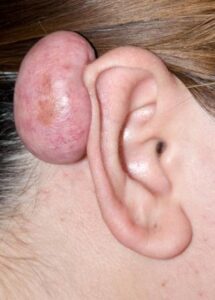
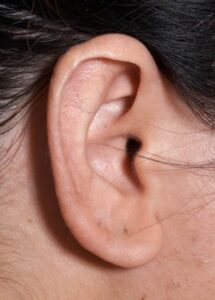
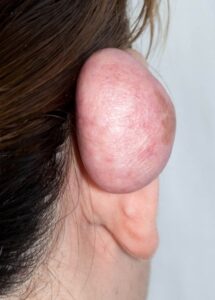
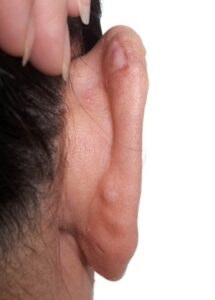
Treatment depends on:
Scar type
Scar location
Scar size
Symptoms
Previous treatment
Skin characteristics
Individual tendency to form problematic scars
There is no single scar treatment that works for every patient.
Prior to any treatment a consultation with Mr Stanley Loo (Auckland Plastic Surgery Group, Unit 6 / 31 Highbrook Drive, Highbrook, Auckland 2013 Ph (09) 220 2580) is required to fully assess your scar and requirements. Treatment options discussed at the time to give you the best outcome possible
A long-term course of corticosteroid injections into the scar may help flatten and soften the appearance of keloid or hypertrophic scars. The steroid is injected into the scar itself; since very little is absorbed into the blood stream, side effects of this treatment are minor. However, it does cause thinning of the scar tissue so it does carry risks when injected into scars caused by operations into ruptured tendons. This treatment is repeated at four- to six-week intervals. Topical steroids are ineffective.
Chemical peels are chemicals which destroy the epidermis in a controlled manner, leading to exfoliation and the alleviation of certain skin conditions, including superficial acne scars. Various chemicals can be used depending upon the depth of the peel, and caution should be used, particularly for dark-skinned individuals and those individuals susceptible to keloid formation or with active infections.
Filler injections of collagen, fat or other artificial collagen products can be used to raise atrophic scars to the level of surrounding skin. Risks vary based upon the filler used, and can include temporary improvement.
Dermabrasion Dermabrasion involves the removal of the surface of the skin with special equipment, and usually involves an anaesthetic.
Nonablative lasers, such as the 585 nm pulsed dye laser, 1064 nm and 1320 nm Nd:YAG, are used as the standard laser therapy for hypertrophic scars and keloids. This therapy smooths the epidermis via contact cooling. Multiple sessions are usually required for a significant reduction in redness and improvement in the texture and pliability of hypertrophic scars and keloids.
Ablative lasers such as the carbon dioxide laser or Er:YAG offer the best results for atrophic and acne scars. Like dermabrasion, ablative lasers work by destroying the epidermis to a certain depth. Healing times for ablative therapy are much longer and the risk profile is greater compared to nonablative therapy; however, nonablative therapy offers only minor improvements in cosmetic appearance of atrophic and acne scars.
Low-dose, superficial radiotherapy is sometimes used to prevent recurrence of severe keloid and hypertrophic scarring. It is thought to be effective despite a lack of clinical trials, but only used in extreme cases due to the perceived risk of long-term side effects
Silicone scar treatments are commonly used in preventing scar formation and improving existing scar appearance. The effectiveness and safety of silicone sheeting for the treatment and prevention of scars is supported by an abundance of clinical studies. Semiocclusive, silicone-based ointments are used to speed healing and reduce the appearance of scars, and likely work in a similar manner as silicone scar sheets.
Pressure dressings are commonly used in managing burn and hypertrophic scars, although supporting evidence is lacking. These involve elastic materials or gauze to apply pressure to the area. For large scars and particularly large burns, pressure garments may be worn. They are believed to work by applying constant pressure to surface blood vessels, and eventually causing scars to flatten and become softer. Pressure therapy has been effective in treating ear keloids.
Surgical scar revision is a process of cutting the scar tissue out. After the excision, the new wound is usually closed up to heal by primary intention, instead of secondary intention. Deeper cuts need a multi layered closure to heal optimally, otherwise depressed or dented scars can result. Surgical excision of hypertrophic or keloid scars is often associated to other methods, such as pressure therapy or silicone gel sheeting. Lone excision of keloid scars, however, shows a recurrence rate close to 45%. A clinical study is currently ongoing to assess the benefits of a treatment combining surgery and laser-assisted healing in hypertrophic or keloid scars.
What Can Scar Revision Achieve?
Scar revision may improve:
Scar width
Scar contour
Raised areas
Depressed areas
Scar direction
Functional restriction
Symptoms such as discomfort
It cannot completely erase a scar.
If you would like to discuss this further a consultation can be made with Mr Stanley Loo at Auckland Plastic Surgery Group, Unit 6 / 31 Highbrook Drive, Highbrook, Auckland 2013 Ph (09) 220 2580
FAQs
Can a scar be completely removed?
No. Scar revision aims to improve a scar rather than eliminate it.
What is the difference between a keloid and hypertrophic scar?
A keloid typically extends beyond the original wound boundaries, whereas a hypertrophic scar generally remains within them.
Can keloids come back after surgery?
Yes. Recurrence is an important consideration, and surgery may need to be combined with other treatment.
Do steroid injections work for keloids?
They can help selected keloid and hypertrophic scars become flatter and softer.
Are all scars suitable for surgery?
No. Treatment depends on the scar and your individual circumstances.
Blogs