 Stanley Loo Plastic SurgeonStanley Loo Plastic Surgeon
Melanoma is a malignant tumour of melanocytes. Melanocytes are cells that produce the dark pigment, melanin, which is responsible for the color of skin. They predominantly occur in skin, but are also found in other parts of the body.
Melanoma is less common than other skin cancers, however it is much more dangerous as it can spread to other sites of the body more frequently than other skin cancers.
Early assessment and treatment are important.
Stanley Loo has specialist experience in melanoma management and has been involved in the development of melanoma services at Middlemore Hospital.
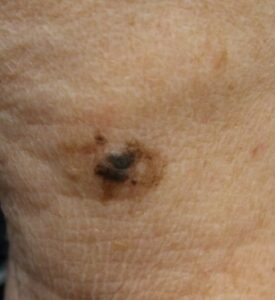
Melanoma can develop in an existing mole or appear as a new lesion.
One commonly used method of recognising suspicious changes is the ABCDE approach.
A – Asymmetry
One half of the lesion looks different from the other.
B – Border
The border may be irregular or poorly defined.
C – Colour
There may be variation in colour within the lesion.
D – Diameter
Larger lesions may be more concerning, although melanoma can occur at smaller sizes.
E – Evolving
A lesion that changes in size, shape, colour or behaviour should be assessed.
Development of itching, ulceration and bleeding can be a possible later warning signs.
Early signs of melanoma are changes to the shape or color of existing moles such lesions should be referred without delay to a plastic surgeon.
Visual diagnosis of melanomas is still the most common method employed by health professionals.
A suspicious lesion requires appropriate clinical assessment.
An excisional biopsy may be performed to establish the diagnosis.
If melanoma is confirmed, further assessment may be required depending on the pathology.
Dr Stanley Loo is a specialist in the management of melanoma’s. He will fully asses the lesion and all other areas of potential spread at the initial consultation.
Surgery is the primary treatment for many localised melanomas however other treatments may be beneficial in certain cases (Mr Loo will explain this to you in the consultation at Auckland Plastic Surgery Group, Unit 6 / 31 Highbrook Drive, Highbrook, Auckland 2013 and perform the surgery at either Auckland Plastic Surgery Group, Kakariki Hospital or Ormiston Hospital. Diagnosis is confirmed with an excisional biopsy (small surgical procedure). If the diagnosis of melanoma is confirmed further investigations may be required.
The risk of spread of melanoma is determined by many factors of which the thickness of the melanoma is a major factor. A wide local excision is recommended in all melanoma’s, the margin of which is determined by the thickness. In melanoma’s which have an intermediate thickness (between 1 – 4 mm) an additional procedure called a “sentinel node biopsy” is also recommended.
Sentinel Lymph Node Assessment
In selected patients, sentinel lymph node biopsy may be considered.
The decision depends on melanoma characteristics and current clinical recommendations.
Sentinel node biopsy is recommended for melanomas of intermediate thickness.
In cases where there is spread to other areas, Mr Stanley Loo will discuss the treatment plan in the consultation.
Reconstruction After Melanoma Excision
Once the melanoma has been removed, the resulting defect may be repaired using:
Direct closure
Skin graft
Local flap
Other reconstructive techniques
Melanoma Follow-Up
Regular follow up is very important in the long term management of melanoma and should be done by an appropriate health professional. Mr Loo will follow you up at his rooms (East Care, Botany, Auckland) and arrange all appropriate investigation as required.
Follow-up may include examination of the surgical site, regional lymph nodes and other areas of skin, depending on the original diagnosis.
Further investigations may be arranged when appropriate.
If you would like to discuss this further a consultation can be made with Mr Stanley Loo at Auckland Plastic Surgery Group, Unit 6 / 31 Highbrook Drive, Highbrook, Auckland 2013 Ph (09) 220 2580
FAQs
Is melanoma more serious than other common skin cancers?
Melanoma has a greater potential to spread than basal cell carcinoma and many forms of non-melanoma skin cancer.
What does ABCDE mean?
ABCDE stands for Asymmetry, Border, Colour, Diameter and Evolving.
Does every melanoma require surgery?
Surgery is the primary treatment for many localised melanomas, but management depends on the individual diagnosis.
What happens after melanoma removal?
The pathology and characteristics of the melanoma determine whether further treatment or investigations are required.
Can melanoma come back?
Recurrence is possible, which is why appropriate long-term follow-up is important.
Should a changing mole be assessed?
Yes. A changing mole should be assessed by an appropriate healthcare professional rather than monitored indefinitely at home.
Post operative care in skin cancer surgery
Blogs
When Should a Skin Lesion Be Removed Safely?
Best Options for Skin Lesion Removal Explained
Skin Cancer Surgery: What to Expect
What to Expect From Skin Cancer Excision Procedure
Are Skin Biopsies Painful? What to Expect
Your Guide to Skin Lesion Biopsies and Results