
Categories
Hand Surgery

Carpal Tunnel Release vs Injection Compared

https://plasticsurgerynz.org/carpal-tunnel-release-vs-injection/
September 5, 2026 - Stanley Loo -Waking with a numb hand, dropping a cup or struggling to

Waking with a numb hand, dropping a cup or struggling to fasten buttons can make even ordinary tasks frustrating. When symptoms persist, the question of carpal tunnel release vs injection is often less about which treatment is ‘best’ and more about which option is appropriate for the severity, cause and pattern of your symptoms.

Carpal tunnel syndrome occurs when the median nerve is compressed as it travels through a narrow passage at the wrist. This can cause tingling, numbness, pain or weakness in the thumb, index, middle and part of the ring finger. A careful assessment helps distinguish carpal tunnel syndrome from other causes of hand symptoms, such as neck problems, arthritis or nerve compression elsewhere.

Carpal Tunnel Release vs Injection: The Main Difference

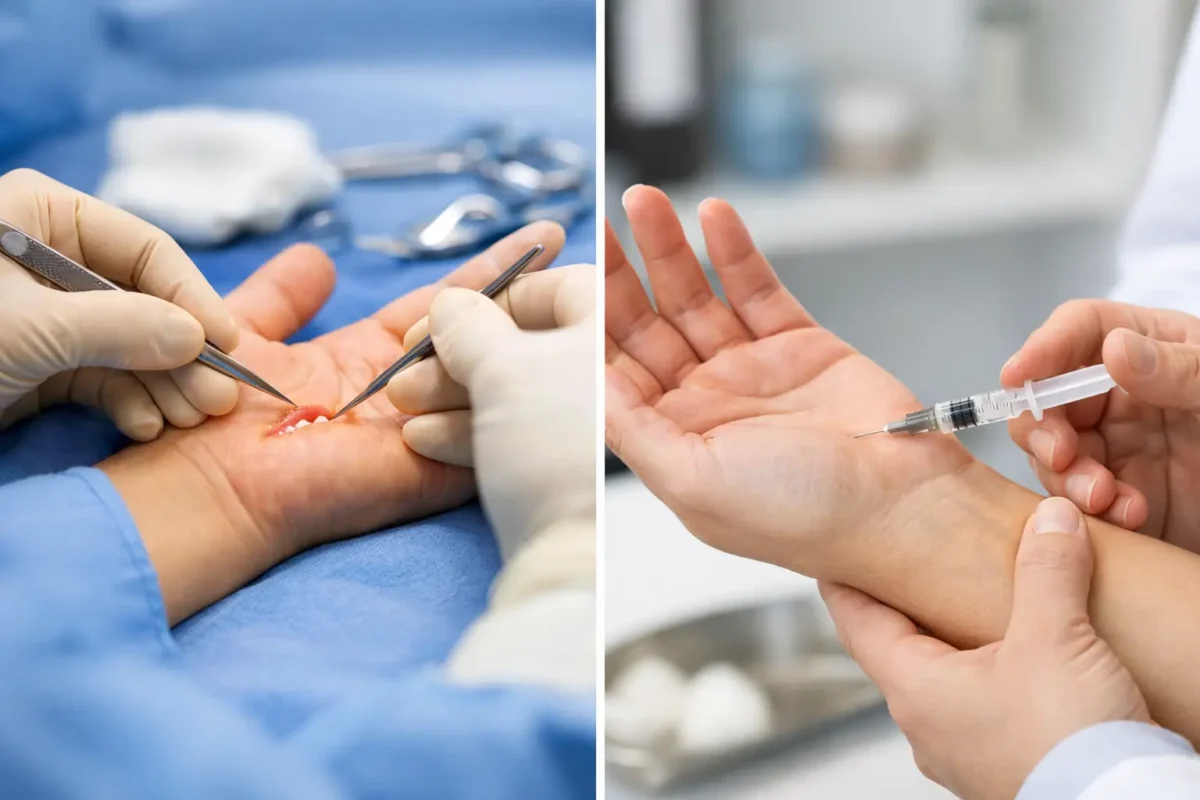
A corticosteroid injection aims to reduce inflammation and swelling around the median nerve. It can ease symptoms without an operation, but its effect may be temporary. Carpal tunnel release is a minor operation that enlarges the tunnel by dividing the tight ligament across the wrist, creating more space for the nerve.

An injection may be a sensible first treatment for some people, particularly when symptoms are mild to moderate, recent in onset, or related to a temporary factor such as pregnancy. Surgery is more commonly considered where symptoms are severe, longstanding, recurrent after injection or associated with weakness and evidence of nerve damage.

Neither treatment should be chosen simply on convenience. The right approach follows a discussion of your symptoms, examination findings, medical history and, where appropriate, nerve conduction studies.

When a Steroid Injection May Be Appropriate

A steroid injection is usually performed in the clinic. Local anaesthetic may be used alongside the steroid, and the procedure itself is brief. Some people notice a reduction in tingling and night-time waking within days, although the response varies and it can take longer for symptoms to settle.

For a person with early symptoms, an injection can offer valuable relief while avoiding or postponing surgery. It may also help clarify whether the median nerve is the source of the problem when the diagnosis is uncertain. During pregnancy, when fluid retention can trigger carpal tunnel symptoms, an injection may provide symptom control until the underlying changes resolve after delivery.

The limitation is durability. Some patients gain relief for months or longer, while symptoms return quickly for others. Repeat injections are sometimes considered, but repeated steroid injections are not usually a long-term solution for ongoing nerve compression. They do not physically widen the carpal tunnel.

Possible side effects include temporary soreness, bruising and a short-lived increase in pain after the injection. Less common risks include skin thinning or colour change at the injection site, infection, raised blood glucose levels in people with diabetes, and injury to nearby structures. These risks are small but should be discussed before treatment.

When Carpal Tunnel Release Is Usually Recommended

Carpal tunnel release is designed to address the mechanical pressure on the nerve. It is often recommended when symptoms disturb sleep regularly, interfere with work or daily activities, return after non-surgical treatment, or when there is weakness, loss of thumb muscle bulk or abnormal nerve testing.

These more advanced signs matter because prolonged compression can lead to permanent nerve impairment. Surgery cannot always restore sensation or strength fully once significant damage has occurred, but relieving the pressure can prevent further deterioration and gives the nerve the best opportunity to recover.

The operation is generally carried out as a day procedure, often under local anaesthetic. A small incision is made in the palm or wrist area, and the transverse carpal ligament is divided to release pressure on the median nerve. The exact technique and anaesthetic plan should be tailored to the individual patient.

For many people, night-time tingling improves soon after surgery. Numbness that has been present for a long time may improve more gradually, sometimes over several months. Recovery depends on how compressed the nerve was before surgery, as well as the demands placed on the hand during healing.

Recovery: Injection Versus Surgery

Recovery after an injection is usually quick. It is sensible to take things gently with the hand for a short period, particularly if the area is sore, but most people can return to light daily activities promptly. The key uncertainty is not recovery time but how long the symptom relief will last.

After carpal tunnel release, the wound needs protection while it heals. Patients are encouraged to move their fingers early to limit stiffness, but heavy gripping, forceful lifting and pressure through the palm need to be avoided initially. A desk-based role may allow an earlier return to work than a job involving manual labour, tools, repetitive gripping or heavy lifting.

Tenderness around the scar and discomfort when leaning on the palm are common in the early weeks. Keeping the hand elevated when advised, following wound-care instructions and attending follow-up appointments support a safe recovery. Your surgical team can give more specific guidance based on the hand treated, your occupation and the type of work you need to resume.

Comparing Long-Term Results

For persistent carpal tunnel syndrome, surgical release generally provides more reliable long-term relief than steroid injection. That does not mean surgery is necessary for everyone. If symptoms are occasional, mild, or linked to a reversible situation, an injection and practical measures may be entirely reasonable.

However, an injection can sometimes mask progression. If numbness becomes constant, grip weakens, thumb muscles appear flatter, or hand function continues to decline, it is sensible to seek reassessment rather than repeatedly treating the symptoms alone.

Splinting the wrist at night can also help selected patients, especially in the earlier stages. It is often used alongside an injection or while a treatment decision is being made. Activity modification may reduce aggravation, but it cannot reliably correct significant nerve compression.

Risks and Expectations of Carpal Tunnel Surgery

Carpal tunnel release has a high success rate, but no procedure is without risk. Possible complications include bleeding, infection, scar sensitivity, stiffness, ongoing pain, incomplete symptom relief and, rarely, injury to nerves or tendons. There is also a small possibility that symptoms may persist or recur for reasons unrelated to the carpal tunnel itself.

A specialist consultation is an opportunity to discuss these issues in the context of your own health. Diabetes, thyroid disease, inflammatory arthritis, previous wrist injury and pregnancy can all influence symptoms and treatment planning. Nerve conduction testing may be useful where symptoms are atypical, severe or clinically unclear, although it is not required in every case.

Good decision-making also means being realistic about recovery. Surgery relieves pressure on the nerve, but it does not make the hand instantly normal if the nerve has been compressed for a long time. Patients with severe pre-operative numbness should understand that improvement can be gradual and may be incomplete.

How to Decide Between Injection and Release

The decision usually comes down to four questions: how severe are the symptoms, how long have they been present, is there evidence of nerve damage, and how important is a durable solution? An injection may offer a lower-intervention way to manage early or temporary symptoms. Release surgery is often the more definitive option when compression is established or function is being affected.

At a consultation, be prepared to describe when symptoms occur, which fingers are affected, whether you wake at night, and whether you have noticed weakness or difficulty with fine tasks. Sharing details about previous splints, injections, injuries and medical conditions helps create a treatment plan that is safe and proportionate.

The aim is not to push every patient towards an operation, nor to delay surgery when the nerve needs protection. With an accurate diagnosis and clear advice, you can choose treatment with a realistic understanding of relief, recovery and the longer-term health of your hand.


Categories
Hand Surgery

A Carpal Tunnel Surgery Review for Patients

https://plasticsurgerynz.org/carpal-tunnel-surgery-review/
August 25, 2026 - Stanley Loo -Numb fingers can turn ordinary tasks into frustrating ones

Numb fingers can turn ordinary tasks into frustrating ones. Fastening buttons, holding a phone, driving, sleeping comfortably or opening a jar may become difficult when tingling, pain and weakness persist. This carpal tunnel surgery review explains when a carpal tunnel release may be considered, what the procedure involves, and what a realistic recovery can look like.

Carpal tunnel surgery is not automatically the right answer for every person with hand symptoms. A careful assessment matters because similar symptoms can arise from conditions affecting the neck, nerves elsewhere in the arm, tendons or joints. The purpose of specialist review is to establish the likely cause, discuss non-surgical options where appropriate, and help you make an informed decision about surgery.

What is carpal tunnel syndrome?

The carpal tunnel is a narrow passage at the wrist. It contains the median nerve, which supplies sensation to the thumb, index finger, middle finger and part of the ring finger, as well as tendons that move the fingers. When pressure builds within this confined space, the median nerve can become irritated or compressed.

Typical symptoms include tingling or numbness in the thumb, index and middle fingers, particularly at night; a burning or aching discomfort in the hand or wrist; and weakness when gripping or pinching. Some people wake needing to shake their hand for relief. In more advanced cases, there may be constant numbness, loss of thumb strength or wasting of the thumb muscles.

Symptoms often fluctuate. Pregnancy, repetitive hand use, diabetes, thyroid conditions, inflammatory arthritis and previous wrist injury can all be relevant, although carpal tunnel syndrome also occurs without an obvious cause.

When might surgery be recommended?

A wrist splint worn at night, changes to aggravating activities, treatment of contributing medical conditions and, in selected cases, an injection may provide worthwhile relief. These approaches can be particularly suitable when symptoms are mild, recent or intermittent.

Surgery is more often considered where symptoms continue despite conservative treatment, repeatedly disturb sleep, interfere with work or daily function, or where there are signs that the nerve is under more significant pressure. Persistent numbness, weakness or muscle wasting deserve timely assessment, as prolonged compression can lead to nerve changes that may not fully reverse.

A consultation should include a discussion of your symptoms, medical history, work and home activities, and examination of the hand and wrist. Nerve conduction studies may be arranged when the diagnosis is uncertain, symptoms are severe, or there is a need to assess the degree of nerve compression. They are helpful information, but they are considered alongside the clinical picture rather than in isolation.

Carpal tunnel surgery review: what happens during the operation?

Carpal tunnel release is a focused hand operation designed to create more room for the median nerve. The surgeon divides the transverse carpal ligament, the firm band forming the roof of the carpal tunnel. This reduces pressure on the nerve while allowing the ligament to heal in a lengthened position.

The procedure is commonly performed as a day-case operation under local anaesthetic. You are awake, but the area is numbed and should not be painful. Sedation or a different anaesthetic approach may be discussed in specific circumstances, depending on your health, preferences and the planned setting.

In an open carpal tunnel release, a small incision is made in the palm near the wrist. The ligament is carefully divided, the wound is closed and a dressing is applied. The operation itself is usually relatively short, but good care is not measured by operating time alone. Clear preparation, careful technique, pain management and accessible post-operative guidance all contribute to a safer, more comfortable experience.

Some patients ask about endoscopic, or keyhole, release. This approach uses a small camera and specialised instruments. It may offer a different scar position and an earlier return to some activities for selected patients, but it is not inherently better for everyone. The best method depends on anatomy, symptom severity, surgeon experience and the balance of potential benefits and risks in your particular case.

Recovery: the first days and following weeks

Most people go home on the day of surgery with a bulky dressing or lighter protective bandage. The local anaesthetic can leave the hand numb for several hours, so it is sensible to arrange transport and avoid tasks requiring reliable grip immediately afterwards.

Keeping the hand elevated during the first few days can help control swelling. Gentle movement of the fingers is usually encouraged from early on to reduce stiffness, unless you have been given different instructions. The wound should be kept clean and dry as advised by your surgical team.

Pain is often manageable with simple pain relief, although the palm can feel tender. It is common to experience bruising, swelling and a pulling sensation around the incision. Some patients also notice temporary “pillar pain” – discomfort on either side of the heel of the palm, particularly when pushing up from a chair or gripping firmly. This usually settles gradually, but may take several weeks or occasionally longer.

Stitches, if non-dissolving, are generally removed after around 10 to 14 days. Desk-based work may be possible within days to a couple of weeks, depending on comfort and the demands of the role. Manual work, heavy lifting, repetitive gripping and vibration exposure usually require more time. Your return should be based on wound healing, strength, symptoms and the practical requirements of your job rather than a fixed date.

Night-time tingling can improve quickly after release, sometimes within days. Recovery of constant numbness and weakness is less predictable. If the nerve has been compressed for a long time, it may recover slowly over months and, in some cases, incompletely. Honest discussion before surgery is important: the operation aims to relieve nerve pressure, not to guarantee that every symptom will disappear immediately.

Understanding the risks and trade-offs

Carpal tunnel release is a commonly performed operation, but no surgery is without risk. Your surgeon should explain the risks that are relevant to you and provide an opportunity to ask questions without pressure.

Possible complications include bleeding, infection, wound healing problems, scar sensitivity, stiffness and ongoing palm tenderness. There is also a small risk of injury to nearby nerves, blood vessels or tendons. Symptoms can persist if the diagnosis is not solely carpal tunnel syndrome, if the nerve has sustained lasting damage, or if there is another source of nerve irritation. Recurrence after an initially successful release is uncommon but can occur.

Scar care can make a practical difference once the wound has healed. Massage, moisturising and gradual exposure to normal hand use may be advised. A scar may remain noticeable, but it commonly softens and settles with time. If you have a history of difficult scarring, poor wound healing, diabetes, smoking or medicines that affect bleeding, raise this at your consultation so that planning can be tailored appropriately.

Questions worth asking at your consultation

The most useful consultation is a two-way conversation. Ask whether your symptoms and examination findings are typical of carpal tunnel syndrome, whether tests would add useful information, and what may happen if you delay surgery. It is also reasonable to ask which technique is proposed, where the incision will sit, what pain relief and dressing care will involve, and when you can expect to return to driving, work, exercise and caring responsibilities.

You may also wish to ask about the expected benefit in your situation. Someone with occasional night tingling and someone with long-standing numbness and thumb weakness may both have carpal tunnel syndrome, but their likely recovery and urgency of treatment can differ. A responsible recommendation should reflect that difference.

At Stanley Loo’s practice, the aim is to ensure that patients considering functional hand surgery understand both the procedure and the recovery commitments before choosing to proceed. This includes clear post-operative advice and a plan for follow-up should you have concerns during healing.

If numbness is worsening, sleep is regularly disrupted, or your hand is becoming weaker, arranging a specialist assessment is a sensible next step. The right decision is not simply whether surgery is available, but whether it fits your diagnosis, symptoms, lifestyle and expectations.

Categories
Hand Surgery

Carpal Tunnel Release Recovery and Your Timeline

https://plasticsurgerynz.org/carpal-tunnel-release-recovery-timeline/
July 17, 2026 - Stanley Loo -The numbness, tingling and night-time hand pain caused by

The numbness, tingling and night-time hand pain caused by carpal tunnel syndrome can make even simple tasks feel difficult. Carpal tunnel release recovery is usually straightforward, but the pace of improvement varies between patients. Knowing what is normal after surgery, and when to seek advice, can make the recovery period feel more manageable.

Carpal tunnel release is a procedure that creates more space for the median nerve at the wrist. During surgery, the ligament forming the roof of the carpal tunnel is carefully divided to relieve pressure on the nerve. The operation is commonly performed as a day-case procedure, often under local anaesthetic, although the exact approach will be discussed during your consultation.

Carpal tunnel release recovery: the first two weeks

Your hand will usually be covered with a bulky dressing immediately after surgery. This protects the wound and helps limit early swelling. Keep the hand elevated, particularly for the first few days, using pillows when resting and holding it above heart level where practical. Gently moving your fingers from the day of surgery is encouraged unless you have been advised otherwise. It helps reduce stiffness and supports circulation.

Some discomfort around the incision and palm is expected once the local anaesthetic wears off. Simple pain relief is often sufficient, but take medicines only as advised by your surgical team. Bruising, mild swelling and a feeling of tightness are common during the first week. These symptoms should gradually settle rather than become more severe.

The dressing should be kept clean and dry until your follow-up instructions allow it to be changed or removed. If you have sutures that require removal, this is commonly arranged at around 10 to 14 days. Avoid soaking the wound in a bath, swimming pool or spa until it has fully healed and your team has confirmed this is appropriate.

It is sensible to use the hand for light activities such as eating, dressing and gentle household tasks as comfort allows. However, gripping firmly, lifting heavy objects, repetitive forceful movement and putting direct pressure through the palm can irritate the healing tissues. A little protection early on is preferable to trying to push through pain.

What improvement feels like

Many patients notice that night-time tingling and pain improve quickly, sometimes within days. Numbness may take longer to settle because the median nerve needs time to recover after prolonged compression. Where symptoms have been severe or present for many months, sensation and strength may improve gradually over weeks or months. Occasionally, some nerve symptoms may not resolve completely.

This is one reason a specialist assessment matters before surgery. Carpal tunnel symptoms can overlap with problems arising from the neck, arthritis, tendon conditions or other nerve disorders. Surgery can relieve pressure on the median nerve, but it cannot correct a different cause of hand symptoms.

Tenderness in the palm is also common during recovery. Some people experience pillar pain, an aching or sensitivity at either side of the scar when leaning on the hand or gripping. This can be frustrating, particularly when opening jars, pushing up from a chair or returning to manual work. It generally improves with time, although the period varies from person to person.

Weeks two to six: restoring comfortable hand use

Once the wound has healed, gentle scar care may be recommended. Massaging the scar with a suitable moisturiser can help reduce sensitivity and encourage the scar to soften. Your surgeon or hand therapist will explain when to begin and which technique is suitable for you. Scar tissue continues to mature for several months, so early redness and firmness are not usually a sign of a poor final result.

Light wrist and finger movement can be built up gradually. The aim is to regain comfortable movement and confidence in daily hand use without provoking sustained pain or swelling. Formal hand therapy is not necessary for every patient, but it can be valuable if stiffness, scar sensitivity, weakness or difficulty returning to a specific activity persists.

Avoid judging recovery solely by the appearance of the scar. A small incision can still involve deeper healing in the palm and wrist. It is common for the hand to feel tired after a busy day during the first few weeks. Pacing activities, taking short breaks and increasing demands in stages usually produces a better outcome than alternating between complete rest and overuse.

Returning to driving, work and exercise

The right time to return depends on the hand operated on, the demands of your job and how secure and comfortable your grip feels. For desk-based work, some patients can return within one to two weeks, with adjustments for typing and mouse use. Work involving repetitive hand movements, heavy lifting, tools, machinery or prolonged gripping often requires more time, sometimes four to six weeks or longer.

You should not drive until you are no longer affected by anaesthetic or strong pain medication and can safely control the vehicle, including performing an emergency stop. You must also be able to grip the steering wheel confidently without distracting pain. Check the advice of your insurer if you are uncertain.

Walking is usually fine soon after surgery, but exercise that loads the palm, such as weight training, cycling, racquet sports or press-ups, should wait until the wound is healed and your hand is comfortable. Your return should be guided by function, not by a fixed date on the calendar.

When to contact your surgical team

Most postoperative concerns can be addressed promptly with reassurance or a simple adjustment to wound care. Contact your surgical team if you notice increasing rather than improving pain, spreading redness, heat, discharge or an unpleasant smell from the wound, as these may indicate infection.

You should also seek advice for:

  • persistent bleeding that soaks through the dressing;
  • marked swelling or fingers that become pale, blue or unusually cold;
  • fever or feeling generally unwell alongside wound concerns;
  • severe new numbness, weakness or difficulty moving the fingers;
  • a dressing that feels excessively tight or causes worsening discomfort.

Do not wait for a scheduled review if you are worried. Early assessment is the safest approach when recovery is not following the expected course.

Supporting the best long-term result

The operation addresses pressure at the wrist, but your wider hand health still matters. If your work or hobbies involve repeated gripping, vibration, awkward wrist positions or prolonged computer use, consider practical changes as you recover. Better workstation positioning, regular movement breaks and sensible task rotation can reduce strain on the hand and wrist.

Smoking can delay wound healing and increase surgical risks, so stopping before and after surgery is strongly advisable. Conditions such as diabetes, thyroid disease and inflammatory arthritis can also influence nerve recovery and healing. Sharing a complete medical history allows your surgeon to tailor advice and follow-up appropriately.

Recovery is not a test of how quickly you can resume every activity. Give the wound, palm and nerve the time they need, follow the individual guidance provided by your surgical team, and ask for help when something does not feel right.