
A finger that catches, locks or suddenly releases with a painful click can make ordinary tasks unexpectedly difficult. Buttoning a shirt, holding a cup or gripping a steering wheel may become uncomfortable. Trigger finger release surgery is a small hand procedure designed to restore smoother tendon movement when non-surgical treatment has not provided sufficient relief.
Trigger finger is common and usually treatable, but the right approach depends on the severity of symptoms, the finger involved, your health and how much the condition is affecting daily life. A specialist assessment helps distinguish trigger finger from other causes of hand pain or stiffness and ensures that surgery is considered at the appropriate time.
What is trigger finger?
Trigger finger, also called stenosing tenosynovitis, affects the flexor tendon that bends the finger or thumb. These tendons normally glide through a series of fibrous bands, known as pulleys, which hold them close to the bones of the hand.
At the base of the affected digit, the tendon or its surrounding lining can become thickened and irritated. It may then struggle to pass smoothly through the first pulley, called the A1 pulley. This creates the familiar clicking or catching sensation. In more established cases, the finger can become locked in a bent position and may need to be gently straightened with the other hand.
Symptoms can vary. Some people notice tenderness or a small lump in the palm at the base of the finger. Others have morning stiffness, intermittent catching or pain when gripping. A locked finger, persistent discomfort or loss of hand function warrants specialist review.
Trigger finger can occur without an obvious cause. It is more frequent in people with diabetes, inflammatory arthritis or certain thyroid conditions, and it may develop alongside carpal tunnel syndrome. Repetitive hand use can aggravate symptoms, although it is not always the underlying reason the condition develops.
When might surgery be recommended?
Not every trigger finger requires an operation. Early or mild symptoms may improve with changes to activity, a splint, anti-inflammatory pain relief where appropriate, or a steroid injection around the tendon sheath. Steroid injections can be effective, particularly when symptoms are recent, but their benefit is not guaranteed and triggering can return.
Surgery may be considered if the digit is regularly locking, symptoms continue despite non-surgical treatment, or the problem is significantly limiting work, sleep, hobbies or personal care. It may also be a sensible first option in selected circumstances, such as a severe fixed locking problem or when an injection is less likely to offer lasting benefit.
The decision is individual. During consultation, your surgeon will examine the hand, discuss your medical history and medications, and explain the likely advantages and limitations of each option. If you have diabetes, it is particularly helpful to discuss blood glucose control, as steroid injections can temporarily raise glucose levels and healing considerations may differ.
How trigger finger release surgery works
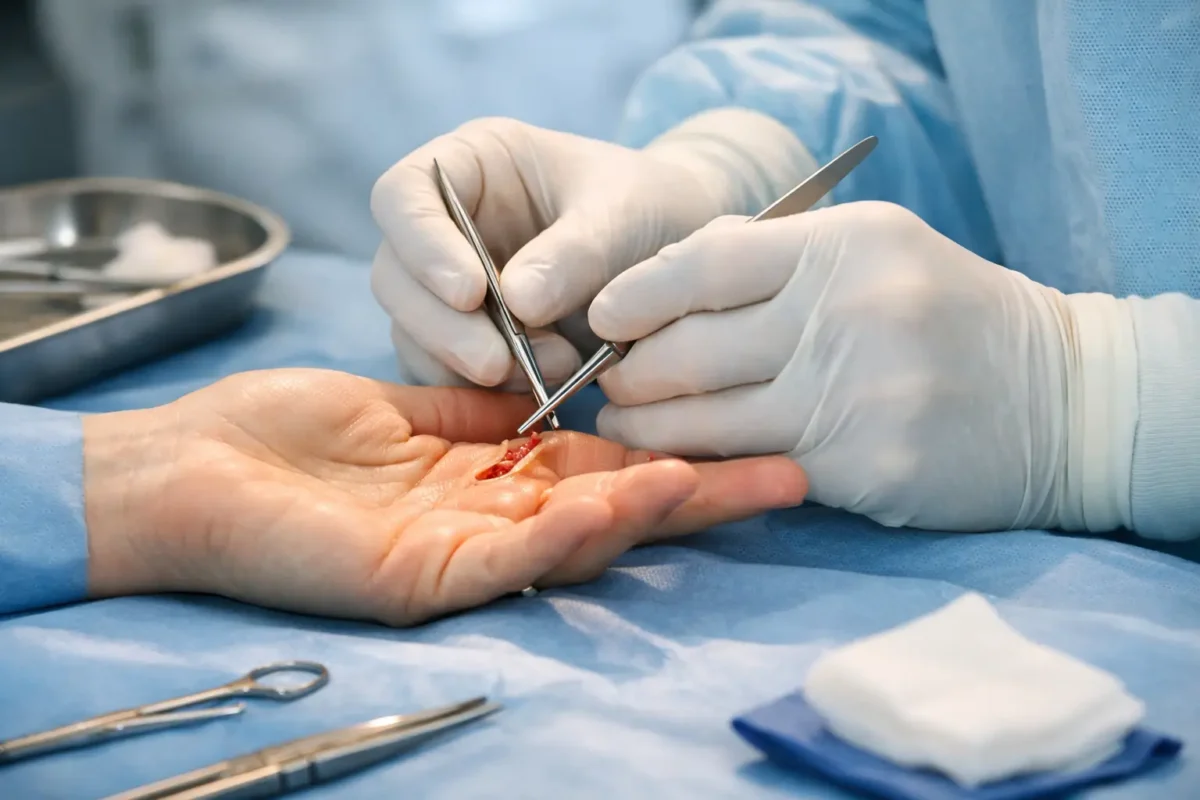
The purpose of trigger finger release surgery is to create more space for the flexor tendon to glide. The surgeon divides the tight A1 pulley through a small incision in the palm. The tendon is not cut. Once the constricting pulley has been released, the tendon can move more freely during bending and straightening.
The procedure is commonly performed as a day-case operation under local anaesthetic. This means the hand is numbed while you remain awake, although the precise anaesthetic plan should be tailored to you. In some situations, another form of anaesthesia may be appropriate. Your surgeon will discuss this before the procedure, including whether you need someone to accompany you home.
A small dressing is applied afterwards. You will usually be encouraged to begin gently moving the finger soon after surgery, as movement helps limit stiffness. The hand may feel sore and swollen initially, but severe pain is not expected and should be discussed with the clinical team.
What happens on the day
Before surgery, the team will confirm the digit being treated, review consent and check for relevant changes in your health. It is important to mention blood-thinning medication, allergies, previous hand operations and any current infection or broken skin on the hand.
The operation itself is relatively brief, but allow time for admission, preparation, the procedure and post-operative instructions. You should avoid driving immediately after hand surgery, particularly if the operated hand is needed to control the vehicle or you have received sedating medication.
Recovery after trigger finger release surgery
Recovery is usually straightforward, though the pace differs between patients. The clicking or locking often improves immediately because the tendon has more room to move. However, tenderness at the incision and swelling in the palm can take several weeks to settle.
For the first few days, keeping the hand elevated can help reduce swelling. The dressing should be kept clean and dry according to your post-operative instructions. Gentle finger movement is encouraged, but forceful gripping, heavy lifting and strenuous hand use should wait until the wound is healing comfortably.
Many people can use the hand for light tasks within days. The timing of return to work depends on the role. Office-based duties may be possible sooner than manual work involving tools, repetitive gripping, vibration or heavy lifting. A surgeon can provide more specific guidance based on the finger treated and the practical demands of your job.
Stitches are commonly reviewed or removed around 10 to 14 days after surgery, depending on the closure used. Some residual stiffness is more likely when a finger has been locked for a long period before treatment, or when arthritis and other hand conditions are also present. Hand therapy is not required for everyone, but may be recommended if motion remains limited or swelling is prolonged.
Caring for the scar
The incision is small, but scars in the palm can initially be sensitive because this is a high-contact area. Once the wound has fully healed, scar massage and desensitisation techniques may be advised. It is normal for the scar to feel firm or tender early on, and this generally improves gradually over time.
Contact the practice promptly if you develop increasing redness, heat, discharge, fever, worsening pain, numbness, or a dressing problem. Early advice is preferable to waiting if you are concerned about the wound or your recovery.
Risks and realistic expectations
Trigger finger release has a high rate of symptom improvement, but no procedure is entirely without risk. Potential complications include bleeding, infection, delayed wound healing, scar tenderness, stiffness, persistent swelling and temporary irritation of nearby nerves. Rarely, numbness, ongoing pain, incomplete symptom resolution or recurrence can occur.
There is also a balance between releasing enough of the pulley to relieve triggering and protecting the surrounding structures. This is why a careful surgical technique and appropriate aftercare matter. Your surgeon should explain risks in the context of your own health, rather than presenting a generic list alone.
Surgery addresses the mechanical catching at the A1 pulley. It may not resolve pain arising from arthritis, nerve compression or a separate tendon condition. If your symptoms do not fit a typical trigger finger pattern, further assessment may be needed before deciding on treatment.
Preparing for a specialist consultation
It can be useful to note which finger is affected, when the catching occurs, whether it locks, and what treatment you have already tried. Bring a list of medications and mention health conditions such as diabetes, rheumatoid arthritis or previous hand injuries.
A consultation is also the right place to ask practical questions: whether an injection remains reasonable, what anaesthetic is planned, when you can return to driving and work, and who to contact after surgery. Clear answers allow you to make a decision that fits both your symptoms and your circumstances.
A clicking finger may seem like a minor inconvenience at first, but persistent locking can gradually restrict how confidently you use your hand. Seeking advice early gives you time to consider the least invasive effective option and, if surgery is appropriate, to approach it with realistic expectations and a clear recovery plan.