
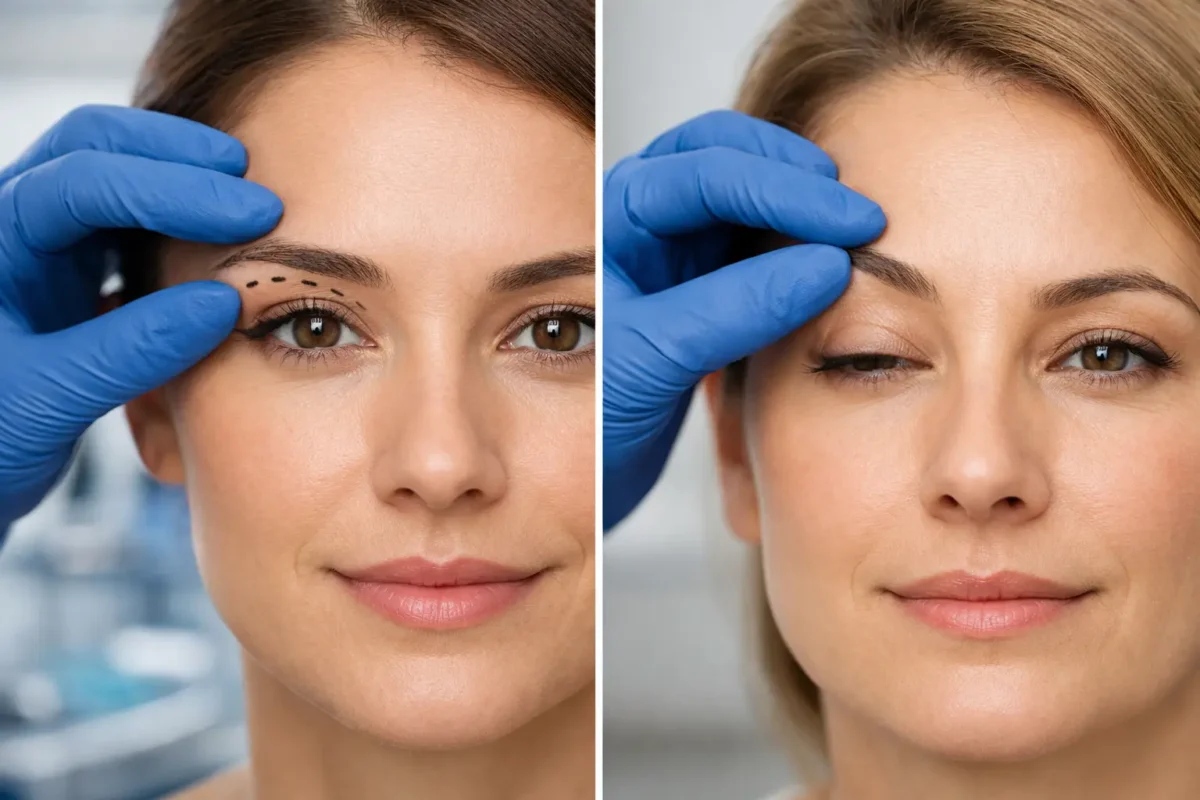
A heavy or tired-looking upper eyelid is not always caused by excess skin. When considering blepharoplasty vs ptosis surgery, the key question is whether the skin is weighing down the eyelid, the eyelid itself sits too low, or both are contributing. Although the procedures are often discussed together, they address different anatomical concerns and can produce very different functional and cosmetic outcomes.
A careful specialist assessment helps distinguish between these possibilities before surgery is planned. This matters not only for appearance, but also for comfort, symmetry and, in some cases, peripheral vision.
Understanding the difference between the procedures
Blepharoplasty is surgery to reshape the tissues around the eyelids. Upper eyelid blepharoplasty commonly removes or repositions excess skin and, where appropriate, small amounts of fat. It can create a more open upper eyelid area and reduce the sense of heaviness caused by loose skin folding over the lid crease.
Ptosis surgery is different. Ptosis describes a low position of the upper eyelid margin itself – the edge of the eyelid where the eyelashes sit. The eyelid may cover more of the coloured part of the eye than it should, making one or both eyes appear smaller or less alert. Ptosis repair lifts the eyelid margin by tightening or adjusting the muscles that raise the eyelid.
The distinction can be subtle when looking in the mirror. A person may describe droopy eyelids, but the cause may be skin laxity, a low eyelid margin, a low eyebrow position, or a combination of these factors. Treating only one issue when another is present may leave the patient disappointed that the eyes still feel heavy or asymmetrical.
What upper blepharoplasty treats
Upper blepharoplasty is usually considered when excess upper eyelid skin creates folds, obscures the natural crease or rests on the eyelashes. These changes often develop gradually with ageing as the skin loses elasticity, although some people naturally have fuller or more hooded upper eyelids from an earlier age.
The aim is not simply to remove as much skin as possible. The eyelids protect the eyes, distribute tears and contribute significantly to facial expression. A conservative, well-planned approach preserves a natural appearance and reduces the risk of an over-operated look or difficulty closing the eyes.
For some patients, upper blepharoplasty is primarily cosmetic. For others, loose skin may interfere with the upper field of vision, particularly when reading, driving or looking upwards. The degree of functional impact should be assessed alongside the appearance of the eyelids.
What ptosis surgery treats
Ptosis surgery is designed to improve the height and contour of the upper eyelid margin. The specific technique depends on the cause and severity of the ptosis, the strength of the eyelid lifting muscle, and the patient’s eye health.
Acquired ptosis commonly occurs when the tendon of the levator muscle stretches or becomes detached over time. It may also be associated with previous eye surgery, contact lens wear, trauma or certain neurological and muscular conditions. Some people have had ptosis since childhood.
Because a low eyelid can occasionally signal an underlying medical problem, new or rapidly changing ptosis should be assessed promptly. Sudden eyelid drooping, particularly if accompanied by double vision, unequal pupils, headache, facial weakness or other neurological symptoms, requires urgent medical attention rather than a cosmetic consultation.
Blepharoplasty vs ptosis surgery: clues to look for
A simple observation can offer a useful clue. Look at the position of the eyelashes and eyelid edge in relation to the pupil. If the eyelid margin appears low and covers part of the pupil, ptosis may be present. If the lid margin is in a good position but loose skin hangs over it, blepharoplasty may be more relevant.
However, self-assessment has limits. Many people unconsciously lift their eyebrows to compensate for heavy upper lids. This can make the forehead feel strained and may disguise the true level of the eyelid margin. When the brow relaxes during an examination, ptosis or brow descent may become more apparent.
Asymmetry is another common concern. Mild differences between the two eyelids are normal, but a noticeable difference in lid height can often be addressed with ptosis repair. Excess skin can also be uneven from side to side, and an upper blepharoplasty plan can be tailored accordingly. Perfect symmetry is not always anatomically possible, but careful measurements and realistic planning can improve balance.
Why a detailed assessment comes first
Eyelid surgery should begin with a full facial and eye-area assessment, not a decision based on a single photograph. Your surgeon will consider eyelid height, skin quality, fat prominence, eyebrow position, lid closure, tear film symptoms and the strength of the muscles that elevate the lids. Previous surgery, contact lens use, dry eye, medications and relevant medical conditions are also discussed.
Photographs may be taken to support planning and to document pre-existing asymmetry. Where vision is affected, visual field testing may be appropriate. Patients who have had laser eye treatment, cataract surgery or other ophthalmic procedures may need their surgical timing and ocular health considered carefully.
This assessment may show that one procedure is clearly indicated. It may also show that a combined operation is likely to give the most balanced result. For example, a patient with both true ptosis and excess upper lid skin may benefit from ptosis correction followed by a conservative blepharoplasty during the same operation. In other cases, treating the ptosis first is preferable so the amount of skin to remove can be judged more accurately.
What surgery and recovery involve
Upper blepharoplasty is commonly performed through a fine incision placed within the natural upper eyelid crease. Excess skin is removed conservatively, and the incision is closed with delicate sutures. The operation may be performed under local anaesthetic with sedation or under general anaesthetic, depending on the treatment plan and patient preference.
Ptosis repair may be carried out through an incision in the eyelid crease, or in selected cases from the inside of the eyelid. The surgeon adjusts the structures responsible for lifting the lid and checks height and contour during the procedure where appropriate. Ptosis surgery requires precise planning because small changes in eyelid height can be visible.
Following either operation, bruising, swelling, tightness and temporary dryness are common. Cold compresses, prescribed eye care and head elevation can help during the early recovery period. Many patients feel comfortable returning to social activities after around one to two weeks, although residual swelling can take longer to settle. Eyelid position after ptosis surgery may continue to refine over several weeks.
Contact lenses, eye make-up, driving and exercise should be resumed only when your surgeon advises it is safe to do so. Clear post-operative guidance and access to the surgical team are particularly reassuring during eyelid recovery, when even normal swelling can look more dramatic than expected.
Results, limitations and potential risks
The goal of eyelid surgery is a rested, balanced and natural-looking eye area, not a completely different face. Blepharoplasty can reduce hooding and improve definition, while ptosis surgery can raise a low eyelid margin and, where relevant, improve the upper visual field. Neither procedure stops further age-related change in the skin, brows or eyelid tissues.
All surgery carries risks. These include bleeding, infection, scarring, dry or irritated eyes, temporary blurred vision, asymmetry and the need for revision surgery. With ptosis repair, there can be under-correction, over-correction or contour irregularity, and the eyelid height may change as swelling resolves. With blepharoplasty, excessive skin removal can affect eyelid closure, which is why conservative planning is essential.
Patients with significant dry eye, certain thyroid eye conditions, facial nerve weakness or previous eyelid surgery may need additional precautions. Honest discussion of these factors is part of safe, informed consent.
Choosing the right approach for your eyes
The most suitable procedure depends on your anatomy, symptoms and priorities. If the concern is mainly folded skin and heaviness, upper blepharoplasty may be appropriate. If the eyelid edge sits low, ptosis repair may be needed. When both concerns are present, a combined approach may offer the most harmonious improvement.
A consultation with a specialist plastic surgeon provides the opportunity to discuss what you see, what you feel and what you would like to change. At Stanley Loo’s practice, surgical recommendations are based on individual assessment, clear explanation and a plan that gives equal weight to appearance, eye comfort and long-term safety.
The right eyelid procedure should feel considered rather than rushed. A careful assessment can turn a general concern about droopy lids into a treatment plan that respects the function of the eyes and the character of your face.