
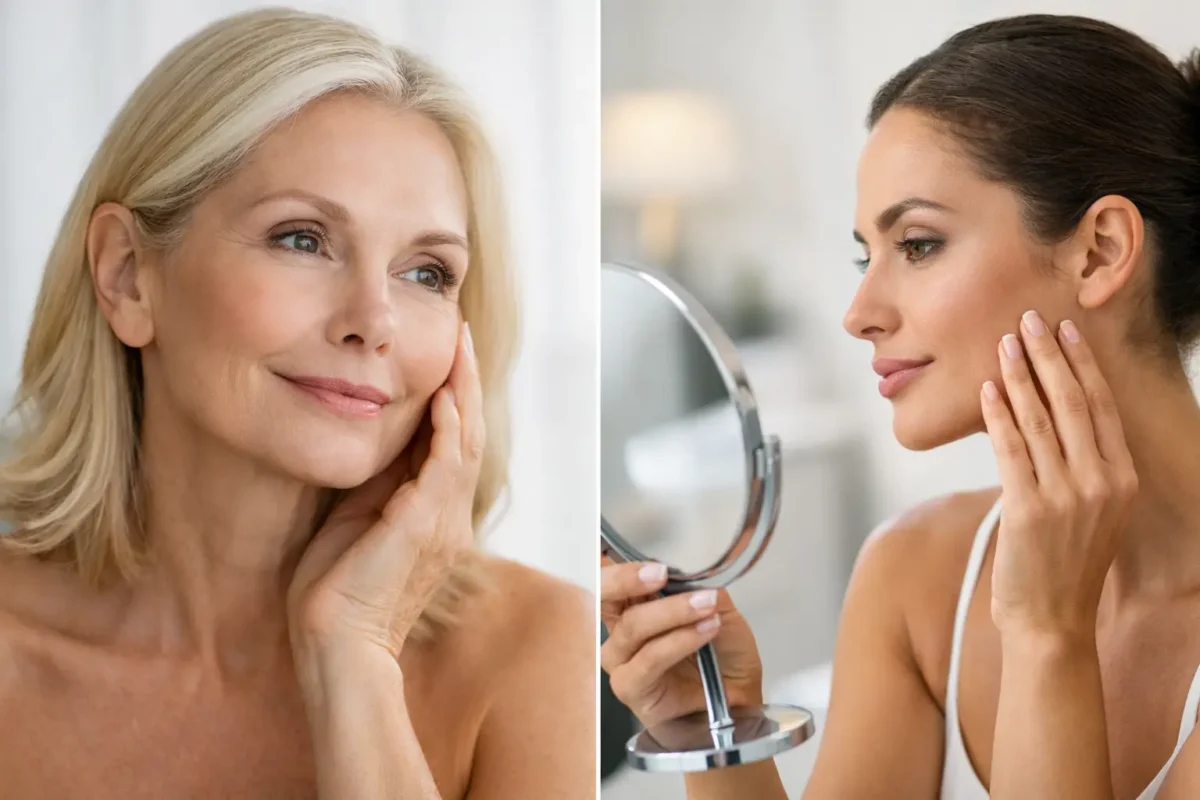
A facelift is not simply a treatment for looking older. It is a surgical option for people whose facial changes no longer reflect how rested, well or confident they feel. The best candidates for facelift surgery are usually seeking a natural restoration of facial definition, rather than a dramatic change to who they are.
A well-planned facelift, also known as rhytidectomy, can improve loose skin and deeper tissue descent through the cheeks, jawline and neck. However, suitability is individual. Skin quality, general health, smoking status, goals and willingness to recover properly all matter as much as age.
What a Facelift Can Realistically Improve
Facial ageing is not caused by one factor alone. Over time, the skin loses elasticity, facial fat changes position, and the supporting tissues of the face descend. This can lead to jowls, a less defined jawline, deeper folds around the mouth and looseness in the neck.
A facelift is designed to reposition and support the deeper facial layers, with careful removal or redraping of excess skin where appropriate. This is why a surgical facelift can achieve a more lasting improvement than non-surgical treatments for significant laxity. The aim should be to look refreshed and recognisably yourself, not pulled or overcorrected.
It does not usually address every concern in the upper face. Fine lines, sun damage, uneven skin texture, volume loss and brow position may need different treatments or a separate procedure. Some patients considering a facelift may also benefit from eyelid surgery, neck contouring or fat transfer, but combining procedures should always be considered carefully in light of safety and recovery.
Best Candidates for Facelift Surgery: The Main Considerations
There is no single ideal age for a facelift. Many suitable patients are in their forties, fifties or sixties, while some younger or older people may be appropriate candidates depending on their anatomy and health. The more useful question is whether the changes bothering you can be improved predictably with surgery.
You have noticeable laxity in the lower face or neck
A facelift is often most effective when there is visible descent of the cheeks, jowling, loss of jawline definition or loose neck skin. People with mild early changes may prefer to wait, particularly if their concerns can be managed with less invasive treatment. Conversely, when laxity is more established, a facelift may offer a more meaningful improvement than repeated temporary procedures.
The amount of skin laxity is only part of the assessment. Your surgeon will also consider the position of deeper tissues, neck anatomy, bone structure and the quality of your skin. These features influence the type of facelift recommended and the result that can reasonably be expected.
You are in good general health
Facelift surgery is elective surgery and should be approached with appropriate care. Suitable candidates are generally medically well enough to undergo an anaesthetic and recover safely. Conditions such as poorly controlled diabetes, significant heart or lung disease, bleeding disorders or immune problems do not always rule out surgery, but they require thorough assessment and, in some cases, advice from other treating clinicians.
A consultation should include a detailed medical history, current medications, allergies, previous operations and any tendency towards poor wound healing or excessive scarring. Blood-thinning medicines, certain supplements and anti-inflammatory medication may need to be adjusted before surgery under medical guidance. Never stop prescribed medication without speaking to the doctor who manages it.
You do not smoke or can stop well before surgery
Nicotine is one of the most significant risk factors in facelift surgery. Smoking, vaping and nicotine replacement products can reduce blood flow to the skin, increasing the risk of delayed healing, infection, wound problems and skin loss.
Candidates should be prepared to stop all nicotine products for the period advised by their surgeon before and after the operation. This is not a minor precaution. In some circumstances, continuing nicotine use may mean that surgery should be postponed because the risk is unacceptably high.
Your weight and lifestyle are reasonably stable
A facelift is not a weight-loss procedure. Significant weight gain or loss after surgery can alter facial fullness and affect the longevity of the result. Patients do not need to meet an arbitrary number on the scales, but a stable weight and sustainable lifestyle provide a better foundation for surgical planning and recovery.
Good nutrition, regular movement within your ability, adequate sleep and sensible alcohol intake can all support healing. They are not guarantees of a particular result, but they help your body prepare for surgery and recuperation.
You have realistic, personal reasons for surgery
The strongest motivation for a facelift is usually personal: you feel your appearance no longer matches your energy or self-image, and you would like to address specific changes. It is sensible to bring photographs, identify the areas that concern you and explain what you hope will be different.
A facelift cannot solve relationship difficulties, workplace pressures or a broader sense of dissatisfaction. It also cannot reproduce a photograph from decades earlier. Patients who understand these limits are often better placed to feel satisfied with a natural improvement.
Skin Quality Matters, but It Is Not Everything
People sometimes assume that thin or sun-damaged skin automatically makes them unsuitable for facelift surgery. This is not necessarily the case. Skin quality influences incision planning, the degree of improvement possible and the need for ongoing skincare, but a facelift works primarily by repositioning deeper tissues rather than relying only on skin tightening.
Previous cosmetic treatments, scars, skin cancer surgery and facial procedures should be discussed openly. They may affect blood supply, scar placement and the operation itself. A specialist assessment can determine whether they alter suitability or simply require a modified approach.
Scarring is an unavoidable part of surgical treatment, although facelift incisions are planned carefully around the ear and hairline so they become progressively less noticeable. Healing varies from person to person. Patients need to accept that scars take time to mature and will require protection from sun exposure while they settle.
Who May Need a Different Approach First?
Not everyone concerned about facial ageing needs a facelift immediately. If the primary issue is volume loss rather than loose skin, fat transfer or other non-surgical options may be more relevant. If heavy upper eyelids or brow descent are the main concern, eyelid or brow surgery may be considered instead. A neck procedure alone can occasionally suit someone with good mid-face support but localised neck laxity.
Equally, a facelift may not be advisable until a medical issue is better controlled, nicotine use has stopped, or expectations are clearer. Being advised to wait does not mean your concerns are unimportant. It reflects a safety-first approach and the recognition that good surgical outcomes begin with appropriate timing.
The Importance of Recovery Readiness
A person can be medically suitable for a facelift yet poorly prepared for the practical demands of recovery. Swelling and bruising are expected, particularly in the first two weeks, and it can take several months for the tissues to settle fully. Most people need time away from work and social commitments, although the exact timeframe depends on the procedure and the nature of their work.
You will need to follow instructions on wound care, activity restrictions, sleeping position and follow-up appointments. Arranging help at home for the first few days can be reassuring. It is also wise to avoid scheduling surgery immediately before an important event, as recovery does not follow an exact calendar.
A consultation should include an honest discussion of risks, such as bleeding, infection, nerve injury, asymmetry, altered sensation, scarring and the possibility of revision surgery. These complications are uncommon in appropriately selected patients, but informed consent means understanding them before deciding whether surgery is right for you.
A Specialist Consultation Brings the Decision Into Focus
The value of a facelift consultation is not simply being told yes or no. It is an opportunity to discuss your concerns, examine the facial structures contributing to them, and understand the benefits and limitations of available options. At Stanley Loo Plastic Surgery, this conversation is centred on an individual treatment plan, careful preparation and clear post-operative guidance.
Bring your medical information, a list of medications and questions about downtime, scars, anaesthetic and aftercare. A good decision should feel considered rather than rushed. The right time for facelift surgery is when the procedure addresses a genuine concern, your health and circumstances support safe recovery, and you feel fully informed about the journey ahead.