A heavy upper eyelid is not always an eyelid problem. In the discussion of blepharoplasty vs brow lift, the most useful question is not which operation sounds more appealing, but where the heaviness actually begins. For some people, excess upper-eyelid skin is the main concern. For others, descent of the brow has pushed skin downwards and changed the shape of the upper face. The distinction matters because treating the correct area produces a more natural, lasting result.
Both procedures can create a fresher, less tired appearance, and both should be considered carefully with a specialist plastic surgeon. They are not interchangeable treatments, however. A thorough assessment considers your brow position, eyelid skin, eye shape, facial proportions, vision, medical history and the changes you would genuinely like to see.
What does upper-eyelid blepharoplasty treat?
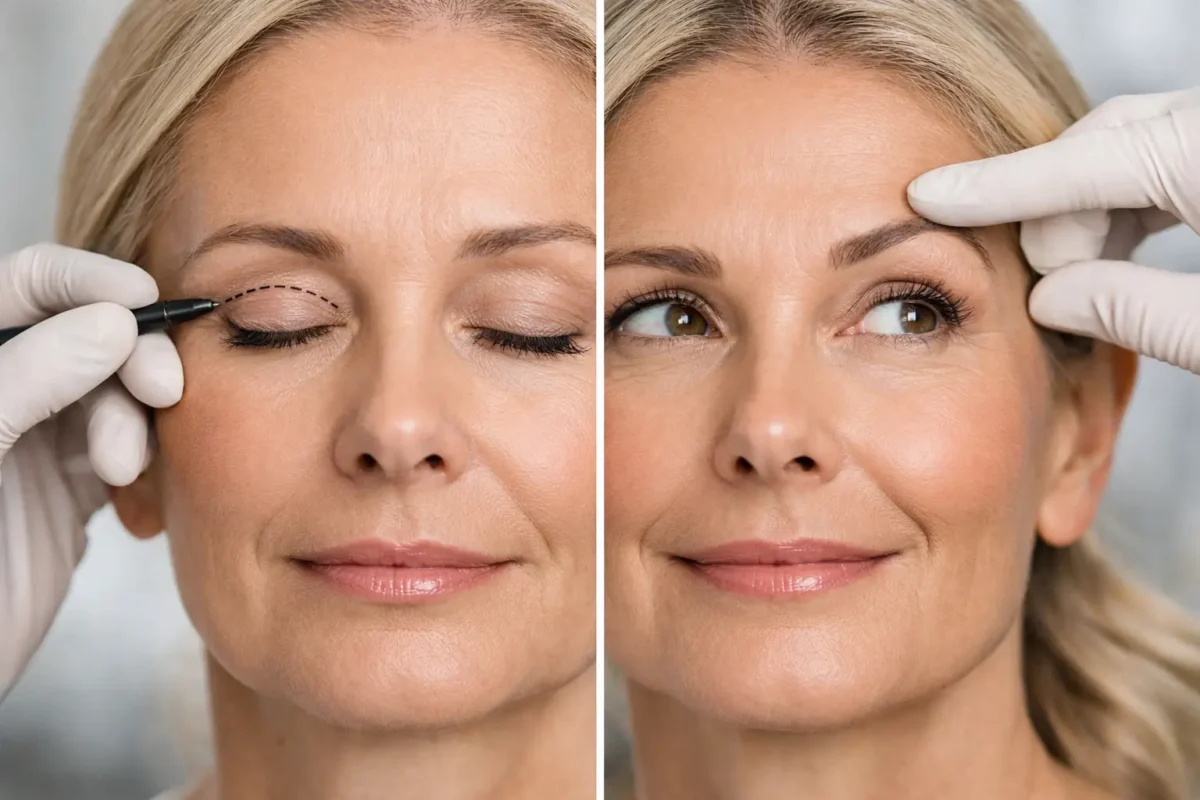
Upper-eyelid blepharoplasty is surgery to remove or reposition excess skin and, where appropriate, a small amount of fat from the upper eyelids. It is often chosen when folds of skin make the lids look hooded, obscure the eyelid crease, interfere with make-up application or sit close to the lashes.
The incision is usually placed in the natural upper-eyelid crease, so the resulting scar generally becomes discreet as it matures. The procedure can be performed for cosmetic reasons, but in some patients substantial upper-lid skin can also affect the superior visual field. If functional impairment is suspected, formal visual-field testing may form part of the assessment.
Blepharoplasty is particularly suitable when the brow sits in a favourable position but there is genuine skin redundancy on the eyelid. It can refine the upper-lid contour without changing the position of the brow itself. A conservative approach is essential. Removing too much skin can make eyelid closure uncomfortable and may create an unnaturally hollow or over-operated appearance.
What does a brow lift treat?
A brow lift, also called a forehead lift, raises a brow that has descended over time. Brow descent can make the upper eyelids appear heavy even where there is relatively little excess eyelid skin. It may also flatten or lower the natural arch of the brow, create a tired expression, or lead a person to unconsciously lift their forehead to see more clearly.
The technique is selected according to the degree and pattern of brow descent, hairline position, forehead height, skin quality and the desired amount of lift. Incisions may be concealed in the hair-bearing scalp, at or near the hairline, or in selected cases above the brow. Each approach has particular advantages and limitations, including the possible effect on hairline position and the visibility of scars.
A brow lift addresses the upper third of the face rather than the eyelid alone. For the right patient, that can restore a more open eye area while preserving the natural relationship between the brow and eyelid. It does not remove lower-eyelid bags, and it is not intended to erase every forehead line or expression.
Blepharoplasty vs brow lift: the key differences
The clearest difference is anatomical. Blepharoplasty treats excess tissue in the eyelid. A brow lift treats brow position and the forehead tissues that support it. Although both may make the eyes look more open, they work in different places.
The signs can overlap. A low brow may create apparent hooding, especially at the outer upper eyelid. Conversely, someone may have a well-positioned brow but enough upper-lid skin to benefit from blepharoplasty. There are also patients with both concerns, for whom a combined approach may provide a more balanced result than either operation alone.
Age alone does not determine the answer. Brow descent, skin laxity and facial anatomy vary greatly between individuals. Some younger adults have naturally hooded eyelids or low-set brows, while some older patients retain good brow position and need only conservative eyelid surgery.
A common concern is whether upper-eyelid surgery will cause the brow to fall. In some people, particularly those who have been habitually raising their forehead to compensate for heavy lids, the brow may relax after blepharoplasty. This is one reason careful pre-operative examination is so valuable. Your surgeon will assess the brow at rest rather than relying only on photographs taken with the forehead muscles active.
How a specialist assessment guides the decision
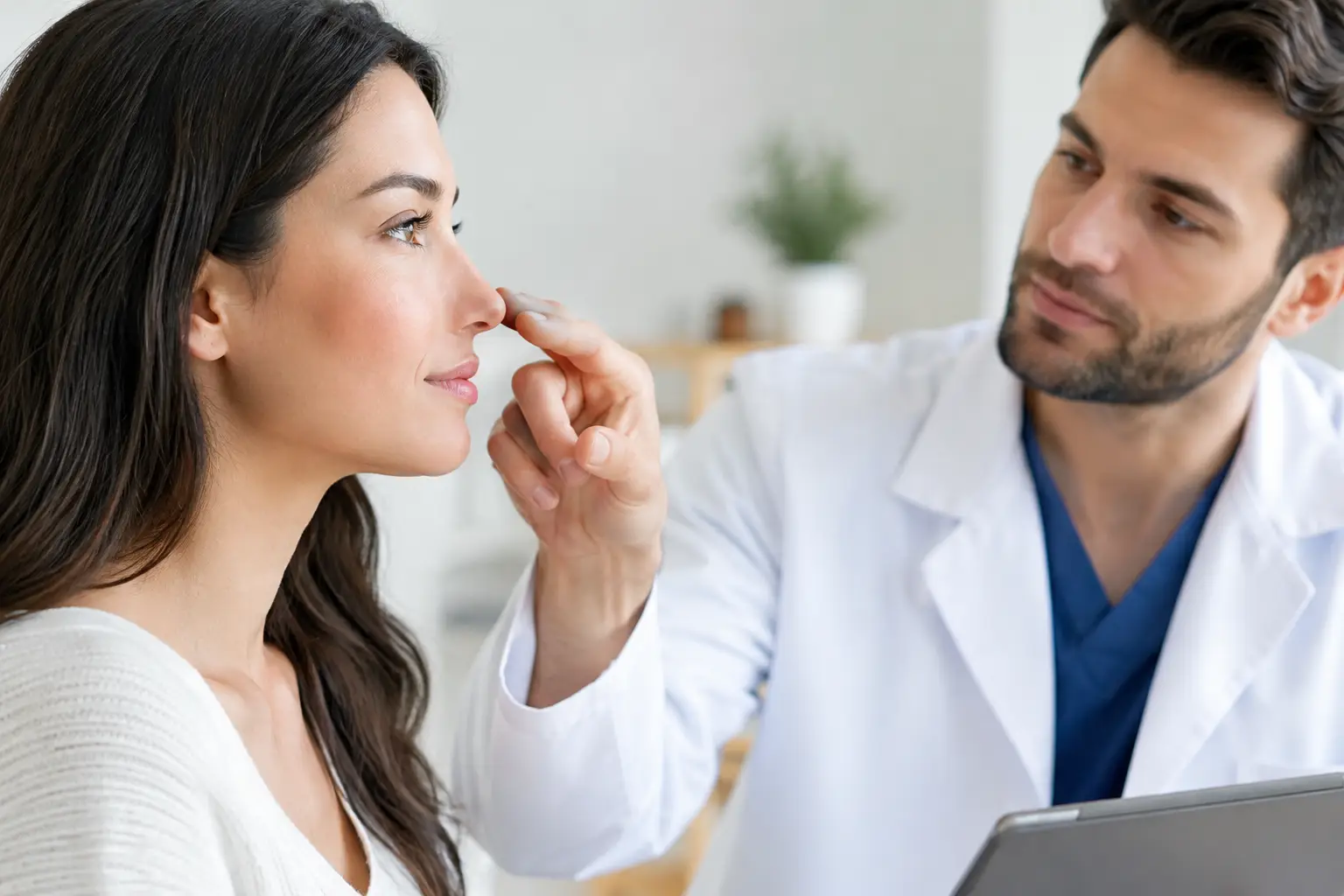
A consultation should be detailed and unhurried. Your surgeon will discuss what bothers you most, but will also examine the full upper-face structure. This includes brow height and shape, eyelid crease position, the amount and distribution of skin excess, fat prominence, eyelid tone, eye dryness, symmetry and previous surgery.
Photographs are commonly used for planning and for an objective record. If you have visual symptoms, frequent forehead tension from lifting the brows, dry eyes, thyroid eye disease, glaucoma, previous laser eye surgery or a history of eyelid procedures, these details should be raised early. They may affect the recommended technique or whether surgery is appropriate.
The goal is not to create a standardised brow shape or dramatically change your expression. Good upper-face surgery respects sex, ethnicity, facial balance and the features that make you recognisable. For patients considering Asian blepharoplasty, crease design and eyelid anatomy require particularly individualised discussion.
At Stanley Loo, consultation-led planning is centred on understanding the concern beneath the visible heaviness, explaining realistic options and allowing time for informed decision-making. If surgery is not likely to meet your aims safely or predictably, that should be said clearly.
Recovery and practical considerations
Upper-eyelid blepharoplasty is usually associated with bruising and swelling around the eyes for the first one to two weeks. Stitches, where used, are commonly removed after around a week. Most people feel comfortable returning to light social activities once bruising has settled sufficiently, although residual swelling and scar maturation continue for several months.
Brow-lift recovery depends more on the technique used. Swelling, bruising, forehead tightness, temporary altered sensation and scalp tenderness can occur. Incisions need ongoing care, and patients should avoid strenuous activity until their surgeon advises that it is safe. A brow lift may involve a longer period before the forehead feels fully settled than upper-eyelid surgery alone.
Neither operation should be planned around an exact deadline such as a wedding or major event without allowing generous healing time. Early swelling can be uneven, and subtle changes continue as tissues settle. Your consultation should cover time away from work, driving, exercise, make-up, sleeping position and follow-up appointments so that recovery is manageable in real life.
Risks and realistic expectations
All surgery carries risks. With blepharoplasty, these include bleeding, infection, asymmetry, visible scarring, dry or irritated eyes, temporary blurred vision, difficulty closing the eyes and the possibility of under- or over-correction. Serious complications are uncommon, but must be understood before proceeding.
Brow-lift risks include altered scalp sensation, hair loss around incision areas, asymmetry, scar concerns, prolonged swelling, changes in hairline position and the possibility that the degree of lift settles with time. Individual factors such as smoking, certain medications, diabetes, blood-clotting issues and previous surgery can increase risk or alter healing.
Photographs can help communicate a preferred aesthetic, but they cannot guarantee a result. The safest aim is an improvement that looks rested and proportionate, not a result that removes all signs of age or reproduces another person’s anatomy.
When combining procedures may make sense
A combined brow lift and upper blepharoplasty may be considered when brow descent and true eyelid skin excess are both significant. Combining procedures can allow the surgeon to address the complete cause of upper-lid heaviness in one operative plan. It also means a single recovery period, though the operation may be more involved and requires a careful discussion of risks, costs and downtime.
Not every patient benefits from combining surgery. If lifting the brow reveals that there is little remaining eyelid excess, blepharoplasty may be unnecessary. Equally, if the brow is well supported, a brow lift may add more intervention than is needed. Choosing the smallest appropriate procedure is often the soundest approach.
The right choice begins with an in-person assessment, not a mirror test or a single photograph. When the anatomy, expectations and recovery plan are understood together, you can decide with greater confidence whether eyelid surgery, a brow lift, a combined procedure or no surgery at all is the most appropriate path.