
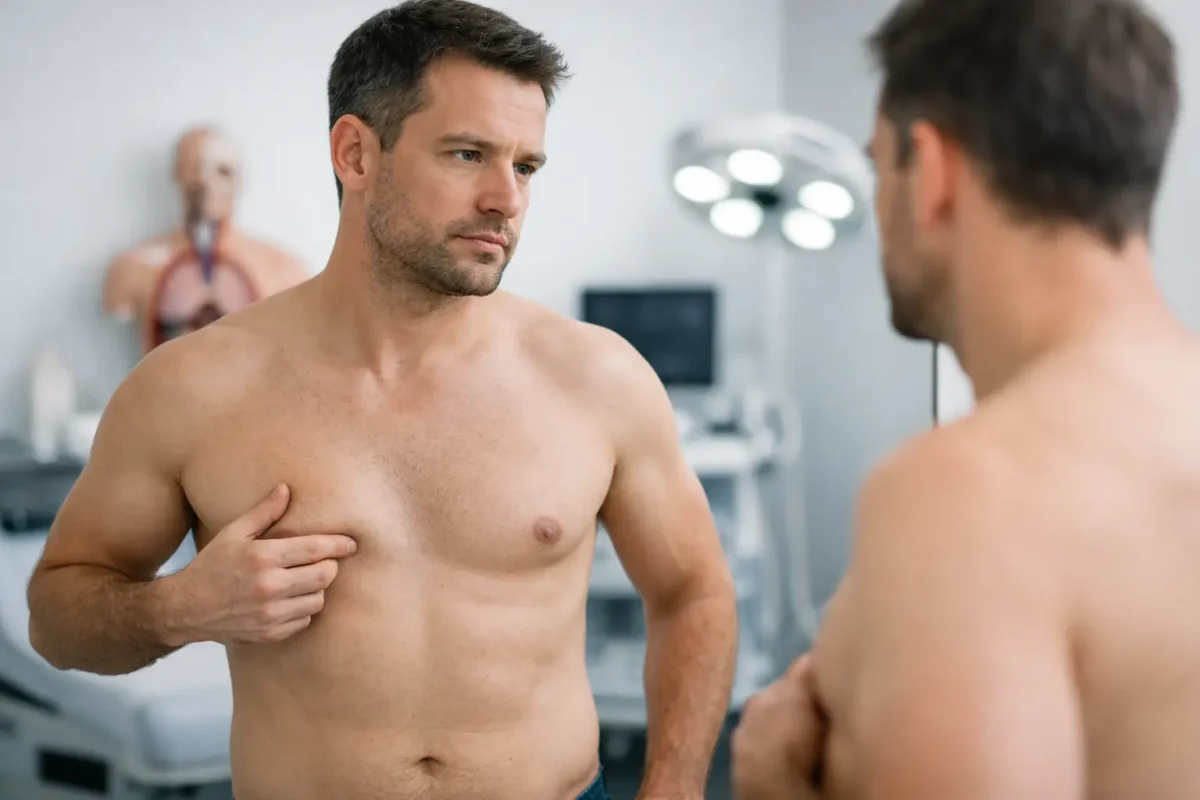
A fitted T-shirt, a day at the beach or changing at the gym can become situations to avoid when excess breast tissue affects the chest. For many men, this is not a minor cosmetic concern. It can have a lasting effect on confidence, clothing choices and comfort in social settings. So, is gynaecomastia surgery worth it? It can be, but only when the diagnosis, expectations and timing are right for the individual.
Gynaecomastia surgery is designed to improve chest contour by removing excess glandular breast tissue, fatty tissue, and sometimes loose skin. It is a highly individual decision rather than a procedure that should be pursued because of pressure from others or an unrealistic idea of perfection. A careful consultation with a specialist plastic surgeon is the right place to establish what is causing the fullness and whether surgery is likely to offer a worthwhile, lasting improvement.
What gynaecomastia surgery can and cannot change
Gynaecomastia is the development of firm glandular tissue beneath or around the nipple and areola. It may affect one side or both, and the degree of asymmetry can vary. Hormonal changes, certain medicines, alcohol or recreational drug use, weight changes and some medical conditions can contribute. In some cases, there is no clearly identifiable cause.
Not every prominent chest is caused by true gynaecomastia. Some men have mainly fatty fullness, sometimes called pseudogynaecomastia, which may respond well to weight management or liposuction. Others have a combination of fat and glandular tissue. Firm glandular tissue is unlikely to disappear with exercise alone, even in men who are otherwise lean and physically active.
Surgery can create a flatter, more masculine chest contour and reduce the prominence or puffiness of the nipple area. It can also address asymmetry where this is practical. However, it cannot guarantee complete symmetry, remove every trace of a scar, or change the natural structure of the chest muscles and ribcage. A good outcome is one that looks proportionate and natural in your body, not one that pursues an artificial ideal.
Is gynaecomastia surgery worth it after considering the benefits?
The value of surgery is often less about a measurement of the chest and more about how a person feels day to day. Patients may feel more comfortable wearing close-fitting clothes, swimming, exercising or being intimate with a partner. If chest fullness has been a source of self-consciousness for years, the psychological relief from no longer trying to conceal it can be significant.
There are practical benefits too. When glandular tissue is the main cause, surgical excision offers a more definitive correction than diet and training can usually provide. For men whose gynaecomastia has remained stable after puberty or persisted despite a healthy weight, this can make surgery a sensible option.
That said, surgery is not automatically the best first step. Recent breast enlargement, pain, nipple discharge, a new lump or changes on one side require proper medical assessment before cosmetic treatment is considered. It may be appropriate to review medication, hormonal health or an underlying condition with a GP or relevant specialist. Treating a reversible cause first can prevent unnecessary surgery and may reduce the chance of recurrence.
Who is most likely to feel satisfied with the decision?
The strongest candidates are generally adults in good overall health whose chest shape has been stable for several months. They are at or close to a sustainable weight, do not smoke or are prepared to stop before and after surgery, and understand that recovery takes time. They are also choosing treatment for themselves.
Weight stability matters. Significant weight gain after surgery can increase fatty fullness in the chest, while substantial weight loss may reveal looseness of the skin that was not obvious beforehand. Surgery does not replace a healthy lifestyle, but it can be a very effective finishing step when lifestyle measures have already taken a person as far as they can.
Emotional readiness is equally relevant. It is reasonable to want a meaningful improvement, but not reasonable to expect surgery to solve every confidence issue or relationship difficulty. A specialist consultation should feel open and unhurried enough to discuss your reasons for considering surgery, your concerns about scars and recovery, and the outcome you would regard as successful.
What the operation usually involves
The technique depends on the tissue present, skin quality and the size of the chest. Where excess fat is a significant feature, liposuction may be used through very small incisions to refine the contour. When there is dense glandular tissue, this is usually removed through an incision placed discreetly around the edge of the areola.
For more pronounced gynaecomastia, particularly after major weight loss or where skin elasticity is poor, skin removal and repositioning of the nipple may be needed. This gives the surgeon greater control over shape but involves longer scars. The trade-off between scar length and chest contour should be discussed clearly before committing to surgery.
The procedure is commonly performed under general anaesthetic. It is often day surgery, although individual arrangements depend on the extent of treatment, your health and the support available at home. Your surgeon should explain the planned technique, the likely scar pattern and whether a change in approach might be necessary during the operation for safety or balance.
Recovery: the part that deserves proper planning
Most patients can walk around gently on the day of surgery and return to light daily activities within a few days. Bruising, swelling, tightness and temporary numbness are normal in the early stage. A compression garment is usually worn to support healing and help the skin settle against the new contour.
Desk-based work may be possible after around one to two weeks, depending on comfort and the nature of your role. Heavy lifting, strenuous gym work and chest training need to wait until your surgeon advises it is safe, often for several weeks. Rushing back to exercise can increase swelling and compromise healing.
The early appearance is not the final result. Swelling can take several months to resolve fully, and scars continue to mature over many months. Follow-up care matters because it provides an opportunity to check healing, answer questions and give tailored advice about garments, activity and scar management.
Risks and limitations to weigh up honestly
Gynaecomastia surgery is generally safe when performed by an appropriately qualified specialist in a suitable facility, but no operation is risk-free. Potential complications include bleeding, infection, fluid collection, delayed wound healing, changes in nipple sensation, contour irregularity, asymmetry and noticeable scarring. Rarely, reduced blood supply can affect the nipple or surrounding skin, particularly when larger skin-reduction procedures are required.
A revision procedure is occasionally needed if the contour does not settle as expected or if asymmetry remains. This does not necessarily mean the original operation was poorly performed. Human chests are naturally asymmetrical, tissues heal differently from side to side, and surgery has to balance correction with safety.
Smoking, vaping products containing nicotine and certain health conditions can increase surgical and healing risks. Being fully honest about your medical history, medicines and supplements allows the surgical team to plan safely. Good care is not about promising a risk-free procedure. It is about identifying risks early, reducing them where possible and ensuring you understand them before giving consent.
How to decide whether the cost represents value
The financial cost of private surgery is an important part of the decision, but it should not be considered separately from surgical expertise, anaesthetic care, facility standards and post-operative follow-up. A low initial quote may not represent the same level of assessment, theatre care or aftercare as a comprehensive specialist service.
During a consultation, ask what the quoted fee includes, whether pathology assessment is required for removed tissue, how follow-up is arranged and what support is available if you have concerns during recovery. It is also sensible to ask about the surgeon’s experience with cases similar to yours and to look at appropriate before-and-after examples where available.
For some men, the improvement in comfort and confidence makes the expense feel justified for many years. For others, particularly if the concern is mild, recent or related to a treatable underlying cause, delaying surgery can be the better decision. There is no correct answer that applies to everyone.
The most useful next step is a consultation focused on clarity rather than persuasion. When you understand the cause of your chest fullness, the likely surgical plan, the scar and recovery trade-offs, and the limits of what can be achieved, you can decide with confidence whether treatment feels right for you.