Categories
Breast Surgery Cosmetic Surgery

Is Gynaecomastia Surgery Worth It for You?

https://plasticsurgerynz.org/is-gynaecomastia-surgery-worth-it/
August 25, 2026 - Stanley Loo -A fitted T-shirt, a day at the beach or changing at the gym

A fitted T-shirt, a day at the beach or changing at the gym can become situations to avoid when excess breast tissue affects the chest. For many men, this is not a minor cosmetic concern. It can have a lasting effect on confidence, clothing choices and comfort in social settings. So, is gynaecomastia surgery worth it? It can be, but only when the diagnosis, expectations and timing are right for the individual.

Gynaecomastia surgery is designed to improve chest contour by removing excess glandular breast tissue, fatty tissue, and sometimes loose skin. It is a highly individual decision rather than a procedure that should be pursued because of pressure from others or an unrealistic idea of perfection. A careful consultation with a specialist plastic surgeon is the right place to establish what is causing the fullness and whether surgery is likely to offer a worthwhile, lasting improvement.

What gynaecomastia surgery can and cannot change

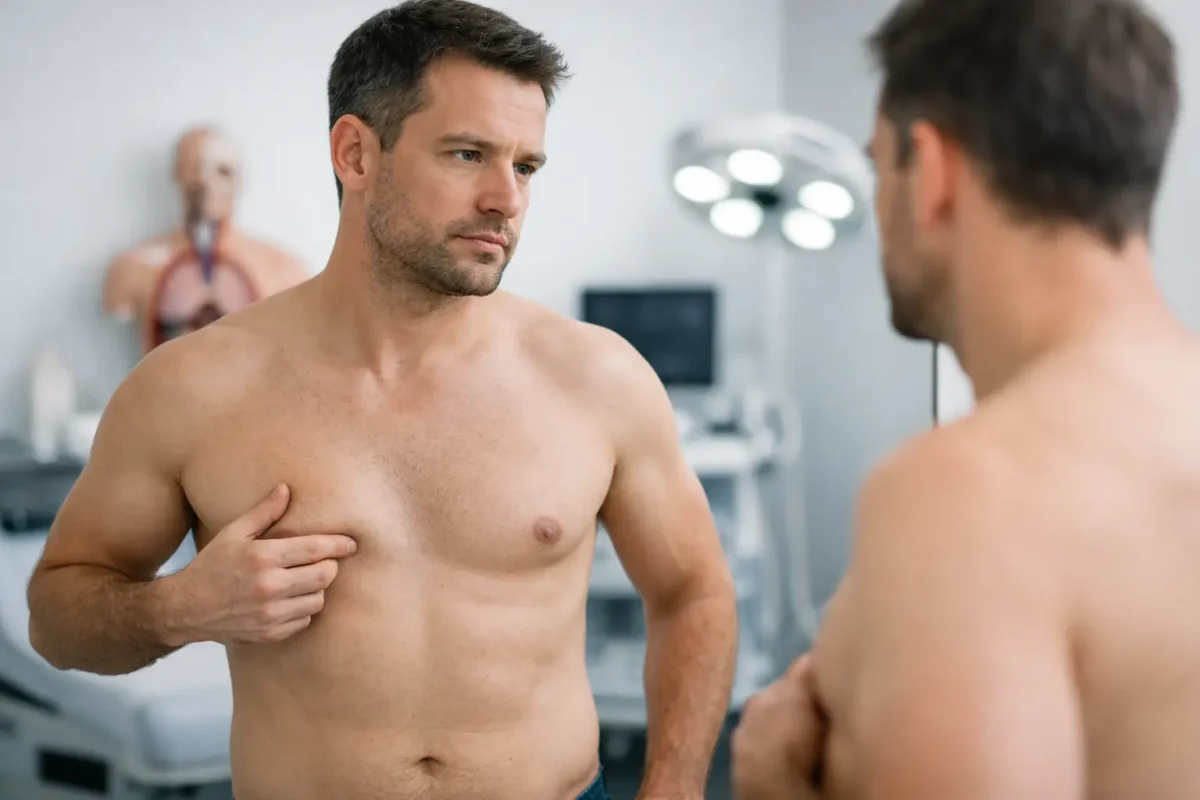
Gynaecomastia is the development of firm glandular tissue beneath or around the nipple and areola. It may affect one side or both, and the degree of asymmetry can vary. Hormonal changes, certain medicines, alcohol or recreational drug use, weight changes and some medical conditions can contribute. In some cases, there is no clearly identifiable cause.

Not every prominent chest is caused by true gynaecomastia. Some men have mainly fatty fullness, sometimes called pseudogynaecomastia, which may respond well to weight management or liposuction. Others have a combination of fat and glandular tissue. Firm glandular tissue is unlikely to disappear with exercise alone, even in men who are otherwise lean and physically active.

Surgery can create a flatter, more masculine chest contour and reduce the prominence or puffiness of the nipple area. It can also address asymmetry where this is practical. However, it cannot guarantee complete symmetry, remove every trace of a scar, or change the natural structure of the chest muscles and ribcage. A good outcome is one that looks proportionate and natural in your body, not one that pursues an artificial ideal.

Is gynaecomastia surgery worth it after considering the benefits?

The value of surgery is often less about a measurement of the chest and more about how a person feels day to day. Patients may feel more comfortable wearing close-fitting clothes, swimming, exercising or being intimate with a partner. If chest fullness has been a source of self-consciousness for years, the psychological relief from no longer trying to conceal it can be significant.

There are practical benefits too. When glandular tissue is the main cause, surgical excision offers a more definitive correction than diet and training can usually provide. For men whose gynaecomastia has remained stable after puberty or persisted despite a healthy weight, this can make surgery a sensible option.

That said, surgery is not automatically the best first step. Recent breast enlargement, pain, nipple discharge, a new lump or changes on one side require proper medical assessment before cosmetic treatment is considered. It may be appropriate to review medication, hormonal health or an underlying condition with a GP or relevant specialist. Treating a reversible cause first can prevent unnecessary surgery and may reduce the chance of recurrence.

Who is most likely to feel satisfied with the decision?

The strongest candidates are generally adults in good overall health whose chest shape has been stable for several months. They are at or close to a sustainable weight, do not smoke or are prepared to stop before and after surgery, and understand that recovery takes time. They are also choosing treatment for themselves.

Weight stability matters. Significant weight gain after surgery can increase fatty fullness in the chest, while substantial weight loss may reveal looseness of the skin that was not obvious beforehand. Surgery does not replace a healthy lifestyle, but it can be a very effective finishing step when lifestyle measures have already taken a person as far as they can.

Emotional readiness is equally relevant. It is reasonable to want a meaningful improvement, but not reasonable to expect surgery to solve every confidence issue or relationship difficulty. A specialist consultation should feel open and unhurried enough to discuss your reasons for considering surgery, your concerns about scars and recovery, and the outcome you would regard as successful.

What the operation usually involves

The technique depends on the tissue present, skin quality and the size of the chest. Where excess fat is a significant feature, liposuction may be used through very small incisions to refine the contour. When there is dense glandular tissue, this is usually removed through an incision placed discreetly around the edge of the areola.

For more pronounced gynaecomastia, particularly after major weight loss or where skin elasticity is poor, skin removal and repositioning of the nipple may be needed. This gives the surgeon greater control over shape but involves longer scars. The trade-off between scar length and chest contour should be discussed clearly before committing to surgery.

The procedure is commonly performed under general anaesthetic. It is often day surgery, although individual arrangements depend on the extent of treatment, your health and the support available at home. Your surgeon should explain the planned technique, the likely scar pattern and whether a change in approach might be necessary during the operation for safety or balance.

Recovery: the part that deserves proper planning

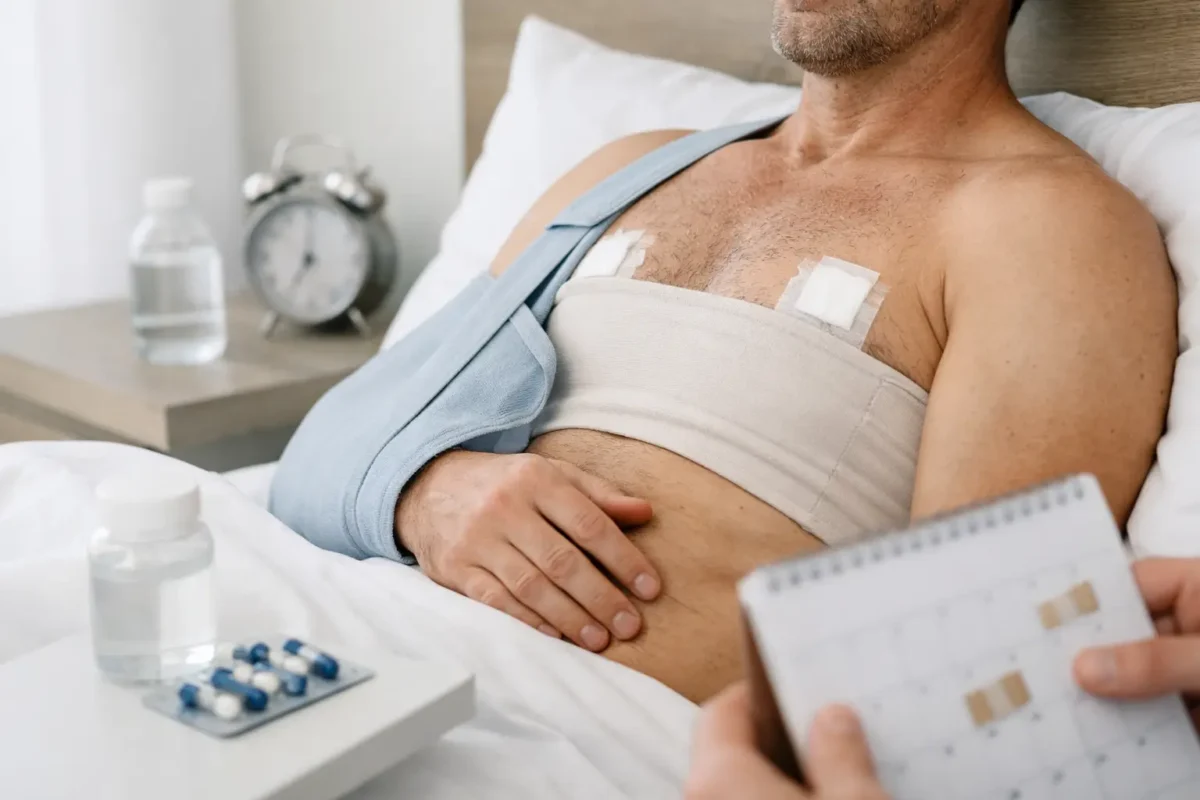
Most patients can walk around gently on the day of surgery and return to light daily activities within a few days. Bruising, swelling, tightness and temporary numbness are normal in the early stage. A compression garment is usually worn to support healing and help the skin settle against the new contour.

Desk-based work may be possible after around one to two weeks, depending on comfort and the nature of your role. Heavy lifting, strenuous gym work and chest training need to wait until your surgeon advises it is safe, often for several weeks. Rushing back to exercise can increase swelling and compromise healing.

The early appearance is not the final result. Swelling can take several months to resolve fully, and scars continue to mature over many months. Follow-up care matters because it provides an opportunity to check healing, answer questions and give tailored advice about garments, activity and scar management.

Risks and limitations to weigh up honestly

Gynaecomastia surgery is generally safe when performed by an appropriately qualified specialist in a suitable facility, but no operation is risk-free. Potential complications include bleeding, infection, fluid collection, delayed wound healing, changes in nipple sensation, contour irregularity, asymmetry and noticeable scarring. Rarely, reduced blood supply can affect the nipple or surrounding skin, particularly when larger skin-reduction procedures are required.

A revision procedure is occasionally needed if the contour does not settle as expected or if asymmetry remains. This does not necessarily mean the original operation was poorly performed. Human chests are naturally asymmetrical, tissues heal differently from side to side, and surgery has to balance correction with safety.

Smoking, vaping products containing nicotine and certain health conditions can increase surgical and healing risks. Being fully honest about your medical history, medicines and supplements allows the surgical team to plan safely. Good care is not about promising a risk-free procedure. It is about identifying risks early, reducing them where possible and ensuring you understand them before giving consent.

How to decide whether the cost represents value

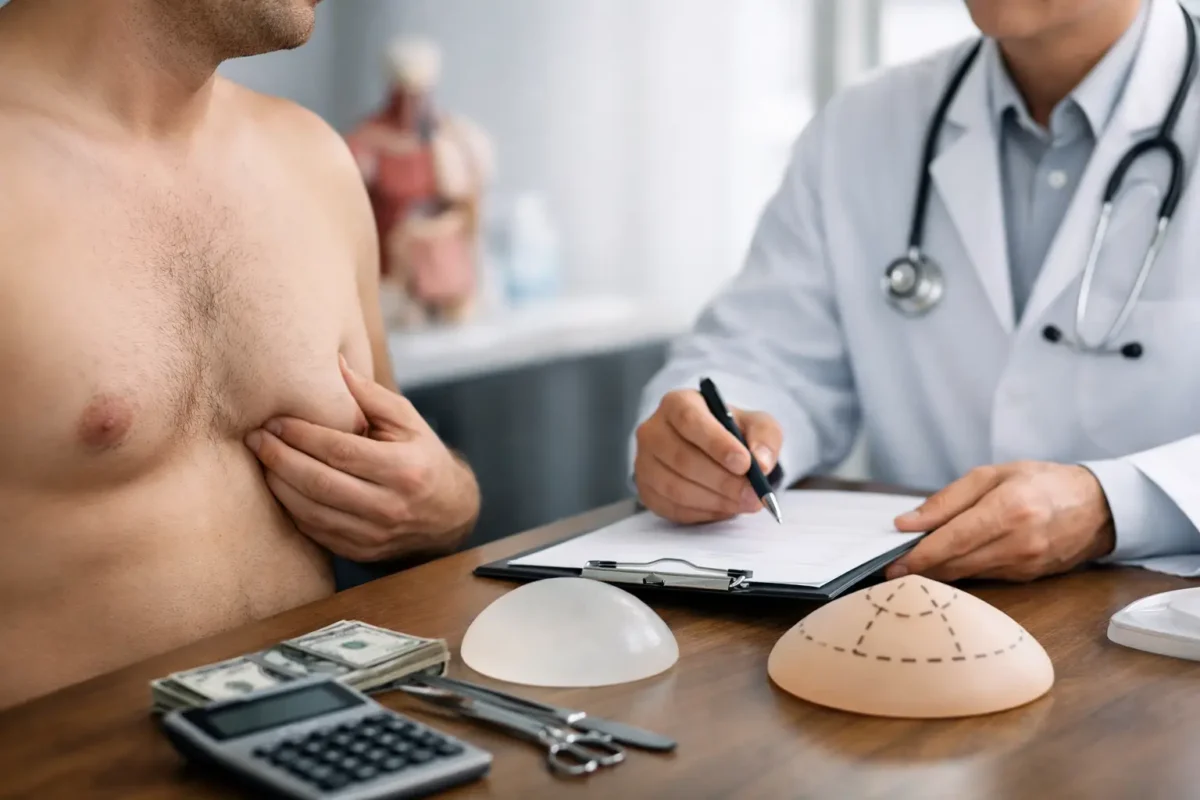
The financial cost of private surgery is an important part of the decision, but it should not be considered separately from surgical expertise, anaesthetic care, facility standards and post-operative follow-up. A low initial quote may not represent the same level of assessment, theatre care or aftercare as a comprehensive specialist service.

During a consultation, ask what the quoted fee includes, whether pathology assessment is required for removed tissue, how follow-up is arranged and what support is available if you have concerns during recovery. It is also sensible to ask about the surgeon’s experience with cases similar to yours and to look at appropriate before-and-after examples where available.

For some men, the improvement in comfort and confidence makes the expense feel justified for many years. For others, particularly if the concern is mild, recent or related to a treatable underlying cause, delaying surgery can be the better decision. There is no correct answer that applies to everyone.

The most useful next step is a consultation focused on clarity rather than persuasion. When you understand the cause of your chest fullness, the likely surgical plan, the scar and recovery trade-offs, and the limits of what can be achieved, you can decide with confidence whether treatment feels right for you.

Categories
Breast Surgery Cosmetic Surgery

Gynaecomastia Surgery Cost Factors Explained

https://plasticsurgerynz.org/gynaecomastia-surgery-cost-factors/
August 24, 2026 - Stanley Loo -For many men, the difficult part of considering chest

For many men, the difficult part of considering chest reduction surgery is not simply deciding whether treatment is right for them. It is understanding what they are being asked to pay for. Gynaecomastia surgery cost factors extend beyond the operation itself, reflecting the complexity of the condition, the surgical setting and the level of care provided before and after surgery.

A clear, personalised quote should follow a proper consultation and examination. This allows your surgeon to assess the tissue involved, discuss the likely technique, explain the expected recovery and identify any factors that may affect cost or suitability. It also means you can make a decision based on a complete picture rather than a headline figure.

Why costs vary between patients

Gynaecomastia is the enlargement of male breast tissue. It may involve firm glandular tissue beneath the nipple, excess fatty tissue across the chest, loose skin, or a combination of these. The appearance can affect one or both sides, and the degree of asymmetry can vary considerably.

Because no two chests are identical, there is no single operation that suits every patient. A person with a small, localised area of glandular tissue may require a more limited procedure than someone with significant skin excess, longstanding enlargement or asymmetry. The work needed to produce a natural chest contour is one of the main reasons that individual quotations are more meaningful than advertised starting prices.

The aim is not simply to remove tissue. It is to create a flatter, balanced chest while protecting nipple sensation, minimising visible scarring where possible and maintaining a natural shape. These details require careful planning and surgical judgement.

Gynaecomastia surgery cost factors to consider

The type and extent of surgery

Some patients benefit from liposuction alone, particularly where the enlargement is mainly fatty tissue and the skin has good elasticity. Others need direct excision of firm glandular tissue, often combined with liposuction to refine the surrounding contour.

More extensive cases may involve skin removal and repositioning of the nipple-areola complex. These procedures generally take longer and involve more detailed scar planning and post-operative management. Surgery for one side only can also be technically demanding when the objective is to achieve symmetry with the untreated side.

During consultation, your surgeon should explain what is likely to be required and why. It is worth asking whether the proposed plan includes gland excision, liposuction, skin reduction or a combination of techniques, as this helps you understand the scope of your quote.

Surgeon expertise and specialist care

Gynaecomastia correction is a contouring procedure as well as a tissue-removal procedure. Choosing a suitably qualified specialist plastic surgeon means paying for experience in assessing chest anatomy, selecting an appropriate technique and managing potential complications.

The consultation is also an important part of that care. A responsible assessment considers when the breast enlargement began, whether it is tender, the medicines or supplements you take, changes in weight and any relevant medical history. In some circumstances, further investigation or a discussion with your GP may be appropriate before cosmetic surgery is considered.

A lower price may not include the same level of consultant-led assessment, surgical planning or follow-up. When comparing quotations, it is sensible to look at the care pathway rather than treating surgery as a single transaction.

Anaesthesia, hospital and theatre fees

Gynaecomastia surgery is commonly performed under general anaesthesia, although the appropriate approach depends on the extent of surgery and the individual patient. Anaesthetist fees, theatre time, nursing staff, recovery facilities and hospital charges are significant components of the overall cost.

Longer or more complex operations generally require more theatre resources. A procedure involving bilateral gland excision, liposuction and skin reduction will usually have different facility and anaesthetic requirements from a short, limited excision. The safety systems around an operation matter just as much as the time spent in theatre.

Ask whether the estimate includes all expected hospital and anaesthetic costs. If a quote separates these fees, ensure you understand the likely total before booking surgery.

Pre-operative assessment and medical tests

Your medical history, examination and surgical planning are central to safe treatment. Depending on your circumstances, pre-operative blood tests, photographs, an ECG or medical clearance may be recommended. These requirements are not identical for every patient, but they can influence the final cost.

Patients who smoke or use nicotine products may be advised to stop well before surgery because nicotine can impair healing and increase complication risks. Achieving a stable weight before treatment can also improve surgical planning and the durability of the result. These steps may delay an operation, but they support a safer recovery and a better outcome.

Post-operative garments, dressings and follow-up

Recovery care should be considered part of the procedure, not an optional extra. Following gynaecomastia surgery, patients commonly wear a compression garment for a period advised by their surgeon. This helps support the healing tissues and manage swelling.

Your quote may include dressings, garments, routine wound reviews and scheduled follow-up appointments, though arrangements differ between practices. Clarify what aftercare is included, how long you will be followed and who to contact if you have concerns after surgery.

The early weeks can involve swelling, bruising, temporary changes in sensation and a need to avoid strenuous activity. Good post-operative guidance helps patients know what is expected, when they can return to work and exercise, and when they should seek advice.

Pathology and unexpected findings

When glandular tissue is removed, it may be sent for histological examination where clinically appropriate. Pathology fees can be a separate charge or included within a surgical package, depending on the hospital and procedure.

Although most cases of gynaecomastia are benign, a new lump, one-sided enlargement, nipple discharge or skin changes require proper medical assessment. Cosmetic surgery should not replace investigation of symptoms that could indicate another condition.

Revision surgery and contingency planning

No surgeon can guarantee perfect symmetry or a particular scar outcome. The body heals differently from person to person, and small contour irregularities, residual tissue, scar thickening or changes in nipple sensation can occur. In some cases, a revision procedure may be considered after tissues have fully settled.

Before proceeding, ask how revisions are managed and whether surgeon, hospital or anaesthetic charges would apply if further surgery became necessary. The answer will depend on the reason for the revision and the clinical circumstances. A transparent conversation before surgery is far preferable to assumptions afterwards.

What should a detailed quote include?

A useful quotation should make it easy to see what is and is not covered. It will usually identify the surgeon’s fee, anaesthetist fee, hospital or theatre fee, implants or specialist equipment where relevant, garments, pathology and planned post-operative reviews.

It should also state whether the figure is an estimate or a fixed package, and whether there may be additional charges if theatre time changes or tests are required. Do not feel rushed to decide at consultation. Taking the quote home, reviewing the information and writing down questions can help you compare options carefully.

Price alone does not indicate quality, but neither should the cost be unclear. You should understand the expected financial commitment before scheduling surgery, as well as the practical commitment to recovery.

Looking beyond the initial price

A very low advertised figure can be appealing, particularly when gynaecomastia has affected confidence for years. However, it may not reflect the complexity of your particular surgery or include the full costs of anaesthesia, hospital care and follow-up. Conversely, a higher quote is not automatically better if the plan is not clearly explained.

The most useful comparison is between like-for-like care. Consider the surgeon’s specialist credentials, whether you feel heard during consultation, the detail of the proposed operation, the safety of the facility and the availability of post-operative support. For a procedure with lasting physical and emotional significance, these are meaningful parts of value.

At Stanley Loo Plastic Surgery, consultation is intended to give you a calm, realistic understanding of your options. If surgery is appropriate, you should leave knowing the proposed approach, the likely recovery and the costs relevant to your individual treatment plan.

A well-informed decision begins with an honest conversation. Bring your questions, discuss what concerns you about your chest and recovery, and allow enough time to consider a plan that feels safe, appropriate and right for you.

Categories
Breast Surgery Cosmetic Surgery

Does Gynaecomastia Come Back After Surgery?

https://plasticsurgerynz.org/does-gynaecomastia-come-back-after-surgery/
August 22, 2026 - Stanley Loo -A flatter, more masculine chest can be life-changing after

A flatter, more masculine chest can be life-changing after gynaecomastia surgery, so it is understandable to ask: does gynaecomastia come back after surgery? In most cases, a well-planned operation provides a lasting improvement. However, the answer depends on what caused the breast enlargement initially, what tissue was removed, and whether new hormonal or lifestyle factors arise later.

Does gynaecomastia come back after surgery?

True recurrence after gynaecomastia surgery is uncommon, particularly when the firm glandular breast tissue has been carefully excised. Gynaecomastia is not simply chest fat. It often includes a disc of dense glandular tissue beneath the nipple, which does not respond reliably to diet or exercise alone.

During surgery, the approach is tailored to the individual. Liposuction may be used to improve fullness caused by fatty tissue and contour the chest. Where there is a significant glandular component, surgical excision is usually required as well. For more substantial enlargement or excess skin, skin removal and nipple repositioning may sometimes be considered.

A surgeon will not usually remove every microscopic cell of breast tissue. A very small amount may be deliberately retained beneath the nipple to preserve blood supply and avoid a hollow or tethered appearance. This does not mean the operation has failed. It does mean that, in rare circumstances, remaining tissue can respond to a strong hormonal stimulus in the future.

What can make chest fullness return?

Not every change in the chest after surgery is recurrent gynaecomastia. Early swelling, scar tissue and changes in body weight can all make the area look or feel fuller. Distinguishing these causes is one reason follow-up care matters.

Post-operative swelling and scar tissue

Swelling is expected after surgery and can take several weeks to settle. The final contour often continues to refine over several months. A firm area beneath or around the nipple may also be part of normal healing, particularly during the early recovery period.

Scar tissue can feel like a small, firm lump and may be concerning if a patient was not expecting it. It is usually different from the original glandular tissue and may soften gradually with time. Your surgical team can assess whether massage, compression, observation or another measure is appropriate for your stage of healing.

Weight gain and chest fat

Gynaecomastia surgery does not prevent weight gain. If body weight increases significantly, fat can accumulate across the chest, including around the treated area. This can create a fuller contour, sometimes called pseudogynaecomastia, but it is not necessarily a return of glandular breast enlargement.

A stable weight, regular exercise and a balanced diet help protect the long-term contour achieved by surgery. These habits cannot remove established glandular tissue, but they remain relevant after treatment.

Hormones, medicines and substances

The underlying cause of gynaecomastia is not always clear. It may be linked to changes in the balance between testosterone and oestrogen, certain medical conditions, or medications. If that cause continues or develops after surgery, residual breast tissue may enlarge.

Possible triggers include anabolic steroids and testosterone products used without appropriate medical supervision, recreational drugs, excessive alcohol intake, and some prescription medicines. Treatments for prostate conditions, ulcers, heart disease, mental health conditions and other illnesses can occasionally contribute. Do not stop a prescribed medicine because of breast changes without speaking to the clinician who prescribed it.

If new breast enlargement develops after a period of stability, an assessment may include a review of medicines, supplements, medical history and, where indicated, blood tests or imaging. The aim is to identify a treatable cause rather than assume further surgery is the immediate answer.

Why complete assessment before surgery matters

A careful consultation reduces the chance of disappointment later. The chest is examined to establish whether the concern is primarily gland, fat, loose skin or a combination of these. Your surgeon will also ask when the enlargement began, whether it is changing, whether there is pain or nipple discharge, and whether there are relevant medications, supplements or medical conditions.

This assessment informs both the surgical plan and whether further medical investigation is advisable before proceeding. It is particularly valuable when enlargement is one-sided, rapidly growing, painful, associated with a hard irregular lump, or accompanied by nipple discharge. While these features do not automatically indicate a serious problem, they deserve prompt medical review.

The desired result also needs to be realistic. Surgery can reduce breast prominence and improve chest shape, but no operation can guarantee perfect symmetry. Natural differences between the two sides of the chest, skin quality, body shape and healing response all affect the final result.

How to support a lasting result

Following post-operative guidance gives the chest the best opportunity to heal well. This commonly includes wearing a compression garment for the recommended period, avoiding strenuous upper-body activity until cleared, attending follow-up appointments and protecting scars from sun exposure as advised.

Longer term, maintaining a stable weight and avoiding anabolic steroid use are particularly significant. If you require hormone treatment or take a medicine known to affect breast tissue, discuss this openly at consultation. A specialist can work alongside your GP or relevant medical team when needed, so that surgical planning reflects the full picture of your health.

Smoking and nicotine products can also impair healing and affect scar quality. Patients are usually asked to stop these well before and after an operation. This is not a minor administrative request – it is part of reducing avoidable surgical risk.

When to contact your surgeon after gynaecomastia surgery

It is sensible to contact your surgical team if you notice increasing rather than settling swelling, redness, warmth, discharge, fever, marked pain or a sudden change on one side. These symptoms may indicate a complication that needs timely treatment.

Arrange a review if a firm lump or breast prominence persists beyond the expected healing period, or if it returns after initially settling. Photographs taken at consistent intervals can sometimes help demonstrate whether the contour is changing, but an in-person examination remains the most reliable way to assess the chest.

Revision surgery is occasionally considered, but usually only after healing has fully matured and the cause of the concern is clear. Operating too early can be unhelpful because swelling and scar tissue can mimic a residual contour issue. A measured approach protects both safety and the quality of the eventual result.

Questions patients often ask

Can glandular tissue grow back after it has been removed?

If the glandular tissue is comprehensively removed, it is unlikely to grow back in the same way. Small amounts of tissue may remain for contour and nipple support, and these can enlarge if there is a significant hormonal trigger. That is why addressing steroid use, medication effects or endocrine concerns is part of long-term care.

Will exercise prevent recurrence?

Exercise supports weight management and can improve chest muscle definition, but it cannot prevent or remove hormonally stimulated glandular tissue. It is best viewed as one part of maintaining a healthy, stable result rather than a substitute for medical assessment.

How long should I wait before judging my result?

Initial swelling often improves within weeks, but subtle swelling, firmness and scar maturation can continue for several months. Your surgeon can explain the expected timeline for your specific procedure and guide you on when the result can be assessed fairly.

The most reassuring next step is a consultation that considers not only the appearance of the chest, but also the reason gynaecomastia developed in the first place. Clear planning, safe surgery and attentive follow-up offer the best foundation for a result that continues to feel right long after recovery.

Categories
Breast Surgery

Gynaecomastia Surgery Recovery Timeline

https://plasticsurgerynz.org/gynaecomastia-surgery-recovery/
July 1, 2026 - Stanley Loo -Most men asking about gynaecomastia surgery are not only

Most men asking about gynaecomastia surgery are not only thinking about the operation itself. They want to know when they can get back to work, when the swelling settles, whether the chest will look natural, and how uncomfortable recovery is likely to be. Gynaecomastia surgery recovery is a gradual process rather than a single moment, and knowing what to expect can make the experience feel far more manageable.

Recovery varies from patient to patient because the procedure itself varies. Some men need liposuction alone, while others need gland removal, skin tightening, or a combination of techniques. Your starting anatomy, skin quality, general health, and the extent of surgery all influence how quickly you feel back to normal. That said, there are typical stages most patients move through.

What to expect after gynaecomastia surgery recovery begins

Immediately after surgery, it is normal to feel tightness across the chest, mild to moderate discomfort, and some grogginess from the anaesthetic. The chest usually looks swollen at first, and that early appearance is not the final result. Bruising, tenderness, and a sense of pressure are common in the first few days.

A compression garment is often an important part of the early recovery period. This helps reduce swelling, supports the tissues as they settle, and can improve comfort when moving around. It may feel unfamiliar at first, but most patients adjust to it quickly.

Drain usage depends on the surgical technique and the amount of tissue removed. If drains are used, they are usually temporary. Your surgeon will explain how long they are expected to stay in place and what level of drainage is considered normal.

It is also common for the chest to feel numb or patchy in sensation after surgery. This can be unsettling if you are not expecting it, but temporary numbness usually improves with time as the tissues recover.

The first week

The first week is focused on rest, light movement, and protecting the surgical area. Most patients are encouraged to walk gently around the house on the day of surgery or the following day, as this supports circulation and reduces the risk of complications associated with prolonged immobility. At the same time, the chest should not be strained.

During this period, discomfort is usually most noticeable in the first few days and then starts to ease. Pain is often described as soreness, tightness, or stiffness rather than severe pain. Prescribed or recommended pain relief is usually enough to keep symptoms under control.

Swelling and bruising tend to peak early. One side may appear more swollen than the other, and that does not always mean anything is wrong. Human bodies are not perfectly symmetrical, and healing is not either. A small degree of asymmetry early on is common.

Most patients will need time away from gym training, lifting, and strenuous activity. Depending on the nature of your work, you may be able to return to desk-based duties within several days, but physically demanding jobs usually require longer. If your role involves lifting, reaching, manual labour, or a lot of upper body movement, it is sensible to plan more recovery time.

Weeks two to four

By the second and third week, many men feel more comfortable and mobile. Bruising often starts to fade significantly, although residual swelling usually remains. This is the stage where patients sometimes expect the chest to look nearly finished, but healing is still very much underway.

The tissues beneath the skin may feel firm, lumpy, or uneven. This is often part of the normal healing response. Internal swelling and scar tissue formation can create temporary irregularities, even when the long-term result is expected to be smooth. These changes often soften gradually over the following weeks and months.

You may be advised to continue wearing compression for a set period, often for several weeks. The exact duration depends on the procedure performed and your surgeon’s preference. Following that advice matters, because seemingly small details during recovery can influence comfort, swelling, and the way tissues settle.

Light daily activities are usually easier by this stage, but chest workouts, contact sports, swimming, and heavy lifting are generally still restricted. Rushing back too early can increase swelling and may affect healing.

When can you exercise again?

This is one of the most common questions in gynaecomastia surgery recovery, and the answer depends on the type of exercise. Gentle walking usually starts early. More vigorous cardiovascular exercise may be allowed sooner than upper body resistance training, but this varies.

Weight training, press-ups, heavy lifting, and high-impact activity normally need to wait until the chest is more secure and the tissues have had time to heal. If gland excision has been performed, there is often more internal healing required than patients realise. Feeling well is not always the same as being ready.

For men who train regularly, this can be frustrating. Even so, patience usually pays off. A short period of reduced activity is preferable to causing bleeding, prolonged swelling, or disruption to the healing tissues. Your surgeon will advise when it is safe to increase activity and in what stages.

Swelling, scar tissue and final shape

One of the more difficult parts of recovery is that improvement is not always linear. The chest may look better one week and more swollen the next, particularly after increased movement or activity. This can be normal.

Swelling often settles in stages. The early reduction can be quite noticeable, but low-level swelling may persist for longer than expected. Final contour can take several months to declare itself fully. Skin contraction also takes time, especially in patients who had more significant fullness beforehand.

Scar tissue can temporarily create firmness under the nipple or in the lower chest. This does not necessarily mean the gynaecomastia has returned. In many cases, it is simply part of healing. The distinction matters, which is why follow-up appointments are valuable. They allow your progress to be assessed properly rather than guessed at in the mirror.

Scars themselves are usually placed as discreetly as possible, often around the edge of the areola if gland tissue has been removed directly. Early scars may appear pink or firm before softening and fading. Scar quality depends on surgical technique, genetics, skin type, and aftercare, so there is some natural variation.

Warning signs that need review

Most recoveries are straightforward, but patients should know what deserves attention. Increasing rather than improving pain, rapidly expanding swelling, significant bleeding, fever, spreading redness, or unexpected discharge from the wound should be reported promptly.

A fluid collection or bleeding under the skin can sometimes occur after chest surgery. These issues are not common, but early review is important if they are suspected. Good post-operative communication matters here. Patients should feel they know who to contact and when.

Less urgent concerns, such as ongoing firmness, mild asymmetry, or slow fading of swelling, are often best discussed at routine follow-up. Not every irregularity is a complication, and many settle without intervention.

Practical tips for a smoother recovery

A smooth recovery is helped by good preparation. Arrange time away from strenuous work, have comfortable loose clothing ready, and set up a place to rest where getting in and out is easy. Sleeping slightly elevated can help some patients feel more comfortable in the first few days.

Avoid smoking and nicotine exposure, as these can impair healing. Keep to the advice given about showering, wound care, compression, and activity restrictions. If medication has been prescribed, take it exactly as directed. Small lapses can create avoidable setbacks.

It also helps to keep expectations realistic. Surgery can improve chest contour significantly, but the early post-operative period rarely looks polished. The best results tend to reveal themselves gradually, not overnight.

The emotional side of recovery

Physical recovery gets most of the attention, but emotional adjustment matters too. Many men have lived with chest self-consciousness for years before seeking treatment. It is common to feel relief after surgery, but also moments of worry during the healing phase, particularly when swelling or unevenness temporarily disguises the result.

This is where clear guidance and proper follow-up make a real difference. An experienced specialist team will explain what is normal, what is not, and when patience is the right approach. In a consultant-led practice such as Stanley Loo’s, recovery is not treated as an afterthought. It is part of the procedure itself.

How long until you see the final result?

Most patients see meaningful improvement within the first few weeks, but final results usually take longer. A better outline in clothing may be noticeable fairly early, while the refined chest contour, softer tissues, and maturing scars continue to improve over several months.

If skin elasticity is good and the amount of tissue removed is modest, the chest may settle relatively quickly. If surgery was more extensive, or if the skin had been stretched for a long time, the process may be slower. Neither scenario is automatically better or worse. They are simply different patterns of healing.

The most useful mindset is to think of recovery as a series of milestones rather than a deadline. Early healing is about comfort and safety. The next stage is about swelling settling and confidence returning. The final stage is about the chest taking on its longer-term shape. Give your body that time, and judge progress over months rather than days.