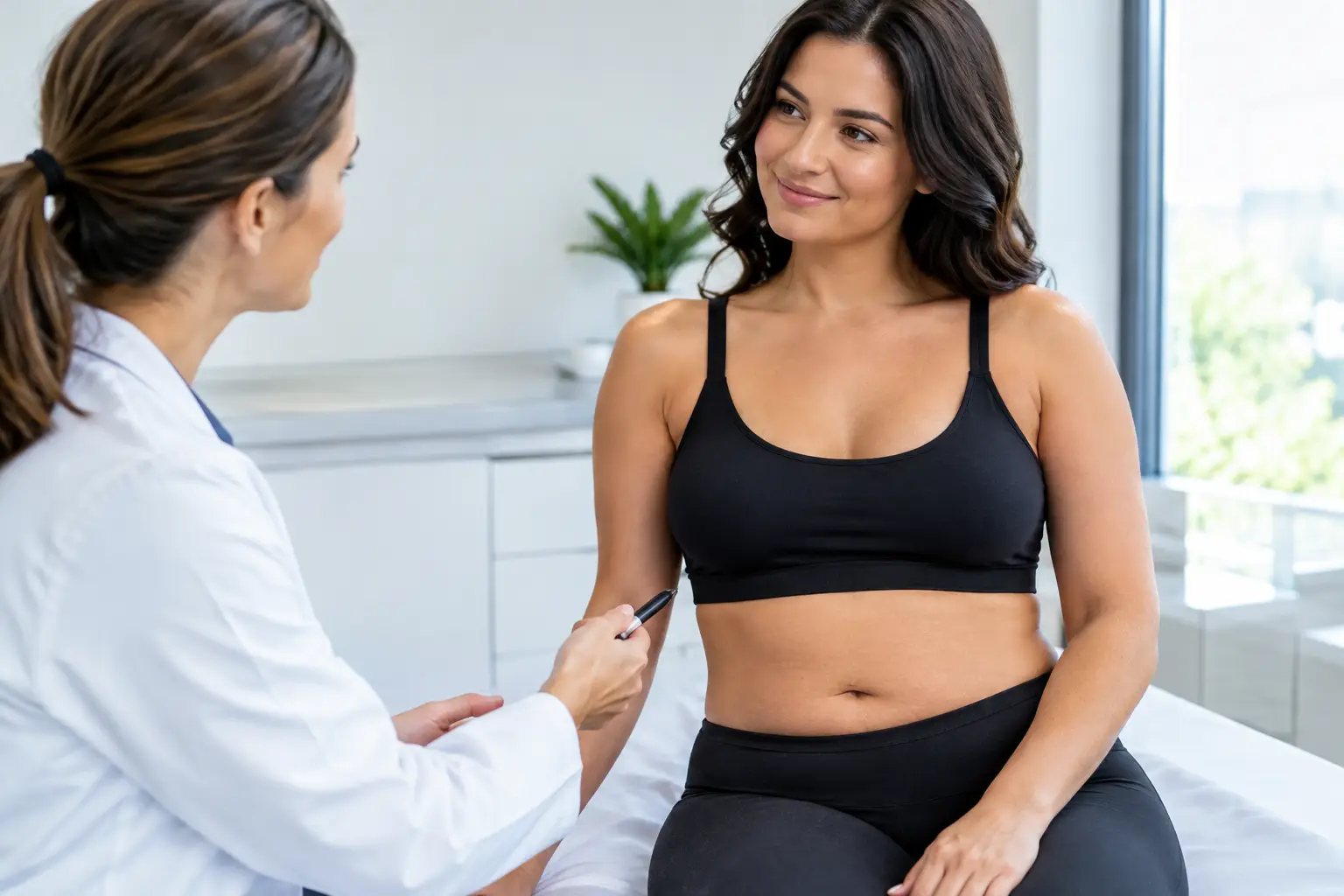
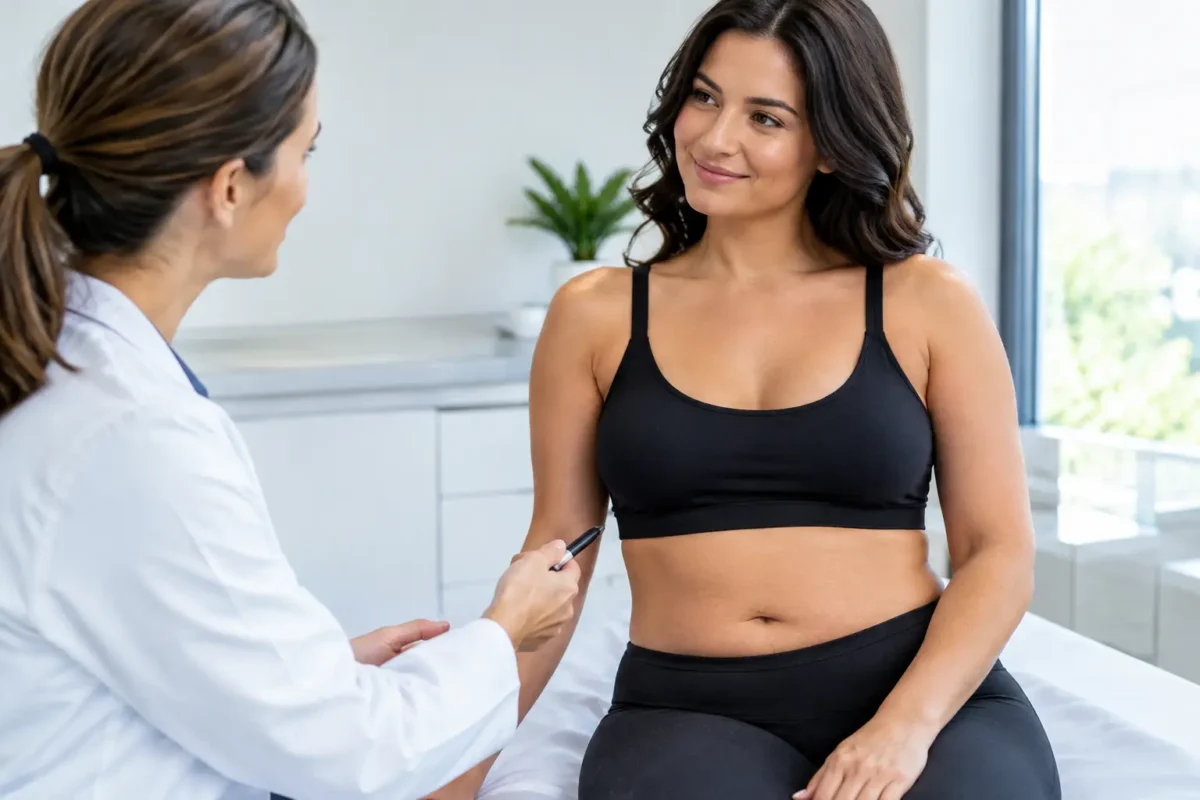
A concern about a persistent area of fat is often what brings patients to consider surgery: the abdomen that does not change despite regular exercise, the thighs that feel out of proportion, or fullness beneath the chin that remains despite a healthy lifestyle. This liposuction candidate suitability guide is designed to help you understand whether liposuction may be appropriate, what a surgeon needs to assess, and when another approach may offer a better result.
Liposuction can create meaningful improvements in body contour, but it is not a shortcut to weight loss or a substitute for a sustainable approach to health. The safest and most satisfying outcomes usually come when the procedure is chosen for the right reasons, at the right time, with realistic expectations.
What liposuction is designed to treat
Liposuction removes localised deposits of fat through small incisions using a fine cannula. It may be considered for areas such as the abdomen, flanks, hips, thighs, knees, upper arms, back, chest, or beneath the chin. The aim is to improve proportion and contour rather than to produce a particular number on the scales.
For many patients, the best results are seen when weight has been stable for some time and the concern is a defined area that remains resistant to diet and exercise. The skin and underlying tissues also need to be considered carefully. Removing fat can improve shape, but it does not reliably tighten loose skin. Where there is significant skin laxity, a procedure that removes excess skin, such as an abdominoplasty, may be more suitable than liposuction alone.
Liposuction candidate suitability guide: the key considerations
Suitability is not decided by one measurement or photograph. It is a clinical judgement based on your health, anatomy, lifestyle, goals, and willingness to follow recovery advice. A specialist consultation allows these factors to be considered together.
You are close to a stable, healthy weight
Liposuction is best regarded as body contouring, not weight-reduction surgery. Patients who are at or close to a weight they can maintain are more likely to see a clear improvement in proportion and maintain that result over time.
There is no single weight or body mass index that automatically determines suitability. However, if substantial weight loss is still planned, it may be sensible to achieve and maintain that weight first. Further weight change after surgery can alter the contour achieved and may affect skin quality.
Your skin has enough elasticity for the planned area
Skin quality varies between people and between body areas. Younger skin often retracts more effectively after fat removal, but age alone does not determine the outcome. Pregnancy, weight fluctuations, sun exposure, genetics, and previous surgery can all affect elasticity.
During an assessment, the surgeon will examine the skin, the thickness and distribution of fat, and the degree of underlying laxity. In some circumstances, liposuction alone may leave loose or uneven-looking skin. An honest discussion before surgery is far preferable to disappointment afterwards.
You are in good general health
A full medical history is essential before any operation. Conditions such as diabetes, high blood pressure, heart or lung disease, bleeding disorders, sleep apnoea, or previous blood clots do not always rule out surgery, but they may affect whether it can be undertaken safely and where it should be performed.
Your surgeon should also know about previous operations, allergies, and all medicines and supplements you take. Some medications can increase bleeding risk or interact with anaesthesia. Any recommended changes must be made under the guidance of the clinician who prescribed them.
You do not smoke or use nicotine products
Smoking and nicotine use can compromise blood flow and delay wound healing. This includes cigarettes, vaping products, nicotine patches, gum, and other nicotine replacement products. The risk is particularly relevant when liposuction is combined with a skin-tightening or skin-removal procedure.
A surgeon may ask you to stop nicotine for a defined period before and after surgery, with testing in some cases. This is not a formality. It is a practical measure to reduce avoidable complications and support proper healing.
Your expectations are realistic and personal
A good candidate understands both what liposuction can achieve and its limits. The procedure can reduce fullness and improve the transition between adjacent areas, but it cannot guarantee complete symmetry, erase cellulite, or create the body shape of someone else.
It is also worth reflecting on why you want surgery now. The strongest decisions tend to be made for your own comfort and confidence, rather than pressure from a partner, social media, or an approaching event. Surgery should never feel rushed.
When it may be better to wait
Delaying a procedure can be the right clinical decision, and it does not mean your concerns are being dismissed. If you are pregnant, breastfeeding, planning a pregnancy in the near future, or undergoing significant weight change, it may be better to postpone treatment. Hormonal and weight changes can affect both contour and skin laxity.
Active medical conditions, poorly controlled diabetes, untreated mental health concerns, or a current nicotine habit may also mean that surgery should wait. In other cases, the concern may be primarily loose skin, muscle separation after pregnancy, or a pattern of fat distribution that is better managed through a different procedure.
A careful surgeon may recommend against liposuction if the likely benefit is limited or the risks outweigh the expected improvement. That candour is a central part of safe, patient-centred care.
Understanding the trade-offs and risks
Every surgical procedure involves recovery and risk. Following liposuction, bruising, swelling, numbness, tenderness, and fluid leakage from the small incision sites are common in the early stages. Swelling can take weeks, and sometimes several months, to settle fully. Compression garments are often recommended to support the healing tissues and help manage swelling.
Less common but more serious risks include infection, bleeding, fluid collection, changes in skin sensation, contour irregularities, skin discolouration, delayed healing, scarring, blood clots, and risks associated with anaesthesia. There is also a possibility of requiring a revision procedure, particularly where healing is uneven or skin retraction is less than anticipated.
These possibilities need to be discussed in the context of your individual circumstances. The goal of consultation is not to alarm you, but to ensure your decision is properly informed.
What happens during a specialist consultation
A consultation should be a conversation, not a sales appointment. Your surgeon will ask about your health, weight history, previous procedures, medications, smoking or nicotine use, and what you hope to change. They will examine the relevant area and assess whether liposuction is likely to produce a worthwhile improvement.
You should have time to ask practical questions about the technique, anaesthetic, expected scars, recovery, compression garments, time away from work, exercise restrictions, and follow-up care. It can help to bring a written list of questions, particularly if this is your first experience of surgery.
You may also be asked about your understanding of the procedure and your expectations of the result. This is part of informed consent, not a test. Clear communication helps the surgical team plan care around your needs and identify any issue that requires further discussion.
Preparing well if liposuction is right for you
Once surgery has been agreed, preparation matters. Maintain a stable weight, follow guidance about nicotine and medicines, arrange practical support for the first days of recovery, and allow enough time before returning to demanding work or exercise. Choosing a quiet recovery period is generally wiser than trying to fit surgery around a major holiday, wedding, or other fixed event.
Attend follow-up appointments even if healing appears straightforward. Early review provides reassurance, while also allowing the team to identify and address concerns promptly. Final results should be judged patiently, after swelling has had sufficient time to settle.
The right decision is not simply whether liposuction is possible. It is whether it is likely to be safe, proportionate, and genuinely helpful for you. A thoughtful consultation with a qualified specialist can give you the clarity to proceed with confidence, or the reassurance that another option, or a little more time, is the better choice.