
Categories
Cosmetic Surgery Eyelid Surgery

Your Asian Blepharoplasty Consultation Guide

https://plasticsurgerynz.org/asian-blepharoplasty-consultation-guide/
August 25, 2026 - Stanley Loo -A consultation for Asian eyelid surgery should never begin

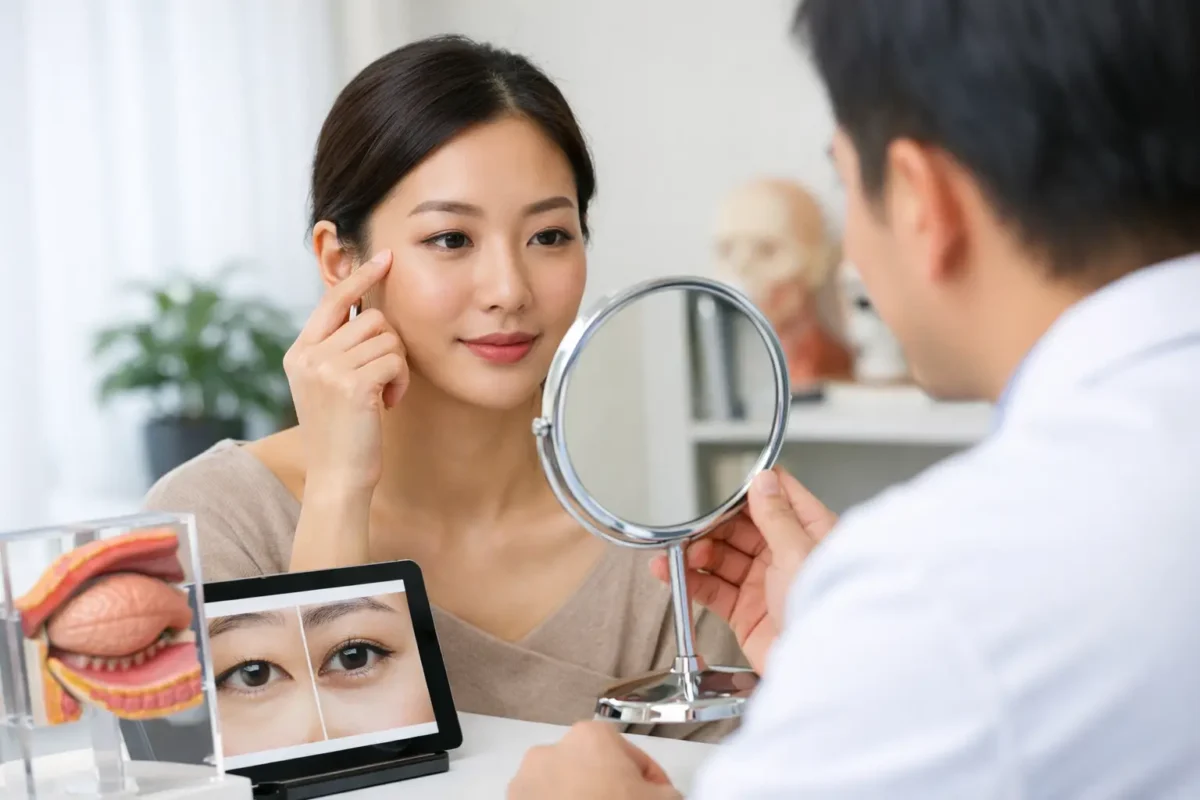
A consultation for Asian eyelid surgery should never begin with a standard crease height or a photograph of someone else’s result. This asian blepharoplasty consultation guide explains how a specialist consultation can help you clarify what you would like to change, what should be preserved, and whether surgery is appropriate for your eyelids, anatomy and long-term goals.

Asian blepharoplasty is a highly individual procedure. Some patients would like a defined upper-eyelid crease; others wish to adjust an existing crease that is uneven, too low or poorly defined. For some, the main concern is excess skin, eyelid heaviness, a fold that obscures make-up, or asymmetry. The aim is not to apply one aesthetic ideal. It is to create a result that looks balanced, functional and in keeping with your facial features and ethnic identity.

What an Asian Blepharoplasty Consultation Should Cover

Your consultation is an assessment, a conversation and an opportunity to make an informed decision. A specialist plastic surgeon will listen carefully to the changes you are considering, ask about your health and examine the eyelid area in detail.

The discussion should begin with your own priorities. You may be very clear that you want a subtle, natural-looking crease, or you may simply know that your eyelids feel heavy and would like to understand the options. Both are valid starting points. Clear communication matters because terms such as “double eyelid” or “natural crease” can mean different things to different people.

Your surgeon will assess the natural eyelid crease, the thickness and quality of the skin, the distribution of fat, eyebrow position, eyelid opening, tear-film health and the symmetry of both sides. They will also consider the epicanthal fold, which is the fold of skin near the inner corner of the eye. This may affect the appearance and position of a proposed crease, but it does not always require treatment itself.

Photographs are usually taken as part of planning and clinical record-keeping. These help document your starting point and allow careful discussion of proportion and symmetry. They are not used to promise an exact outcome. Human faces are naturally asymmetric, and surgery can improve imbalance without always making both eyelids identical.

Choosing a Crease That Suits Your Features

A key part of Asian blepharoplasty is deciding whether a crease should be created, refined or left unchanged. Creases are often described as low, medium or high, but the right choice depends on your anatomy rather than a fixed measurement.

A higher crease can give a more visible lid platform, particularly when the eyes are open. However, an overly high crease may look unnatural for the individual, be difficult to maintain in thicker eyelid tissue, or make the eyes appear hollow if too much tissue is removed. A lower crease may look more subtle and harmonious, but it can be less visible if there is excess skin or fullness above the lid.

Your surgeon may use a temporary marking tool during the consultation to demonstrate possible crease positions. This is useful for discussion, although it cannot reproduce how the eyelid will settle after healing. Bring reference images if they help explain your preferences, but use them as a starting point rather than a blueprint. Differences in brow position, skin thickness, eye shape and facial structure mean another person’s result may not suit you.

Questions About Technique and Suitability

There is more than one approach to Asian blepharoplasty. A non-incisional or suture technique may be suitable for selected patients with little excess skin and a good-quality eyelid. It can involve a shorter recovery, but the crease may soften or fail over time in some cases.

An incisional technique creates a carefully planned crease through a fine incision. It allows the surgeon to address skin excess, fat fullness or other anatomical factors where appropriate. This may offer greater control and durability, but it involves a scar that needs time to mature and a longer period of early swelling.

During the consultation, ask why a particular technique is being recommended for you. A responsible answer should relate to your anatomy, desired result and willingness to accept the trade-offs of each option. If eyelid drooping is contributing to a tired or restricted appearance, the surgeon may also assess whether ptosis correction should be considered. Treating skin alone when the eyelid margin itself is low may not achieve the improvement you expect.

Medical History, Eye Health and Safety

A thorough medical history is central to safe planning. Tell your surgeon about previous eyelid surgery, laser treatments, injectable treatments, eye operations, contact lens use, dry eyes, allergies and any difficulty closing your eyes fully during sleep. Mention thyroid eye disease, diabetes, bleeding disorders, autoimmune conditions and any medicines or supplements you take.

Some medicines can increase bleeding or bruising risk, while smoking and nicotine products can impair wound healing. You should not stop prescribed medication without advice from the clinician who manages it. Your surgical team will provide personalised instructions if changes are required before surgery.

Eye symptoms deserve particular attention. Existing dry eye, irritation or blurred vision does not always rule out surgery, but it may change the recommended approach or mean that an eye assessment is needed first. Cosmetic goals should never override eyelid function and corneal protection.

Understanding Recovery Before You Commit

Recovery is not an afterthought. It should be discussed before you decide whether to proceed. Most people experience swelling, bruising, tightness and temporary changes in sensation around the eyelids. Vision can be blurred initially because of ointment or teariness, so you will need someone to take you home after surgery and should avoid driving until it is safe to do so.

Stitches, if used, are commonly removed after several days. You may feel comfortable being seen socially after one to two weeks, though this varies considerably. Residual swelling can take several weeks to settle, and the final refinement of the crease and scars takes longer. Important events, photographs and travel should be planned with this in mind.

Your surgeon should explain practical aftercare, including how to keep the area clean, use prescribed medication, sleep with your head elevated and avoid strenuous activity for the advised period. You should also know how to contact the practice if you are worried after surgery. Attentive follow-up is part of surgical care, not an optional extra.

Risks and Limits to Discuss Openly

Every operation involves uncertainty. Possible risks of eyelid surgery include bleeding, infection, visible or delayed-healing scars, prolonged swelling, dryness, irritation, asymmetry, an unsatisfactory crease position and the need for revision surgery. More serious complications are uncommon, but your surgeon should explain them clearly in the context of your individual risk factors.

It is also helpful to discuss what surgery cannot reliably do. A crease procedure may improve eyelid definition, but it cannot change every aspect of eye shape or guarantee perfect symmetry. It cannot resolve concerns caused primarily by brow position, facial volume loss or skin quality without considering those features separately.

A good consultation leaves room for reflection. You should feel able to take time, read the written information, discuss the decision with people you trust and return with further questions. Pressure to book quickly is not a substitute for good clinical advice.

Preparing for a Productive Appointment

Before attending, consider what bothers you most in daily life and what result would feel successful to you. It can help to bring a list of medicines and prior procedures, photographs showing how your eyelids looked earlier in life if relevant, and a few carefully chosen reference images.

Ask who will perform your operation, what qualifications and specialist experience they hold, which technique they recommend and why, and what follow-up care is included. You may also wish to ask how revision concerns are assessed, how long you should allow before returning to work or social commitments, and when to seek urgent advice during recovery.

The most valuable outcome of a consultation is not simply a treatment plan. It is the confidence that you have been heard, examined carefully and given advice that respects both your appearance and your health. When the recommended plan feels medically sound and personally right, you can make your decision with greater clarity and peace of mind.

Categories
Cosmetic Surgery Eyelid Surgery

Asian Blepharoplasty Before and After

https://plasticsurgerynz.org/asian-blepharoplasty-before-and-after/
June 28, 2026 - Stanley Loo -A good set of asian blepharoplasty before and after photos

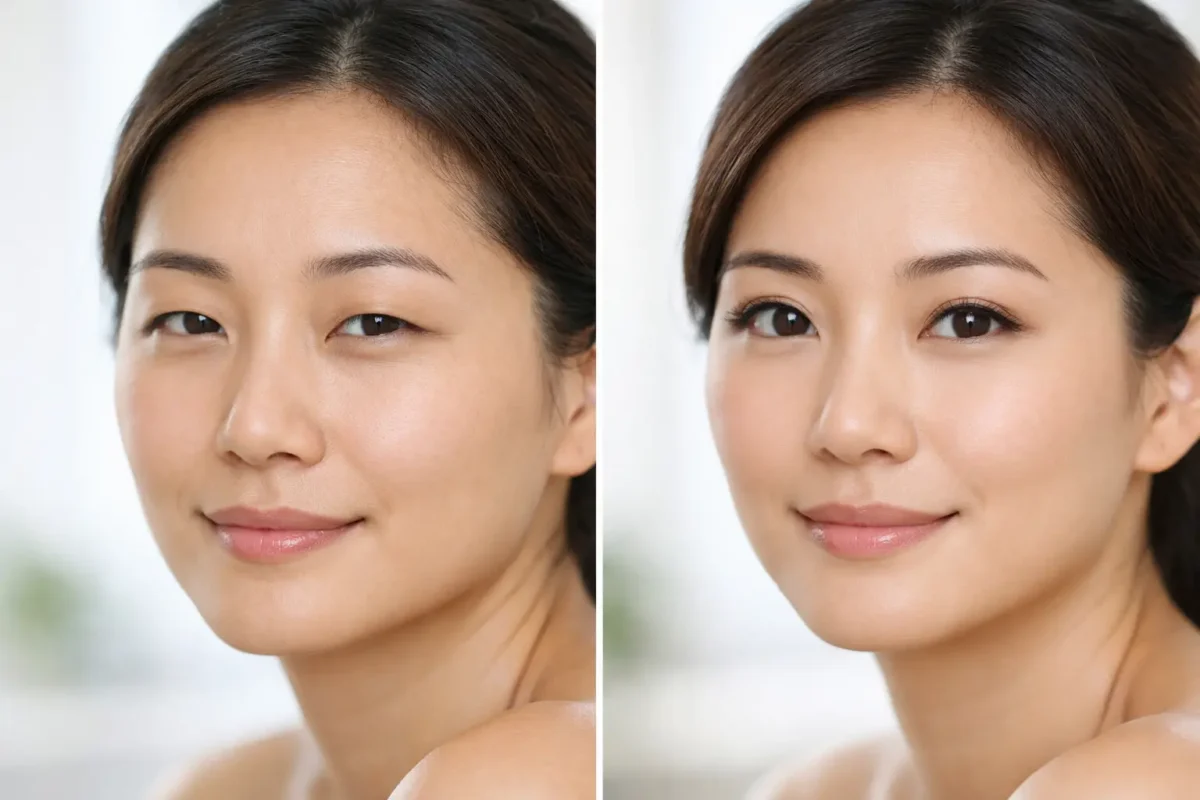
A good set of asian blepharoplasty before and after photos should do more than show a crease. They should show balance, symmetry, and an eyelid shape that still looks like you. For many patients, that is the real question – not whether the eyes look different, but whether the result looks natural, comfortable, and in keeping with their facial features.

Asian blepharoplasty is a highly individual procedure. It is designed to create or refine an upper eyelid crease while respecting the natural anatomy of the eyelid, brow, and surrounding tissues. The aim is not to make the eyes look rounder or more Western. A well-planned result should preserve ethnic identity and suit the patient’s own proportions.

What asian blepharoplasty before and after really shows

Before and after images can be useful, but only if they are interpreted carefully. Lighting, facial expression, swelling, and even make-up can change how results appear. More importantly, two patients may request a similar change and still need very different surgical plans.

In the before stage, the surgeon is assessing far more than whether a natural crease is present. Skin thickness, fat volume, levator function, asymmetry, brow position, and the height of any existing fold all matter. Some patients have no visible supratarsal crease. Others have a low or uneven crease, excess fullness, or an eyelid shape that makes eye make-up difficult to apply evenly.

In the after stage, the most successful result is often the one that does not look obviously operated on. The crease should be appropriately placed, the eyes should open comfortably, and the eyelids should remain harmonious with the rest of the face. A very high crease may look striking in a photo, but it can also appear unnatural on the individual. This is where experience and restraint matter.

Why results vary from person to person

There is no single “ideal” asian blepharoplasty result. Preferences differ, and anatomy differs even more. Some patients want a very subtle change that gives a more defined eyelid platform. Others prefer a slightly more visible crease to improve make-up application or reduce a heavy, puffy appearance.

The starting anatomy influences what is possible. A patient with thicker upper eyelid skin and fuller preaponeurotic fat may need a different technique from someone with a naturally fine eyelid and a faint existing crease. If there is asymmetry before surgery, improvement is realistic, but perfect mirror-image symmetry is not always achievable. Honest discussion about this is part of safe surgical planning.

Age also plays a role. Younger patients may seek crease formation alone, while older patients may have additional concerns such as skin redundancy, drooping, or brow descent. In those cases, the “after” result may depend on whether the plan includes skin excision, ptosis correction, or a more conservative approach to avoid an overdone appearance.

Surgical technique matters

Asian blepharoplasty is not one operation performed the same way every time. The technique is chosen according to anatomy, goals, and tissue characteristics.

For some patients, a suture-based method may be appropriate. This can suit carefully selected individuals with thin skin, minimal excess tissue, and a desire for a less invasive approach. The recovery may be quicker, but the fold may also be less durable in some cases.

For others, an incisional technique is more suitable. This allows more precise crease creation and, where needed, adjustment of skin, muscle, or fat. It is often the better option when there is significant fullness, asymmetry, or a need for long-term definition. That does not mean it should be aggressive. Removing too much tissue can create a hollow or tight-looking eyelid, which is difficult to reverse.

A thoughtful surgeon will explain why one method is recommended over another. The best technique is not the one that sounds simplest. It is the one that gives the safest route to a stable, natural result.

The first few weeks after surgery

Patients are often surprised by how different early recovery looks from final healing. Immediately after surgery, the eyelids are usually swollen. There may be bruising, mild tightness, and some asymmetry while the tissues settle. This is normal.

In the first week or two, the crease can look higher, deeper, or more pronounced than expected. That does not mean the final result will stay that way. Swelling can distort the shape temporarily, and each eyelid may settle at a slightly different pace. This is one reason early before and after comparisons can be misleading.

Most patients start to look more presentable within a few weeks, but refinement continues beyond that point. The scar line generally fades over time, and the crease softens as healing progresses. Final results often take several months to declare themselves fully.

Careful aftercare matters here. Following wound care instructions, sleeping with the head elevated, using cold compresses as directed, and avoiding activities that increase swelling can all support recovery. Just as important is attending follow-up appointments so healing can be monitored properly.

What makes a result look natural

A natural result is usually defined by proportion, not by how visible the crease is. The height of the fold should suit the patient’s anatomy. The shape should flow with the lash line and upper eyelid contour. The eyelid should still look soft.

The after result should also fit the patient’s broader facial features. A crease that is too high or too sharply carved may draw attention to the surgery rather than the face itself. In contrast, a lower, well-designed fold often gives the eyes more definition without changing the person’s character.

This is especially important for patients who want improvement without looking dramatically altered. Many are not seeking a completely new appearance. They want to look fresher, less puffy, or more balanced. In those cases, subtle surgery is often the most effective surgery.

Questions to ask when reviewing before and after photos

Photos are helpful, but they should never replace consultation. When you review asian blepharoplasty before and after examples, ask whether the patients shown have anatomy similar to your own. A result that looks excellent on one face may not suit another.

It is also worth asking how long after surgery the photos were taken. Early images may still show swelling. Late images give a better sense of scar maturation and crease stability.

You should also look beyond the fold itself. Do the eyelids look balanced? Is there any sign of hollowness, excessive tightness, or visible scarring? Does the result appear elegant and believable at rest, rather than simply dramatic in a posed image? These details often tell you more than the headline change.

The consultation is where the real planning happens

A careful consultation is the safest way to understand what your own before and after might look like. This is where your goals, anatomy, and expectations can be assessed properly. It is also where concerns about recovery, scarring, asymmetry, and longevity should be discussed openly.

For first-time surgery patients, this conversation is often reassuring. Good surgical care is not about persuasion. It is about making sure you understand the likely outcome, the limitations, and the recovery process before making a decision.

At a specialist practice such as Stanley Loo’s, that means consultant-led assessment, a personalised operative plan, and clear post-operative guidance. For a procedure as nuanced as asian blepharoplasty, that level of detail matters.

Setting realistic expectations

The best before and after results usually come from realistic expectations rather than dramatic promises. Surgery can improve crease definition, eyelid contour, and symmetry, but it cannot make two eyelids mathematically identical or stop the normal ageing process.

It is also worth remembering that your own perception may change during recovery. In the early stages, patients often focus on small differences that settle with time. Patience is part of the process. A calm, measured review over several weeks and months is far more useful than judging the result too soon.

Choosing surgery for the right reasons matters as well. If your goal is to feel more confident in your appearance, improve make-up application, or address a long-standing concern about eyelid shape, the procedure can be very rewarding. If your aim is to copy someone else’s eyes exactly, the conversation needs more care.

Asian blepharoplasty can produce refined, elegant change when it is based on your anatomy rather than a generic template. The most meaningful before and after is the one that leaves you looking rested, balanced, and recognisably yourself.

Categories
Cosmetic Surgery Eyelid Surgery

Eyelid Surgery Recovery Time Explained

https://plasticsurgerynz.org/eyelid-surgery-recovery-time/
June 27, 2026 - Stanley Loo -Most patients are less worried about the operation itself

Most patients are less worried about the operation itself than the days that follow it. When people ask about eyelid surgery recovery time, they usually want to know two things – how long they will look bruised, and how long it will take before life feels normal again.

The honest answer is that recovery happens in stages. Blepharoplasty is usually very well tolerated, but healing is not identical for every patient. Your age, skin quality, general health, whether upper or lower eyelids are treated, and how closely you follow post-operative instructions can all influence the pace of recovery.

What affects eyelid surgery recovery time?

Eyelid surgery recovery time is often shorter than patients expect, but it is still real surgery. The eyelid area has a very good blood supply, which supports healing, yet that same feature can make swelling and bruising more noticeable in the first week.

Upper eyelid surgery on its own often settles more quickly than lower eyelid surgery, particularly if the lower lids require more extensive work. A small skin excision may have a simpler recovery than surgery involving fat repositioning or tightening of deeper structures. If upper and lower eyelids are treated together, recovery can be a little more involved, even if the final result is very worthwhile.

Individual healing matters as well. Some patients bruise very little and feel comfortable going out after a week. Others look puffy for longer, despite doing everything right. This is normal and not usually a sign that anything is wrong.

The first 48 hours

The first two days are usually the period when swelling starts to peak. The eyelids can feel tight, tender, watery, or slightly gritty. Vision may be a little blurred at times, often because of ointment, watering, or mild swelling rather than a problem with the eye itself.

Cold compresses, rest, and keeping your head elevated are commonly recommended during this phase. These simple measures can make a meaningful difference to swelling and comfort. Most patients do not describe the recovery as severely painful, but the area can feel uncomfortable and heavy.

This is also the stage when planning ahead helps most. It is sensible to arrange a few quiet days at home, avoid unnecessary activity, and have someone available to drive you after surgery and assist if needed.

Days 3 to 7

For many patients, bruising and swelling are most obvious during the first week. The eyelids may look uneven from one side to the other, and that can be unsettling if you are not expecting it. Early asymmetry is common because each side heals at its own pace.

If you have stitches, these are often removed within about a week, depending on the surgical technique used. By this point, many patients are already more comfortable and can see that the eyelids are beginning to settle, even though they are still far from the final result.

Reading, screen use, and watching television are usually possible in moderation, but the eyes may tire more quickly. It is usually wise to avoid strenuous exercise, bending, heavy lifting, and anything else that increases pressure and swelling around the eyes.

Week 2 of eyelid surgery recovery time

This is the point when many patients start to feel more like themselves. Much of the obvious bruising has often faded, and swelling is usually improving. Some people feel comfortable returning to work after 7 to 10 days, especially if their role is not physically demanding. Others prefer closer to two weeks, particularly if they have a public-facing job or are prone to bruising.

Make-up can often help conceal residual bruising once your surgeon confirms it is safe to use. Even so, the eyelids may still look pink, slightly swollen, or firmer than expected. That does not mean recovery is delayed. It simply means healing is still active.

If you wear contact lenses, you may need to wait until the eyelids are comfortable enough and your surgeon advises that it is appropriate. In the early period, glasses are often the easier option.

Weeks 3 to 6

By this stage, most of the social recovery is usually behind you. Patients often feel comfortable attending events, returning fully to work, and resuming more of their normal routine. Light exercise may have restarted earlier, but more vigorous activity is usually reintroduced gradually and only in line with your specific post-operative advice.

The scars continue to mature during this period. On the upper lids, incisions are usually placed within the natural crease, which helps them become less noticeable over time. Early scar redness or firmness can improve steadily over several weeks and months.

This is also when expectations need to stay realistic. You may look much better at three or four weeks than you did in week one, but that still may not be your final outcome. Subtle swelling can persist longer than patients realise, especially in the mornings.

When will I look normal again?

This is one of the most common questions, and it depends on what you mean by normal. Socially, many patients feel presentable at 10 to 14 days. From a healing point of view, recovery continues beyond that. It is quite common for mild swelling, sensitivity, or small differences between the eyelids to keep improving over several months.

If your work involves physical effort, dusty environments, or long hours without rest, your return may need a little more planning. If your work is office-based, you may be back sooner. A consultation is the right place to discuss how your job, commute, and home responsibilities may affect your recovery timetable.

What can slow recovery?

Smoking is a major factor. It reduces blood flow and can impair wound healing, which is particularly relevant in delicate facial tissues. Patients are usually advised to stop smoking well before surgery and throughout recovery.

Medical conditions can matter too. Dry eye symptoms, thyroid eye disease, bleeding tendencies, and certain medications may alter both suitability for surgery and the recovery experience. This is one reason careful pre-operative assessment is so important.

Trying to do too much too soon can also prolong swelling. Even when patients feel surprisingly well, the tissues are still healing. Returning early to intense exercise, bending, lifting, or rubbing the eyes can set recovery back.

Signs that need prompt review

Some swelling, bruising, tightness, watering, and mild discomfort are expected. However, severe pain, rapidly increasing swelling, heavy bleeding, marked redness, or any sudden change in vision should be assessed urgently. These problems are not typical and should not be ignored.

Good aftercare is not just about comfort. It is about safety. A specialist-led practice should give clear instructions on what is normal, what is not, and how to get help if you are concerned.

How to make recovery smoother

The best recoveries are rarely accidental. They usually come from good preparation, careful surgery, and patients following advice closely afterwards. Resting with your head elevated, using cold compresses as directed, avoiding smoking, taking medication exactly as prescribed, and attending follow-up appointments all support better healing.

It also helps to plan for the social side of recovery. If you know you have an important event, family commitment, or work deadline, it is sensible to schedule surgery with adequate time to recover rather than hoping bruising will fade quickly enough.

At Stanley Loo’s practice, this type of planning is part of the wider consultation process. Patients tend to feel more confident when they understand not only the operation, but the recovery pathway that follows it.

A realistic timeline to keep in mind

For most patients, the practical outline is straightforward. Expect the first week to be the most visible phase of healing. Expect noticeable improvement by the second week. Expect to look socially presentable before you feel fully healed. And expect the finer changes – settling of swelling, scar maturation, and refinement of the result – to continue for longer.

That can be reassuring rather than frustrating. Recovery is not a single finish line. It is a gradual process, and the best results often reward patience.

If you are considering blepharoplasty, the most useful question is not simply how many days recovery takes. It is whether you have clear, personalised advice about what your own recovery is likely to involve.