

Categories
Cosmetic Surgery Plastic Surgery

Facelift Surgery Reviews That Help You Decide

https://plasticsurgerynz.org/facelift-surgery-reviews/
November 2, 2026 - Stanley Loo -A facelift is not simply a decision about looking younger

A facelift is not simply a decision about looking younger. It is a decision about facial balance, surgical judgement, recovery time and who will support you while your appearance changes and settles. Facelift surgery reviews can be helpful at this stage, but only when read with a clear understanding of what patient feedback can and cannot tell you.

A warm review may reassure you that a practice is responsive and caring. A detailed one may offer a realistic picture of swelling, scars or the patience needed during recovery. Neither replaces a consultation with a suitably qualified specialist plastic surgeon, where your facial anatomy, medical history and goals can be assessed properly.

What facelift surgery reviews can tell you

The most useful reviews describe the patient experience rather than making broad promises. Look for comments about whether the surgeon listened carefully, explained the limitations of surgery, discussed risks openly and gave the patient enough time to make a decision without pressure.

Facelift surgery is highly individual. Some people are mainly concerned by jowls and loss of definition along the jawline. Others have deeper folds around the mouth, laxity in the neck or a tired appearance caused by the brow and eyelid area. A review is more meaningful when it acknowledges this individuality and explains why a particular treatment plan was recommended.

Reviews can also give useful insight into the standard of care around the operation. Patients often remember whether the team answered questions promptly, whether post-operative instructions were clear and whether they felt supported if swelling or bruising caused concern. These details matter because good surgical care continues well beyond the day of the procedure.

Look for detail, not superlatives

A short comment saying that a result is “amazing” may be genuine, but it offers little information. More useful feedback often mentions the consultation, the recovery process and how the result developed over time. It may describe feeling nervous before surgery, being reassured by clear explanations, or needing to be patient while residual swelling settled.

The best reviews tend to sound balanced. They do not suggest that recovery was effortless or that every day looked better than the last. Bruising, swelling, tightness and temporary numbness are common parts of healing after a facelift. Patients who understood these possibilities before surgery are often better prepared emotionally and practically.

It is also worth considering the volume and consistency of feedback. A pattern of comments about careful communication, professional staff and attentive follow-up is generally more informative than one unusually glowing review. Equally, one negative review should be considered in context. The key question is whether there is a recurring concern, particularly around communication, expectations or aftercare.

How to read facelift surgery reviews critically

Online reviews are personal accounts, not clinical outcome data. They are shaped by an individual’s expectations, healing pattern, procedure type and the amount of time that has passed since surgery. A review written two weeks after an operation will naturally be very different from one written six or twelve months later.

When comparing surgeons, notice whether reviewers describe being given realistic expectations. A responsible surgeon should not promise a specific look or guarantee that a face will resemble an edited photograph. The aim is usually a refreshed, natural-looking result that remains recognisably you, while respecting your anatomy and the limits of safe surgery.

Be cautious of reviews that focus only on price, speed or dramatic claims. Cost is an understandable consideration, but facial surgery should never be selected as though it were a standard retail purchase. The complexity of the procedure, the surgeon’s specialist training, the quality of facilities, anaesthetic care and post-operative support all contribute to safe treatment and a considered result.

Photos can be useful, but they require the same care. Before-and-after images should be assessed for consistency in lighting, facial expression, head position and timing after surgery. A photograph cannot show how well a patient was counselled, whether they experienced complications, or whether their result has remained satisfactory over time.

Consider what is not visible online

A review rarely explains the clinical reasoning behind a treatment plan. For example, a patient may need a facelift with a neck lift, while another may benefit from eyelid surgery or a non-surgical option instead. Adding procedures is not automatically better. Each recommendation should be based on the areas that concern you, your skin quality, facial structure and your willingness to accept recovery time.

Nor can reviews confirm whether you are medically suitable for surgery. Smoking, certain medications, previous facial procedures, skin conditions and health concerns can affect both safety and healing. These are matters for a thorough consultation, not an online comparison.

Questions to take from reviews into your consultation

Rather than treating reviews as a final verdict, use them to prepare better questions. Ask who will perform the operation and what specialist qualifications and experience they hold. Ask which facelift technique is appropriate for your concerns, whether a neck lift or other procedure is being considered, and why.

You should also understand the practical elements of treatment. Ask where surgery will take place, what anaesthetic will be used, how long you are likely to need away from work and social commitments, and what help you may need at home in the early days. Your surgeon should explain likely scars, how they are positioned and how scar care will be managed.

A particularly valuable question is: what happens if I am worried during recovery? Clear information about scheduled reviews, contact arrangements and signs that need urgent attention can provide considerable reassurance. At Stanley Loo’s practice, personalised perioperative guidance and attentive follow-up form an important part of helping patients feel informed throughout their surgical journey.

Signs of a trustworthy facelift consultation

The consultation should feel calm, informative and unhurried. A specialist surgeon should take time to understand what bothers you, examine the relevant facial and neck areas, and explain what surgery can realistically achieve. You should be encouraged to discuss your concerns, including fears about looking overdone, visible scarring or a prolonged recovery.

Trustworthy advice sometimes means being told that surgery is not the right option at present, or that a less extensive procedure may meet your goals. This is not a lack of ambition. It is a sign that recommendations are being made in the interests of safety and proportion rather than to sell a particular procedure.

You should receive clear information about potential complications. Although serious problems are uncommon, facelift surgery carries risks including bleeding, infection, wound healing difficulties, altered sensation, asymmetry, scarring and, rarely, nerve injury. Understanding these risks does not mean expecting them to happen. It allows you to give properly informed consent and recognise why careful planning and follow-up matter.

Give healing the time it deserves

Many patients seek reviews because they want certainty about recovery. The honest answer is that healing has a timetable, but not an exact deadline. Initial bruising and swelling generally improve over the first weeks, yet subtle swelling and tissue firmness can persist for longer. Scars also mature gradually.

Planning ahead makes recovery more manageable. Arrange time away from demanding work, avoid strenuous activity until you have been advised it is safe, and follow instructions on wound care, medication and sleeping position. Keeping follow-up appointments allows your surgeon to monitor progress and address questions before they become a source of unnecessary worry.

A well-chosen review can help you recognise the value of clear communication and compassionate care. Let it guide your questions, not make the decision for you. The right next step is a considered consultation with a qualified specialist who can discuss your face, your health and the result you hope to achieve with honesty and care.
Categories
Cosmetic Surgery Plastic Surgery

Facelift Scar Placement: Where Incisions Sit

https://plasticsurgerynz.org/facelift-scar-placement/
October 21, 2026 - Stanley Loo -A facelift is designed to refresh the face, not to

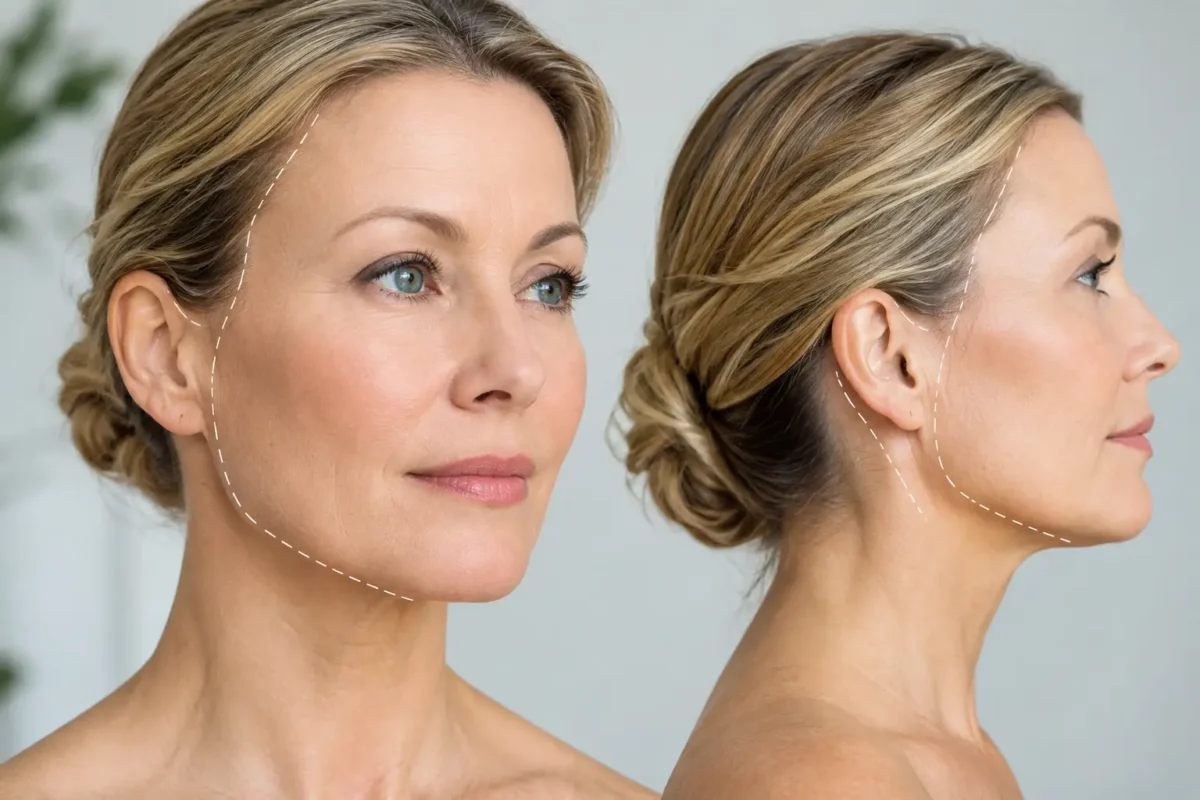
A facelift is designed to refresh the face, not to advertise that surgery has taken place. That is why facelift scar placement is discussed carefully before an operation: the position of each incision influences both surgical access and how discreetly the scar may settle over time. A well-planned scar is usually concealed within natural facial contours, hair-bearing skin and the folds around the ear, but no incision can be made completely scar-free.

The right approach is individual. Facial anatomy, hairline height, skin quality, degree of laxity, previous surgery and the type of lift required all affect where incisions are placed. A consultation is the time to understand these choices, including the benefits, limits and recovery involved.

Why facelift scar placement matters

A facelift, also called a rhytidectomy, addresses laxity in the lower face and neck by lifting and repositioning deeper tissues, removing or redistributing excess skin where appropriate, and refining the jawline and neck contour. The surgeon needs incisions that provide safe, precise access to these structures.

Placing an incision only where it is easiest to hide is not always the best surgical decision. If access is too limited for the amount of correction needed, tension may be placed on the skin closure or the result may be less durable. Conversely, a longer incision may be appropriate when there is significant neck skin excess or a need to improve the contour beneath the chin. The aim is to balance effective lifting with the least conspicuous scar pattern that safely suits the procedure.

Scars are most noticeable early in recovery. They are often pink, firm or mildly raised while the body remodels collagen, then usually soften and fade gradually. This maturation process commonly continues for 12 months or longer.

Common facelift incision locations

In front of the ear

For many facelifts, the incision begins within the natural crease where the ear meets the face, known as the preauricular crease. It may follow the contour in front of the ear and around the small cartilage prominence at the front of the ear canal. Using this natural junction helps break up the line of the scar rather than placing it across a broad, flat area of cheek skin.

Careful closure matters as much as incision design. The skin should be redraped without undue tension, as tension can widen a scar or subtly distort the earlobe and hairline.

Around and behind the ear

The incision often continues around the lower ear and into the crease behind it. This allows the surgeon to address skin laxity through the jawline and upper neck. When necessary, it may extend into the hair-bearing scalp behind the ear, where it can be concealed by the hair once healing has progressed.

An incision behind the ear is particularly common when a neck lift is performed alongside the facelift. The amount of extension depends on the degree of loose neck skin, tissue quality and the planned surgical technique. Patients with short hair or who regularly wear their hair up should mention this during consultation, as it can be considered when discussing scar visibility and placement.

Along the hairline or within the scalp

Some procedures require an incision that extends into the temple or scalp. The precise position is planned with particular attention to the hairline. For patients with a high hairline, thinning hair or a history of hair loss, this conversation is especially important.

A surgeon may choose a hairline-based incision, an incision set slightly within the hair-bearing scalp, or another variation based on the anatomy and goals of the operation. Each option involves a trade-off. An incision within the scalp can be well hidden, but skin movement must not create an unnatural shift in the sideburn or temporal hairline. A hairline incision may preserve hair-bearing skin positioning but can be more visible during the earlier stages of healing.

Beneath the chin

A small incision in the natural crease beneath the chin may be used when the neck needs additional contouring. It can provide access for treating the platysma muscle, removing localised fat where appropriate, or improving the angle between the chin and neck.

Not every facelift requires this incision. In a patient with good neck definition and limited laxity, it may add little benefit. In others, particularly where there is muscle banding or fullness below the chin, it can be an important part of achieving a balanced result.

What changes the scar plan?

There is no single facelift pattern that is right for every face. A limited or short-scar facelift may be suitable for someone with early jowl formation and modest skin laxity. It may involve shorter incisions around the ear, but it cannot reliably correct substantial neck looseness or extensive excess skin.

A more comprehensive facelift and neck lift may require incisions that extend further behind the ear or into the scalp. This can provide better access and reduce closure tension, which may support a more natural contour. The trade-off is a larger scar footprint, although much of it is placed in less visible areas.

Previous facelift surgery, facial scars, radiation treatment, smoking history, tendency to form thick scars and certain medical conditions also require careful consideration. Previous scars may sometimes be incorporated or revised, but scar behaviour cannot be predicted with certainty. A specialist assessment helps identify factors that could affect healing and whether surgery should be adapted, delayed or avoided.

How facelift scars heal

Immediately after surgery, incisions are covered with dressings and the face may feel tight or swollen. Bruising and swelling can temporarily make the scar area appear more obvious than it will later. The early healing period requires patience and close adherence to post-operative instructions.

Once the incisions have sealed, scars may become redder or firmer before they improve. This is a normal part of healing for many patients, rather than a sign that the final result will be poor. However, increasing pain, spreading redness, discharge, fever, wound separation or a sudden change in swelling should be reported promptly to the surgical team.

Skin type and individual biology play a role. Some people naturally develop darker pigmentation after inflammation, while others are prone to raised or widened scars. These risks should be discussed openly before surgery, particularly if you have had problematic scars in the past.

Supporting the best possible scar outcome

Your surgeon and nursing team will provide individual aftercare instructions, including when to wash the area, how to manage dressings and when to return for review. Following these instructions is one of the most practical ways to support healing.

Avoid nicotine in all forms before and after surgery, as it reduces blood flow and can significantly increase the risk of wound-healing problems. Protecting healing scars from sunlight is also important. UV exposure can make scars darker and more persistent, so use the recommended sun protection once the wound has healed sufficiently and keep the area covered where practical.

Do not start silicone products, massage or topical treatments until your surgeon confirms they are appropriate. These measures can be useful for some scars, but timing matters. Similarly, avoid vigorous exercise, heavy lifting and activities that raise blood pressure until you have been cleared to resume them. Early strain can increase swelling and place stress on healing incisions.

Questions worth asking at consultation

A meaningful consultation should include more than a discussion of before-and-after photographs. Ask where your incisions are likely to sit, whether they may extend into the hairline or beneath the chin, and why that approach is recommended for you. It is also reasonable to ask how your hairstyle, hairline, skin quality and previous scars influence the plan.

Your surgeon should explain what improvement is realistic, what scars can and cannot be hidden, and how follow-up care will be organised. A reassuring answer is not one that promises invisible scars. It is one that explains the surgical reasoning clearly and makes space for informed decisions.

The best time to raise concerns about facelift scars is before surgery, when the plan can be tailored to your anatomy and priorities. With thoughtful placement, meticulous technique and attentive aftercare, scars typically become a quieter part of the result rather than the feature you notice first.