
Categories
Cosmetic Surgery Plastic Surgery

A Scar Management Guide for Better Healing

https://plasticsurgerynz.org/scar-management-guide/
October 3, 2026 - Stanley Loo -A scar is a normal part of healing, but it can be a visible

A scar is a normal part of healing, but it can be a visible and sometimes uncomfortable reminder of surgery, injury or a skin lesion. This scar management guide explains what you can do at each stage of recovery, what changes are expected, and when it is sensible to seek specialist advice. The aim is not to promise an invisible scar – no treatment can do that – but to support the best possible maturation of your skin.

Every scar behaves differently. Its final appearance can be influenced by the type and location of the wound, how it was closed, skin type and genetics, infection or delayed healing, sun exposure, smoking and tension across the healing area. Careful surgery and attentive aftercare both matter.

Scar Management Guide: Start With Wound Healing

The first priority is a clean, well-healed wound. In the early days after surgery, follow your surgeon’s individual dressing, showering and activity instructions rather than relying on general advice found online. A wound that is kept protected and heals without complication has the strongest foundation for a good scar.

Do not pick at scabs, trim exposed stitches or apply creams, oils or silicone products before the wound is fully closed unless your clinical team has advised it. Products applied too early may irritate the skin or trap moisture where it is not wanted. If adhesive dressings or tapes cause itching, redness or blistering, contact the clinic rather than simply continuing with them.

Some tightness, mild swelling, bruising and tenderness are common after surgery. The scar may initially look pink or red, feel firm, and seem more noticeable than expected. This does not mean it will remain that way. Scars are active tissue during the first months of healing and commonly change considerably over time.

Understand the Stages of Scar Maturation

Scars do not settle overnight. During the first few weeks, the body produces collagen to strengthen the wound. This can make a scar feel raised, lumpy, itchy or tight. Over the following months, collagen gradually reorganises and the scar usually becomes flatter, softer and paler.

For many people, meaningful improvement continues for 12 to 18 months. Areas under movement or tension, such as the chest, shoulders, abdomen, joints and jawline, may take longer to settle. A scar after breast reduction, abdominoplasty, skin cancer excision or hand surgery also has its own practical considerations because the surrounding skin moves differently.

It is understandable to assess a scar closely in the first few weeks. However, early appearance is rarely the final result. Your surgeon can help you judge whether a change is part of normal maturation or needs treatment.

Protect the scar from sunlight

New scars are particularly prone to colour change after ultraviolet exposure. Once the wound has healed, protect the area with clothing where practical and use broad-spectrum SPF 50 sunscreen on exposed scars. Reapply it as directed, especially during extended time outdoors.

Sun protection is most useful for at least the first year, and longer if the scar remains pink or darker than the surrounding skin. It will not erase a scar, but it can reduce the risk of persistent pigmentation and make the colour difference less pronounced.

Use silicone when it is appropriate

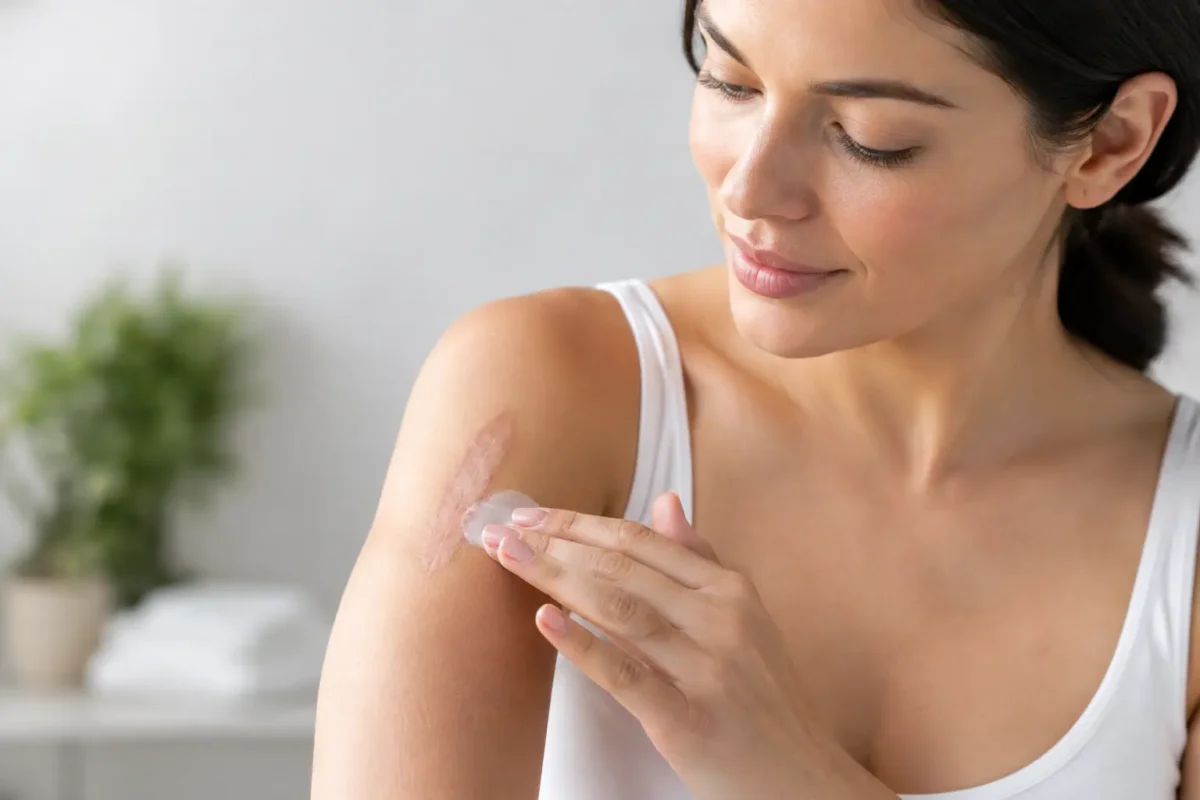
Silicone gel or silicone sheets are commonly recommended once the wound is fully healed and there are no open areas, scabs or signs of infection. Silicone can help maintain hydration at the scar surface and may reduce redness, thickness and itch in some scars.

The practical choice between gel and sheets depends on the site. Gel can be easier for the face, hands and mobile areas. Sheets may suit a flatter, covered area if they stay in position comfortably. Consistency matters, but so does skin tolerance. Stop use and seek advice if you develop a rash, significant itching or broken skin.

Consider gentle scar massage

Scar massage may help improve comfort and mobility once healing is secure, particularly where a scar feels firm or tethered. It should not be painful, and it is not suitable for every wound at the same point in recovery. Your surgeon or specialist nurse can show you when to begin and how much pressure is appropriate.

A plain, fragrance-free moisturiser may make massage more comfortable. Vitamin E is often suggested informally, but evidence that it improves scars is limited and it can cause contact dermatitis in some people. More is not always better when healing skin is concerned.

Support Healing From Within

Your skin needs time, adequate nutrition and good circulation to repair. A balanced diet containing sufficient protein, regular fluids and sensible rest supports normal recovery. If you have diabetes, poor circulation, immune suppression or a history of delayed wound healing, make sure your surgical team knows before treatment.

Smoking and nicotine products deserve particular attention. Nicotine narrows blood vessels and can impair wound healing, increasing the risk of wound separation, infection and less favourable scarring. Stopping well before surgery and remaining nicotine-free through recovery is one of the most constructive steps you can take.

Follow activity restrictions carefully. Stretching a fresh incision, heavy lifting too soon or returning to intense exercise before clearance can widen a scar or delay healing. This is especially relevant after body contouring surgery, breast surgery and procedures across a joint or hand.

When a Scar Needs Further Assessment

Some scars become thicker, redder or more symptomatic than expected. A hypertrophic scar stays within the boundaries of the original wound but becomes raised and firm. A keloid scar extends beyond those boundaries and is more likely in people with a personal or family tendency to develop them. Both can itch, feel tender or create a pulling sensation.

Scars may also widen, become indented, adhere to deeper tissue, cause functional restriction or heal with a colour difference that remains troubling. In these situations, early assessment can be useful. Treatment options depend on the scar and may include silicone therapy, pressure treatment, steroid injections, laser-based treatment, carefully planned scar revision or other approaches.

Scar revision is not simply a matter of cutting out an old scar. It requires consideration of skin tension, scar direction, local blood supply, previous healing and the possibility of making the scar more conspicuous. In many cases, it is best to allow a scar to mature before considering surgical revision. There are exceptions, particularly if a scar is restricting movement, distorting nearby structures or causing significant symptoms.

Know the Warning Signs After Surgery

Contact your surgical team promptly if you notice increasing rather than improving pain, spreading redness, warmth, pus-like discharge, a bad smell, fever, a wound opening, rapidly increasing swelling or bleeding. These may indicate infection or another wound problem that needs timely review.

Seek advice as well if the scar becomes increasingly raised, intensely itchy or painful, or begins to limit movement. A planned follow-up appointment is an opportunity to discuss concerns, but you do not need to wait for one if something changes unexpectedly.

A Personal Plan Gives Scars the Best Chance

The right aftercare plan depends on your procedure, skin, medical history and the stage of healing. A small facial lesion excision may need different advice from an abdominoplasty incision, breast reduction scars or a scar crossing the palm. Clear post-operative guidance and responsive follow-up are therefore as valuable as the operation itself.

At a consultation, a specialist plastic surgeon can assess the nature of an existing scar, discuss realistic improvements and explain the trade-offs of non-surgical and surgical treatments. Stanley Loo’s practice approaches scar care with the same focus on informed consent, careful planning and individual support used throughout the surgical journey.

A scar can ask for patience, particularly when it is new and highly visible. Keep the wound protected, follow the advice specific to your operation, and raise concerns early. With time and appropriate care, many scars become far less noticeable and far more comfortable than they appear in the first stages of healing.
Categories
Plastic Surgery

Scar Revision Treatment Options That May Help

https://plasticsurgerynz.org/scar-revision-treatment-options/
August 25, 2026 - Stanley Loo -A scar can become a daily reminder of an injury, operation,

A scar can become a daily reminder of an injury, operation, burn or skin lesion removal, particularly when it is raised, tight, painful, noticeable or positioned in an area that moves frequently. Scar revision treatment options are not about making a scar disappear completely. They are about improving its appearance, comfort, texture, direction or function in a way that is safe and realistic for your skin and circumstances.

The right approach depends on much more than how a scar looks in a photograph. Its age, location, cause, width, colour, thickness and effect on movement all matter. So do your skin type, medical history, previous healing and whether the scar is still changing. A careful specialist assessment helps determine whether treatment is likely to help, and whether now is the right time.

Why scars behave differently

Scarring is a normal part of healing, but the process is not identical for everyone. Early scars are often red, firm and occasionally itchy. They can continue to settle for 12 to 18 months, sometimes longer. Treating a scar too early with surgery can be unhelpful if natural maturation is still likely to bring improvement.

Some scars widen as tension pulls the skin apart during healing. Others remain raised within the original wound boundary, known as hypertrophic scars. Keloid scars grow beyond the original injury and can recur after treatment, particularly in people with a personal or family tendency to develop them. Depressed scars, such as some acne or chickenpox scars, need a different strategy again.

A scar may also be functionally significant. A tight scar across a joint, eyelid, lip, hand or neck can restrict movement or distort nearby tissue. In these cases, revision may be considered for comfort and function as well as appearance.

Scar revision treatment options: starting conservatively

When a scar is still settling, or when surgery is not the best first choice, non-surgical treatment may improve symptoms and appearance. The expected benefit varies. A treatment that softens a raised scar may not improve a pale, widened scar, for example.

Silicone, massage and pressure

Silicone gel or silicone sheets can help some immature, red or raised scars become flatter and less symptomatic when used consistently. They are usually most useful once the wound has fully healed and any scabs have gone. Scar massage may also be recommended after appropriate surgery or injury, but it should only begin when the area is healed and according to clinical advice.

Pressure garments may be used for selected scars, particularly after burns or where a larger area has healed. These measures require patience. Improvement is gradual and depends on regular use over several months.

Steroid injections and other injections

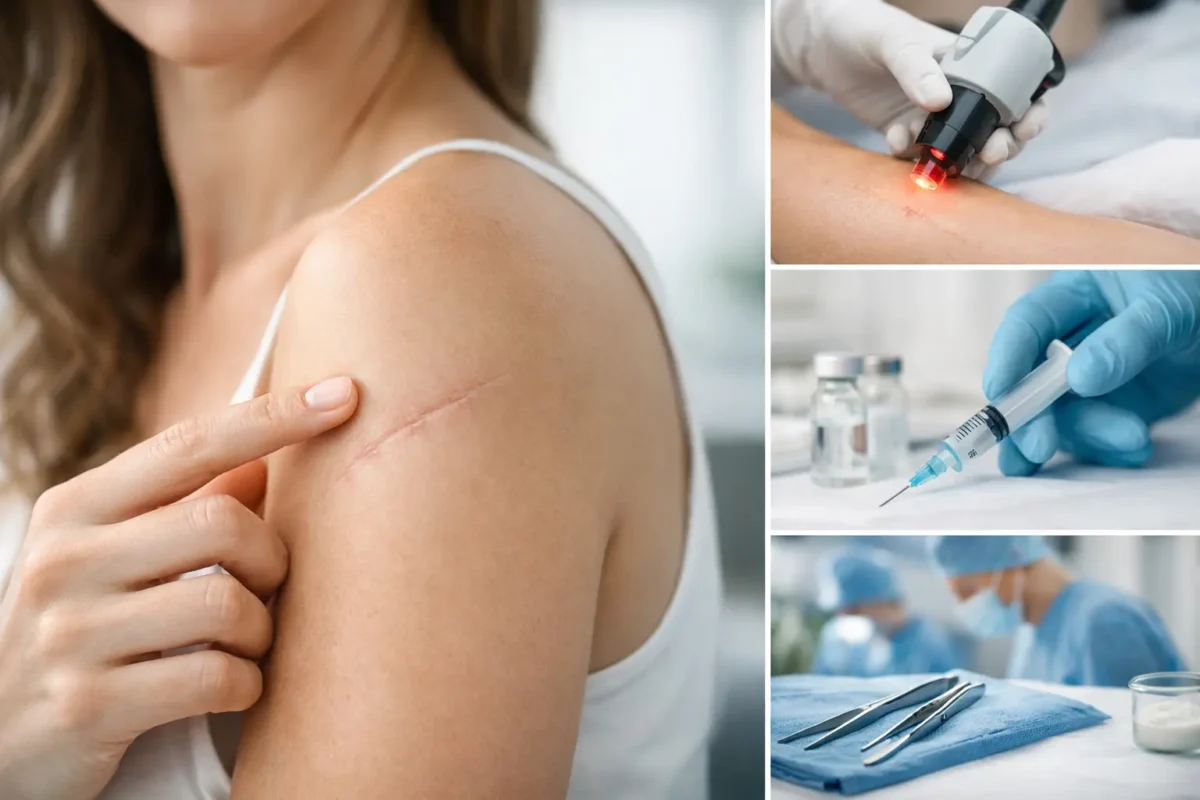
Steroid injections can reduce thickness, firmness, itch and discomfort in hypertrophic and keloid scars. They are often given as a course rather than a one-off treatment. Possible side effects include temporary discomfort, skin thinning, pigment change and small surface blood vessels, so the dose and spacing need to be carefully planned.

For certain scars, a specialist may consider other injection-based treatments alongside steroids. This is generally part of an individual plan, especially where a scar has been resistant to previous care or has a high risk of recurring.

Laser and resurfacing treatments

Laser treatment may help reduce redness, improve texture or address pigment changes in suitable scars. Resurfacing treatments can sometimes soften the edges of selected depressed or uneven scars. They do not suit every scar or every skin type, and more than one session may be required.

The timing is important. Some treatments are more effective while a scar is red and active; others are considered once it has matured. Sun protection remains particularly important, as ultraviolet exposure can make a healing scar darker or more uneven in colour.

When surgical scar revision may be appropriate

Surgical revision is usually considered when a scar is wide, poorly orientated, tethered, causing distortion, or restricting movement. It can also be appropriate when a scar has matured and remains conspicuous despite conservative treatment. Surgery creates a new scar, so the aim is to replace an unfavourable scar with one that is finer, better positioned or less tight.

A procedure may be performed under local anaesthetic, sometimes with sedation or general anaesthetic depending on the site, size and complexity. The planned technique should reflect the scar rather than follow a standard formula.

Excision and careful re-closure

For a widened, uneven or depressed linear scar, the surgeon may remove the existing scar and close the wound with meticulous layered techniques. This can redistribute tension and improve the alignment of the scar with natural skin lines where possible.

Good aftercare matters as much as the operation itself. Protecting the area, attending follow-up appointments and following advice about activity and dressings all support healing. Even with excellent technique, some people are more prone to prominent scarring than others.

Releasing tight or contracted scars

A contracture is a scar that pulls on surrounding tissue. It may follow trauma, burns, previous surgery or a wound that took a long time to heal. Scar release can restore movement by freeing the tight tissue and rearranging nearby skin.

Techniques such as Z-plasty or other local flap designs may change the direction of tension and lengthen a tight scar. In more complex cases, a skin graft or tissue from a nearby area may be needed. These procedures are planned around function, skin quality and the need to preserve healthy tissue.

Scar revision after previous surgery

A previous surgical scar may become wide, raised, uneven or uncomfortable. In some cases, revision is straightforward. In others, the scar reflects deeper issues such as tension, infection, delayed healing, smoking, radiation treatment or changes in body weight. Addressing those contributing factors where possible is part of sensible planning.

If a scar followed skin cancer or lesion excision, the priority is always appropriate diagnosis and treatment of the original condition. Revision is considered only when it is clinically suitable and does not compromise ongoing surveillance or care.

Choosing the right time for treatment

Many scars improve considerably without an intervention. Unless a scar is restricting function, causing significant symptoms or requires earlier treatment for a specific reason, it is often sensible to allow time for maturation before considering surgical revision.

There are exceptions. A scar that is pulling an eyelid, limiting hand movement, creating an open wound, becoming increasingly painful or changing unexpectedly should be assessed promptly. Anyone concerned that a lesion has returned or that a scar is not behaving as expected should seek medical advice rather than assuming it is simply part of healing.

Smoking and nicotine products can impair wound healing and increase the risk of complications. Diabetes, medications that affect immunity, a history of keloids and previous wound problems should also be discussed openly. These factors do not always rule out treatment, but they may influence the technique, timing and likely outcome.

What a scar revision consultation should cover

A useful consultation is not limited to choosing a procedure. It should include an examination of the scar and surrounding skin, a discussion about how the scar developed, and an honest conversation about what improvement is achievable. Photographs may be taken for planning and to track progress over time.

Your surgeon should explain whether observation, non-surgical treatment, surgery or a combination is most appropriate. You should also understand the likely recovery, dressing requirements, time away from certain activities, possible need for further treatment and risks such as infection, bleeding, altered sensation, wound separation, pigment change and recurrent or worsening scarring.

For many patients, the most valuable outcome is not perfection. It is a scar that feels less tight, attracts less attention, sits more naturally in the surrounding skin, or allows them to move with greater comfort and confidence. A thoughtful plan, realistic expectations and attentive follow-up give that goal the best chance of being met.

If a scar is troubling you physically or emotionally, a specialist consultation can provide clarity without committing you to treatment. The right next step may be simple scar care, time, a targeted procedure or reassurance that healing is still progressing.