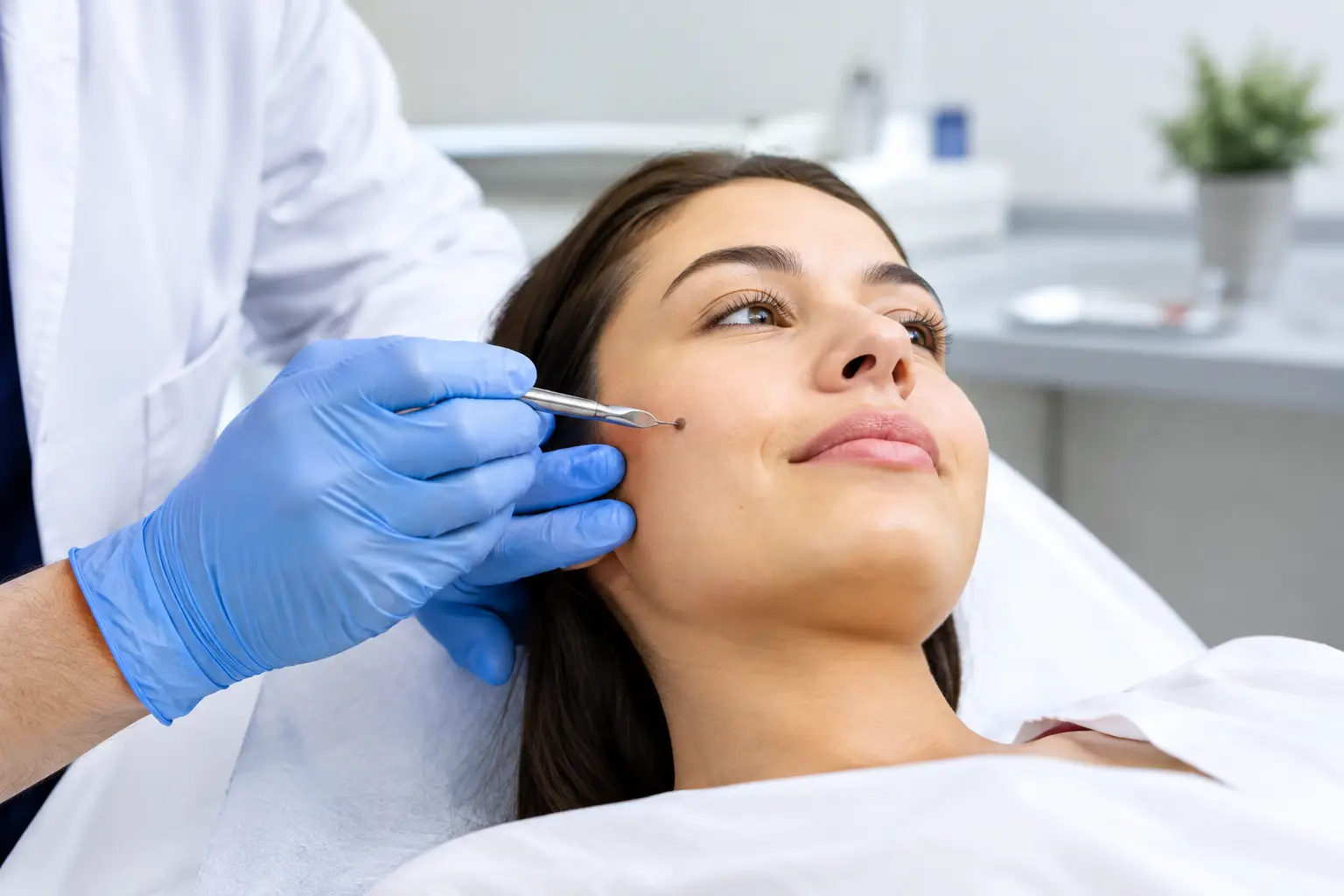
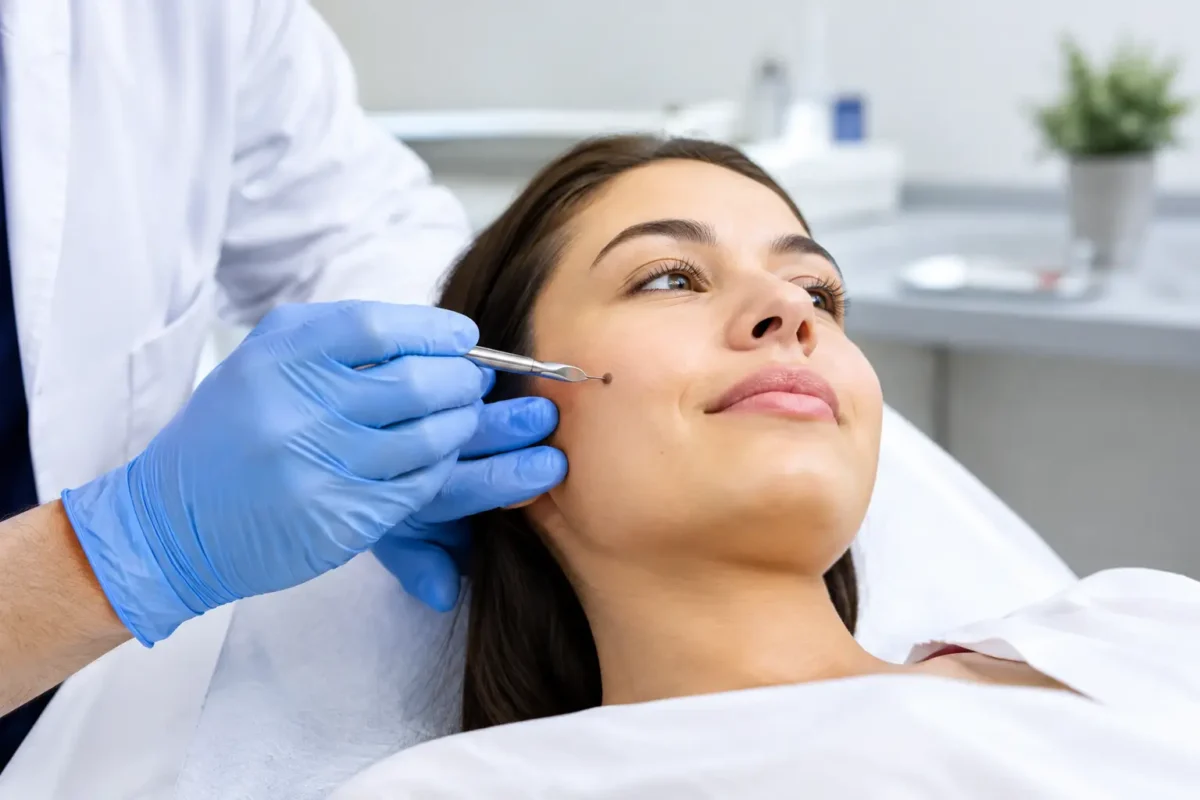
For most people, the part they feel most clearly is the brief sting of the local anaesthetic, rather than the mole removal itself. So, is mole removal painful? It can be uncomfortable at certain stages, but a properly planned procedure should not be painful while the mole is being removed. Your surgeon and clinical team should explain each step, check that the area is fully numb and make sure you know how to manage discomfort afterwards.
Mole removal may be recommended because a lesion is changing, catching on clothing, bleeding, causing irritation or affecting confidence. Whatever the reason, it is understandable to feel anxious about pain, needles, scarring and recovery. Knowing what usually happens can make the experience feel much more manageable.
Is mole removal painful during the procedure?
Most mole removals are carried out using a local anaesthetic. This means you remain awake, but the skin around the mole is numbed. You may feel a sharp scratch or sting as the anaesthetic is injected, followed by a brief burning or pressure sensation. This normally settles within seconds as the anaesthetic starts to work.
Before beginning, the surgeon should test the area to confirm you cannot feel sharp sensation. During the removal, people commonly notice touch, movement or gentle pulling, particularly if stitches are needed. These sensations are not the same as pain. If you do feel anything sharp or uncomfortable, say so straight away. More local anaesthetic can usually be given before the procedure continues.
The length of the procedure depends on the mole’s size, position and the technique required. A small raised mole may be removed relatively quickly, while a deeper lesion or one in a cosmetically sensitive area may require more careful planning and closure. Taking time to achieve a safe removal and considered scar placement is often worthwhile.
Why the method of removal matters
There is no single approach that suits every mole. The most appropriate technique depends on the clinical assessment and whether the lesion needs to be examined under a microscope.
Shave removal
A shave removal involves carefully removing a raised lesion at or slightly below the skin surface. After local anaesthetic, this is usually painless. The area may heal like a graze and can feel tender for a few days. Not every mole is suitable for this technique, especially if there is concern about its depth or diagnosis.
Excision with stitches
For a mole that is flat, deeper, suspicious or likely to recur if only partly removed, an excision may be advised. The surgeon removes the lesion with a small margin of surrounding skin and closes the wound with stitches. You should not feel the excision itself once the local anaesthetic is working, although you may feel pressure. Afterwards, tenderness is often more noticeable than after a shave removal because the skin has been closed under some tension.
Punch biopsy or diagnostic removal
Sometimes the priority is diagnosis rather than cosmetic improvement. A punch biopsy or complete excision may be used to obtain tissue for laboratory assessment. If a mole has changed in size, shape, colour or behaviour, it should be assessed professionally rather than removed at home or treated with over-the-counter products.
What does mole removal feel like afterwards?
As the local anaesthetic wears off, usually within a few hours, the area may begin to ache or throb mildly. This is often most noticeable on the first evening and the following day. Simple pain relief, if suitable for you, is commonly enough to control it. Your surgeon will advise you on the most appropriate option, taking account of your medical history and any regular medicines.
The location makes a difference. A mole removed from the back, shoulder, chest, scalp or lower leg may feel more sore because these areas move, rub against clothing or are under greater tension. A wound over a joint can also be uncomfortable when you bend or stretch. In contrast, a small lesion on a less mobile area may cause very little disruption.
If stitches have been used, you may feel tightness rather than significant pain. Avoiding strenuous exercise, swimming and activities that pull on the wound can help protect the repair while it heals. The exact restrictions and timing vary according to the site and closure, so personalised post-operative instructions matter.
Factors that can affect discomfort
Pain is personal. Two people having the same procedure can have different experiences, and neither response is unusual. Anxiety can heighten awareness of sensation, while previous difficult experiences with injections or surgery may make the appointment feel more daunting.
The size and depth of the lesion, its body location, the removal technique and whether stitches are required all influence recovery. Infection, bleeding or wound tension can also increase pain, although these are not expected outcomes. Being open with your surgeon about concerns, allergies, previous reactions to anaesthetic and medicines such as blood thinners helps the team plan safely.
For some patients, the prospect of being awake is more worrying than the physical sensation. Asking for a clear explanation as the procedure progresses, or preferring not to watch, are both reasonable preferences. Calm, attentive communication is part of good surgical care.
Caring for the wound comfortably
Keeping the area clean, dry when instructed and protected from friction supports healing. Follow the dressing advice you are given, and do not pick at scabs or try to remove stitches yourself. Once the wound has healed, protecting the scar from sun exposure can reduce the chance of prolonged darkening or colour change.
Contact your surgical team promptly if pain is becoming worse rather than gradually improving, or if you notice any of the following:
- increasing redness, warmth or swelling around the wound
- pus, an unpleasant smell or persistent bleeding
- fever or feeling generally unwell
- a wound that opens, or stitches that come out early
These symptoms do not always mean there is a serious problem, but early advice can prevent a minor issue from becoming more difficult to treat.
Will mole removal leave a scar?
Any procedure that breaks the skin can leave a scar. The trade-off is that removing a troublesome or concerning lesion may be clinically necessary, or may improve comfort and confidence. A specialist surgeon will consider the direction of natural skin lines, the method of closure and the balance between complete removal and the most favourable practical scar.
Scars usually look red or raised at first and then mature gradually over months. Some areas and skin types are more prone to noticeable scarring, pigmentation changes or keloid scars. This should be part of the discussion before treatment, particularly when removal is being considered for cosmetic reasons.
A calm consultation makes a difference
Mole removal should never feel rushed. A careful consultation allows your surgeon to examine the lesion, discuss whether removal is appropriate, explain the likely scar and recovery, and answer honestly what you are likely to feel. You should leave with clear aftercare guidance and a plan for reviewing results, including laboratory findings where tissue has been sent for analysis.
The right decision is not simply about whether a mole can be removed. It is about understanding why it is being removed, choosing the safest technique and feeling properly supported from the first assessment through healing.